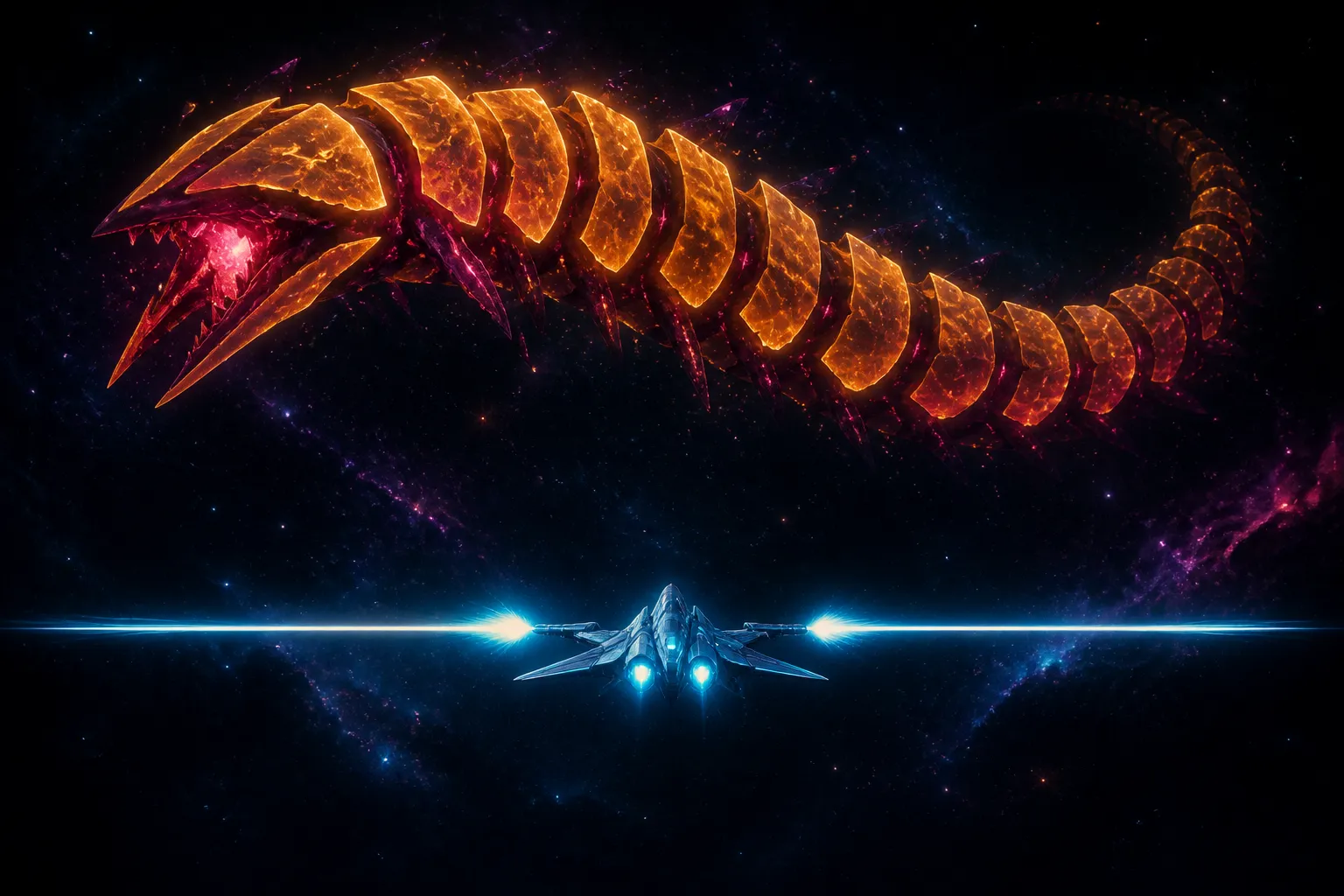
Wave five is where new players most often lose their first life. The usual advice is to shoot faster. The chain system points somewhere else: shoot at the right moment, and keep an eye on one small counter. Here is how I would approach it, with honest notes about what the sources do not tell us.
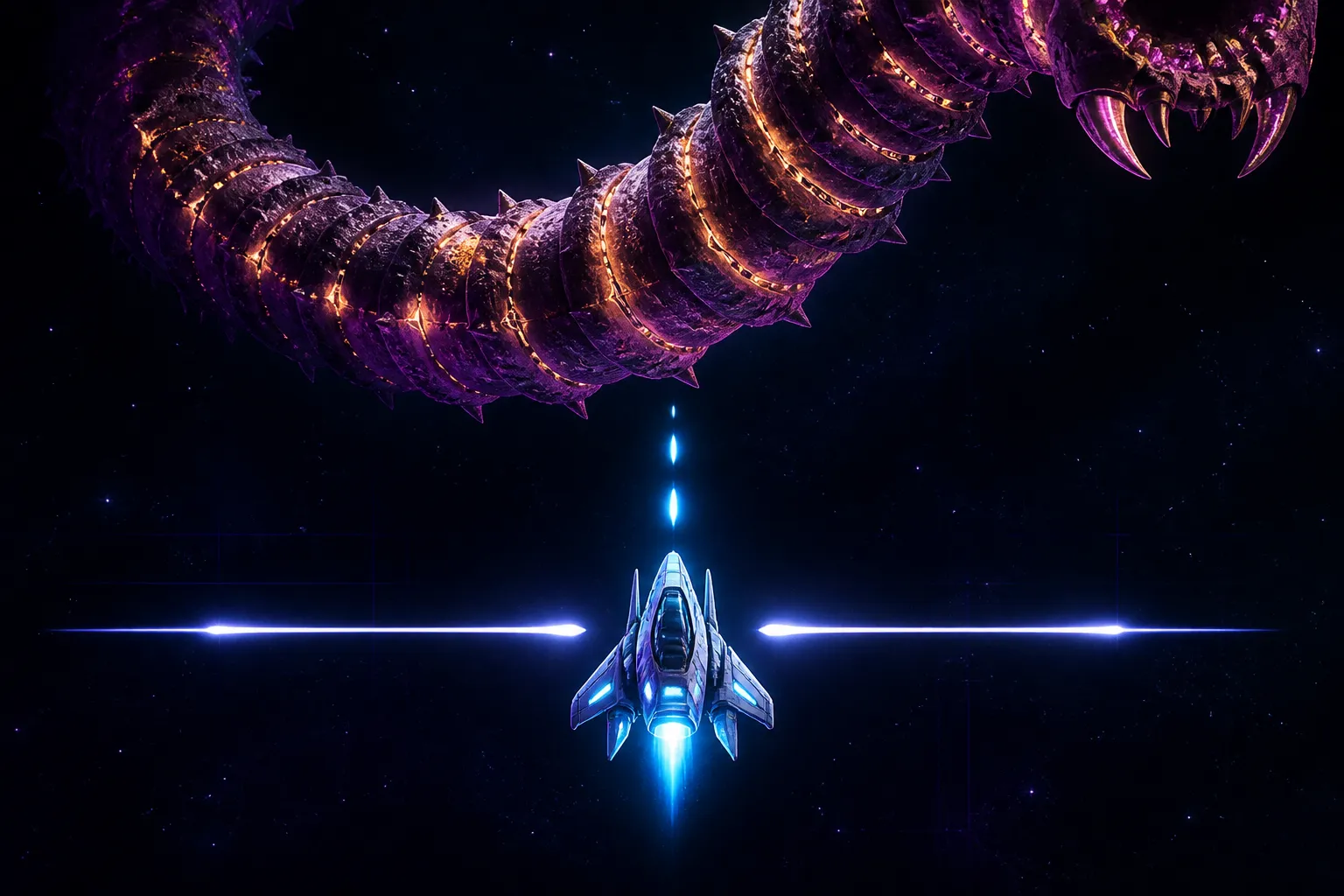
How the Chain Window Works
Enemies are built from discrete body segments. Hit any segment that is not the head and a chain window opens for a fraction of a second. Your next shot has to land on another segment of the same creature before it closes. Miss, or switch creatures, and the chain resets to zero.
The game also tracks how many segments you destroy in one unbroken action, and that sets your base hit value. Each destroyed segment feeds a multiplier into the next kill, as long as the window has not expired. So timing matters more than raw fire rate. You hold Space or Z to fire, but in my experience a steady, aimed stream at one creature serves you better than spraying. That is my advice, not a documented rule. I cannot give you the exact window length or multiplier values. The sources do not state them, so I will not guess.
Reading the Segment Counter
The segment counter sits in the upper-left corner. It pulses amber while a chain window is live. When the window collapses, it turns red.
That is a real-time signal, so treat it like one. Amber means keep going on the same creature. Red means the chain is gone. Reset your aim and start fresh. In early practice, try glancing at the counter between shots. After a few runs the glance tends to become automatic.
Here is a short routine for your first few sessions:
- Waves one and two: ignore score. Just watch the counter turn amber, then red, and learn how long that feels.
- Wave three: pick one creature and try to stay on it until it breaks apart.
- Wave four: when the counter goes red, stop firing for a beat and re-aim before the next shot.
None of this is required by the game. It is a way to build the habit before the speed climbs.
Choosing Targets by Creature Type
Serpentoids carry nine segments. Drifters carry three. That difference decides what is worth hunting.
Take a Serpentoid. Your first non-head hit opens the window. The body has nine segments, so after that first hit there are up to eight more segments you could chain into, if each shot lands before the window closes. That is a lot of room to build a long chain on one target. A Drifter has only three segments. It resolves fast, so it suits quick cleanup better than building anything long.
One caveat. The sources do not explain spawn patterns. Anything I say about where creatures show up is general observation from play, not documented mechanics. Treat it as a habit to test yourself, not a rule.
Movement and Survival in the Early Waves
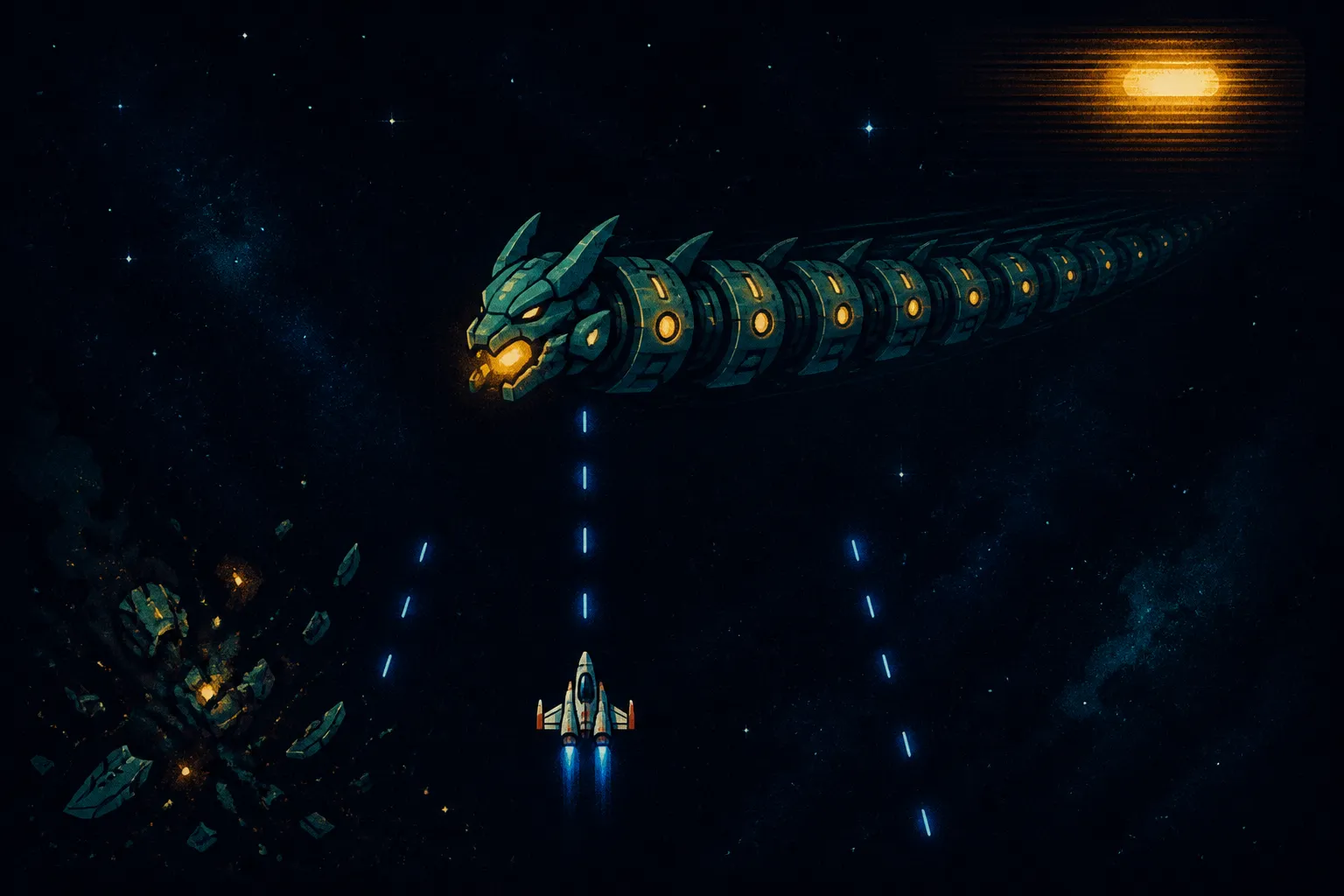
Waves one through four work as a movement tutorial. Stay near the horizontal midline. From there you respond equally well to threats from above and below, and your shot lanes stay clear of the walls.
Wave five is where it bites. Enemy speed rises sharply, and this is where new players most often lose their first life. Slow your own lateral movement. Small, deliberate nudges make fast segment trains far easier to track than constant sweeping.
Then there are shield pulses. They recharge on a fixed timer, not on kill count. A pulse sitting unused is wasted recharge time, so use one as soon as it is available and the timer keeps running. I do not have the pulse count, recharge duration, or activation control, so check those in the game itself.
What We Still Don't Know
A few gaps are worth naming. The sources do not define tail length or any mechanic tied to it, so this guide sticks to segments. Waves six and beyond, score values, and leaderboard rules are not covered. Neither are touch controls, so I will not claim they match the keyboard setup.
What we do know is enough to improve your first runs. The game runs in the browser with no download. Arrow keys or a stick steer, and Enter or Start begins the game. For setup details, see the GoAndGame FAQ. For the mechanics behind all of this, read the chain system breakdown. Then go play a few early waves and watch the counter.

Mara Solis is a staff writer at GoAndGame covering board games, tabletop strategy, and the culture around competitive play. She has spent years logging hours at game tables from local hobby shops to international conventions. Her writing blends practical insight with a genuine enthusiasm for the communities games create.


