In Saros, repetition begins before it becomes a question about the story. Housemarque’s third-person bullet-hell shooter sends players through a roguelite structure of repeated encounters, asking them to learn a fight by surviving it, failing it, and trying again. Arjun Devraj, meanwhile, is caught in an internal conflict shaped by the hope that doing the same thing might finally produce a different result. The IGN review sees those patterns as connected. The harder question is whether that connection makes another run feel meaningful when progress starts to feel slow.
The question inside the loop
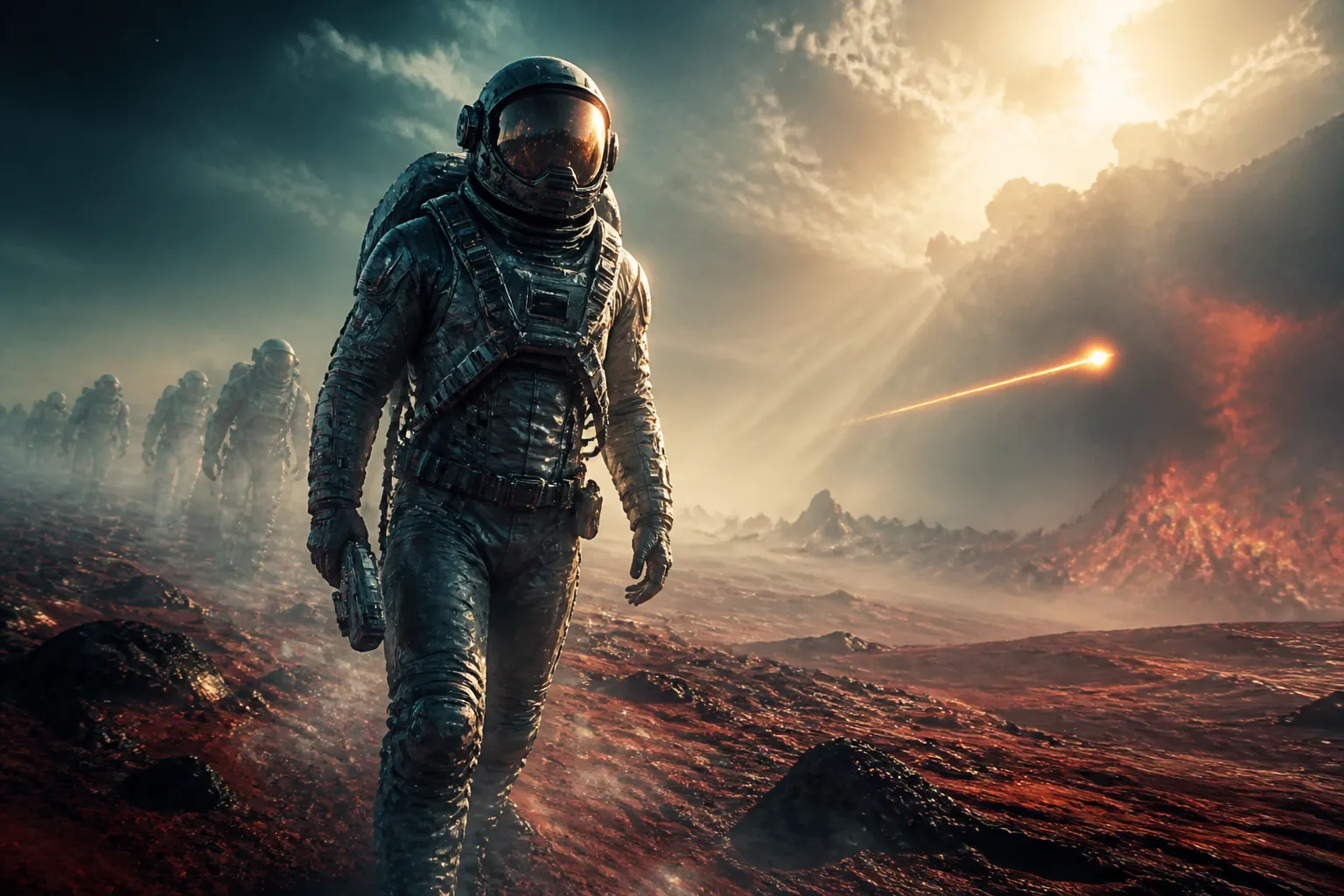
Arjun is an expeditioner for the space corporation Soltari. He and his crew travel to Carcosa to investigate the disappearance of earlier expeditions. That premise gives each return to danger a reason beyond the player’s desire to clear a level. Someone was here before. Something remains unresolved. Arjun’s own conflict brings the pattern closer still: the repeated attempt is part of his character, not just the shape of the game around him.
That is a promising fit for a roguelite. Players repeat actions because they believe the next attempt can change an outcome, even if most of the route looks familiar. Saros asks us to notice the resemblance between that habit and Arjun’s thinking. Yet a theme cannot make every repeated encounter compelling on its own. If the game wants its loop to carry emotional weight, it also has to make the time spent inside that loop feel worthwhile.
Practice has a purpose
The review’s clearest answer comes from combat. Saros shares Returnal’s foundation of fluid gunplay and deft movement, and its difficult boss fights give repeated attempts a practical aim. Going through the motions can sharpen the timing and control needed to win. A room that once overwhelmed you may become readable, even when the game has not offered a strong sense of forward movement elsewhere.
That distinction matters. Learning a demanding fight is a form of progress a player can feel in their hands. The review describes combat as tough and skill-driven, which helps explain why someone might welcome another attempt after a loss. The structure gives failure a use. At the same time, the critic finds that Saros struggles to balance the genre’s natural repetition with a satisfying sense of progression. Better play does not always make the journey itself feel as though it is opening up.
For some players, mastery will be enough. Each return offers another chance to move more cleanly and last a little longer. For others, improvement may start to feel like compensation for ground they are tired of covering. Both reactions can follow from the same design. The difference is how much pleasure a player takes in the act of practicing.
When the story slips its grip
Saros gives its story a larger role than Returnal did, according to the review. That ambition raises the stakes for its central idea. When repeated runs echo Arjun’s internal conflict, the game invites players to look for a connection between what they do and what they learn about him. The reviewer’s concern is that some of its strongest ideas remain too abstract. A theme can be recognizable without becoming emotionally convincing.
There is also a risk in leaving threads hanging. Mystery can sustain another run, especially on a planet where earlier expeditions vanished. But if the story asks players to invest in those questions, its answers matter. The review suggests Saros does not always bring its ambitions together as satisfyingly as its premise promises. Without specific story beats in the available accounts, it would be unfair to claim that any one revelation succeeds or fails. What we have is one critic’s judgment, not evidence of how a wider audience responded.
This is where the game’s two kinds of repetition can pull apart. A boss attempt offers immediate feedback: the player can tell what went wrong, then try to do better. An elusive story may ask for the same patience without offering an equally clear sense of discovery. Repetition can support both experiences, but success in one does not guarantee success in the other.
The time it asks for
The reviewer spent 22 hours reaching Saros’s true ending. That figure is a useful measure of the commitment behind the verdict, though it cannot predict anyone else’s playtime. It also sharpens the buying question. If challenging action is what keeps you engaged, the critic makes a case for learning this combat even when the repeated runs wear you down. If you need the story to reward that effort just as strongly, the same review offers more reason to hesitate.
Returnal is a useful point of reference, with a limit. Saros inherits a familiar feel in its shooting and movement, but the reviewer judges it eclipsed by its predecessor in important ways. That is a comparison of experience, not a promise that enjoying one game determines your reaction to the other. Saros asks more of its story, and that makes its less satisfying threads harder to set aside.
The available sources also leave practical questions unanswered. They establish a PlayStation 5 review, but do not provide a price, details about other platforms, or information about difficulty settings. Nor do they show how other critics or players weighed the repeated runs against the narrative. Those gaps matter when the central concern is how much time a player may be willing to spend trying again.
What changes after another run?
So, is repetition part of the story? On the reviewer’s evidence, yes. Saros builds its encounters around return and gives Arjun a conflict that reflects the player’s repeated attempts. The connection is deliberate enough to shape how the game reads. But recognizing a theme is different from feeling that every hour spent repeating it has been earned.
The decision rests on two questions. Does another run make Arjun’s story more affecting, or does it slow the feeling of progress? And when the game’s ideas remain abstract, do they still land emotionally for you? Saros gives the player plenty of chances to improve. The review is less certain that every return brings an equally satisfying reason to care.

Eliot Reed writes about the intricacies of virtual worlds, blending analysis with storytelling. As a house writer for GoAndGame, he delves deep into game mechanics and narratives, offering thought-provoking insights for players and developers alike.