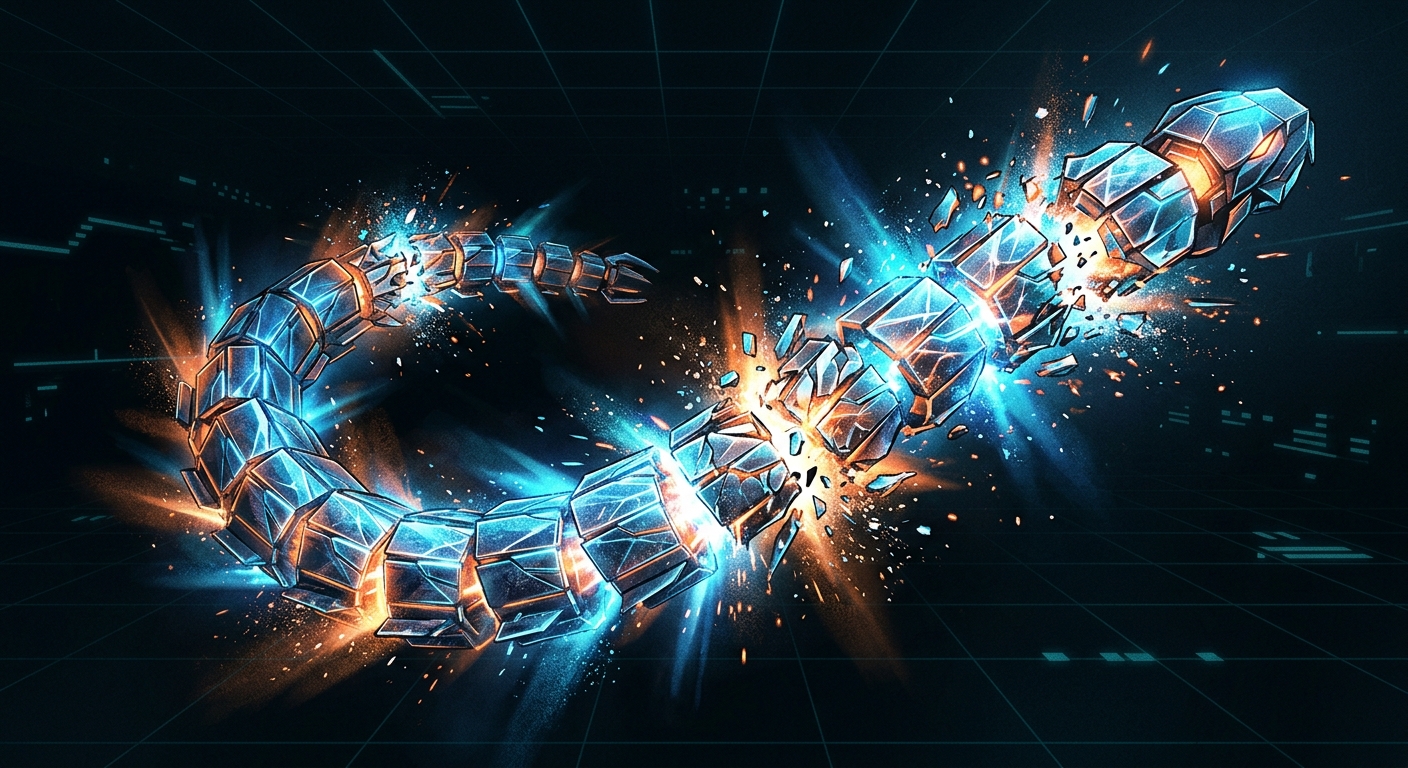
Segment Storm is one of those arcade shooters that looks simple in the first thirty seconds and then quietly humiliates you by wave five. The segment-destruction system is the core of everything: your score, your survival odds, and the gap between a forgettable run and a leaderboard position all flow from how well you read enemy bodies and chain your shots. This guide covers the mechanics that matter, in the order you will actually need them.
Understanding the Segment System
Every enemy in Segment Storm is built from discrete body segments, and the game tracks how many of those segments you destroy in a single unbroken action to calculate your base hit value. That distinction, unbroken action rather than simple kill, is the one concept that separates players who plateau at mid-scores from those who start threatening the top of any given leaderboard.
Hitting any segment that is not the head opens a chain window measured in fractions of a second. Your next shot must connect with another segment of the same creature before that window closes, or the chain resets to zero. The on-screen segment counter in the upper-left corner pulses amber during a live window and flips to red the instant it collapses. Watch that indicator obsessively during your first few sessions. It becomes peripheral vision eventually, but not before you consciously train yourself to see it.
The first homework assignment before chasing any real scores is learning segment counts per enemy class. Serpentoids carry nine segments. Drifters carry three. Those numbers determine which targets are worth hunting and which are only worth touching when they are already in your path.
Surviving the Early Waves
Waves one through four feel designed to bore you. They are not. They are a movement tutorial, and the specific thing they are teaching is the lateral dodge that becomes non-negotiable by wave six. Players who spend early waves standing still and shooting in a straight line are skipping the lesson and will pay for it later.
Stay near the horizontal midline of the playfield through wave four. That position lets you react equally fast to threats coming from above or below, and it keeps your shot lanes clear of the boundary walls. The moment you drift toward either wall, you cut off half your escape routes and compress your targeting angles.
Shield pulses recharge on a fixed timer, not on kill count. Using a pulse the instant it becomes available keeps the recharge clock running toward your next one. Hoarding a pulse for a desperate moment almost always means going into that desperate moment with one pulse instead of two. Wave five is where new players lose their first life most often, because enemy speed jumps sharply. Counterintuitively, slowing your own lateral movement at that point makes it easier to track fast-moving segment trains rather than chasing them across the field.
Building and Maintaining Combo Chains
A combo chain is not just a streak of kills. It is a specific sequence where each destroyed segment feeds multiplier into the next kill before the chain window expires, creating a cascade that can push a single wave's payout into six-figure territory. Understanding the difference between killing a lot of things and chaining a lot of segments is the conceptual jump that most players take several sessions to fully absorb.
The most reliable chain starter is a Serpentoid head shot. Landing it triggers a brief stun on the remaining body segments, which effectively pauses the chain window long enough for even moderately accurate players to clean up the tail. If you are building your first real chains, start there. Hit the head, then work the body methodically.
Cross-creature chaining is the technique that separates mid-tier runs from leaderboard ones. The idea is to kill the last segment of one enemy and immediately connect with the first segment of a nearby enemy inside the same window. Doing it consistently requires positioning yourself between two approaching trains before either one crosses into your half of the field. That means reading enemy paths several seconds in advance, not reacting to where they already are.
One rule applies without exception: losing a life resets your multiplier to one. Survival and chain-building are not competing priorities. They are the same priority described from two different angles. Any chain strategy that requires accepting unnecessary damage is a chain strategy that eventually costs you more score than it generates.
Advanced Positioning and Score Optimization
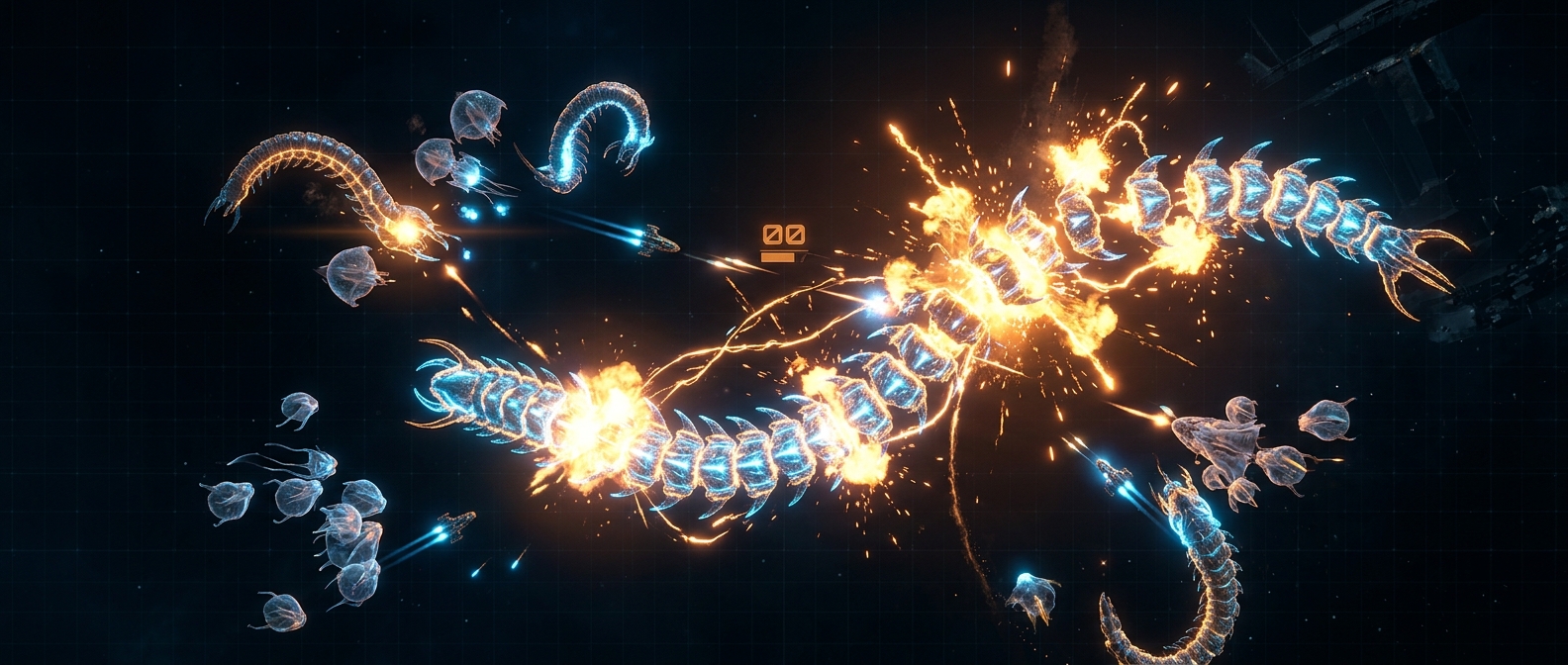
Players who reach consistent high wave counts tend to describe the playfield the same way: a set of imaginary horizontal lanes, with each incoming enemy train mentally assigned to one of them. That lane-based mental model prevents the cognitive overload that causes missed shots and broken chains at higher wave counts, where three or four segment trains can be active simultaneously from different angles.
The bomb collectible that appears on every fifth wave is almost never worth grabbing immediately. Let it drift toward the center of the field first. Detonating it there catches the maximum number of simultaneous segment trains inside the blast radius and can spark a cross-creature chain reaction that multiplies far beyond what a clean single-target run would produce. Patience with the bomb is one of the cleaner separators between players who are improving and players who have plateaued.
Frame-perfect head shots on Drifter clusters, the small triangular enemies that start appearing in groups of five on wave eight, yield disproportionate multiplier bumps. Each individual Drifter counts as a separate chain link despite their small size. Five Drifters in quick succession, hit cleanly, can extend a chain that would otherwise die and keep a multiplier alive into the next creature encounter.
After each session, the most productive review is not simply restarting and replaying. It is identifying which wave broke your longest chain and understanding why. Segment Storm's wave compositions are seeded consistently enough that a weakness on wave eleven will reappear in the same relative position across runs. Targeted practice on the specific enemy configuration that keeps ending your chains is faster improvement than running the full game repeatedly from the start without changing anything.
The game rewards the same qualities that any pattern-based arcade shooter rewards, including reading ahead, managing limited resources without hoarding, and treating positioning as a form of offense rather than a defensive afterthought. Those habits take a few sessions to build. Once they are there, the score ceiling starts looking a lot less fixed. If you want adjacent games that develop similar instincts, GoAndZap and Dot Chomper both train fast target prioritization, and Asteroids Remake shares the same field-reading logic in a different shape.
Sources

Priya Nambiar covers competitive gaming and emerging esports ecosystems for GoAndGame, with a particular focus on Southeast Asian scenes and grassroots tournament culture. She came up through community forums before moving into sports journalism, and that background shapes everything she writes.


