
Kuro Game launched Wuthering Waves in May 2024 with a premise that outpaced its execution. The movement felt exceptional, the combat carried real weight, but the world itself read more like a stage than a place. Version 2.0, titled All Silent Souls Can Sing, arrives roughly seven months later with Rinascita, a Mediterranean-flavored continent that is, by raw landmass, the largest single content drop the game has ever shipped. It also doubles as the game's PlayStation 5 debut. That combination of factors means this update has to do two jobs simultaneously: reward the players who stayed and make a case to everyone who is only just arriving.
A New Continent, A New Ambition
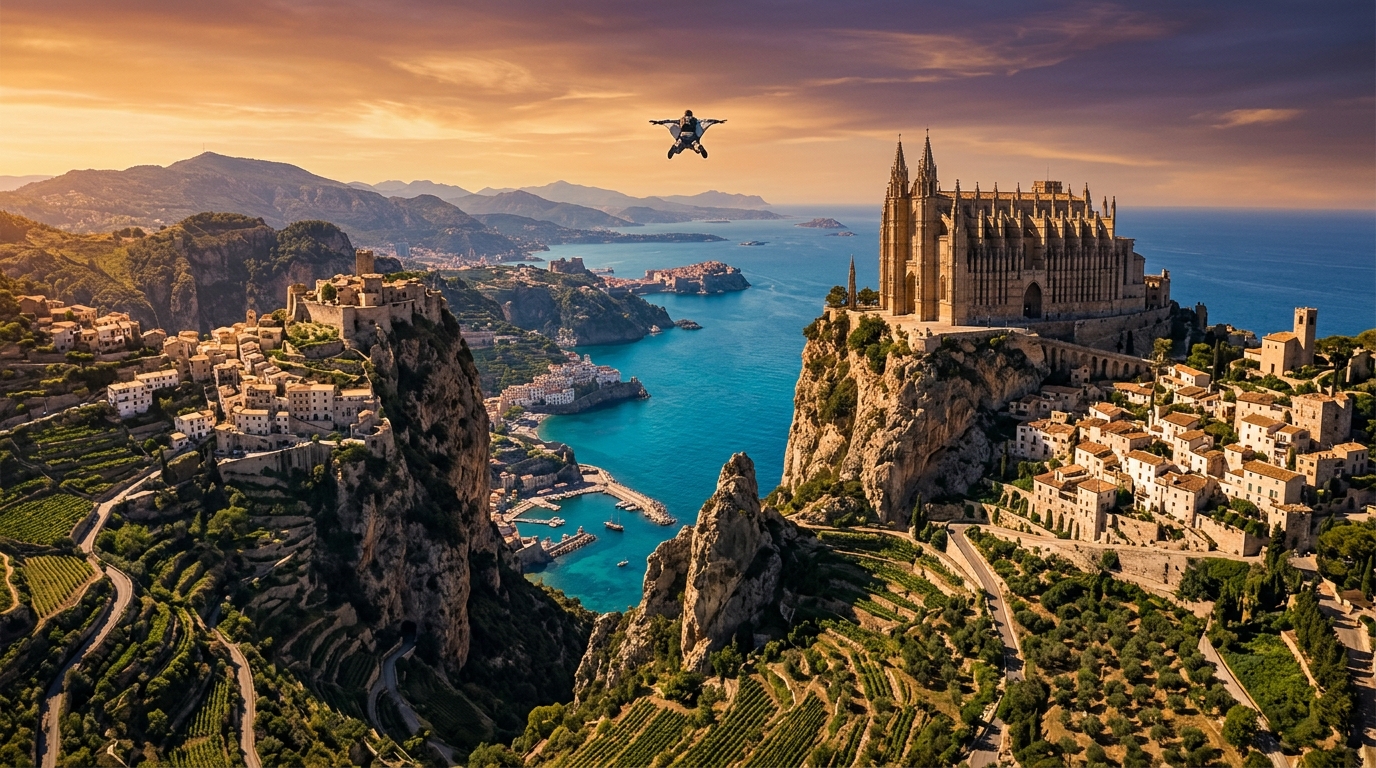
Rinascita is not incremental. Earlier zones expanded the game's map in pieces, adding dungeons and overworld content that felt adjacent to what already existed. This region reorients the whole project. The architecture alone signals intent: terraced vineyards climbing into sea cliffs, cathedral spires that function as actual traversal checkpoints, and towns where vertical space is the primary design axis rather than an afterthought. Kuro Game did not build this region and then retrofit the movement system into it. The region feels conceived from the movement system outward.
Noisy Pixel described the 2.0 update as the game-changing content this series needed to shine, and the framing holds when you consider what was missing before. Earlier versions gestured at a living open world but delivered a functional one. Rinascita closes that gap with environmental lore that sits in the geometry rather than in collectible text dumps, and with a region that rewards deviation from quest markers rather than punishing it. The cumulative effect is a place that feels worth exploring on its own terms, not just as a delivery system for the next story beat.
The update also marks the PS5 launch, giving the game its broadest audience yet. Players arriving fresh on console encounter a version of Wuthering Waves that has already been corrected and expanded by seven months of live feedback. That timing is not accidental.
Traversal and World Design: Climbing to New Heights
The movement system was always the game's strongest argument against competitors. Gliding, wall-running, and grapple mechanics existed at launch, but the original zones gave them limited terrain to work with. Rinascita fixes that with deliberate verticality. Finding a hidden resonance chain by overshooting a cliff edge, or stumbling into a subterranean vineyard cellar while chasing a grapple arc, feels less like accident and more like the map responding to player curiosity.
But Why Tho's coverage characterizes the 2.0 experience as a grand adventure precisely because the region's layout resists checklist tourism. That resistance matters. Open-world fatigue is real, and the genre's dominant solution, filling maps with icons until exploration becomes administrative work, does not fully apply here. Rinascita still has markers, but the space between them is worth traversing on foot, in the air, and along cliff faces that previous zones never offered. The distinction sounds minor and turns out not to be.
Noisy Pixel's impressions note that wandering through Rinascita's areas reveals thoughtful environmental details that immediately give the world a broader and richer atmosphere, with a calm opening vibe giving way to a growing undercurrent of unease as the Sentinel Imperator's silence becomes central to the story. That tonal shift is built into the geography as much as the script.
Narrative Maturity and the Main Story Thread
The subtitle is doing actual work. Rinascita's main quest moves into territory the game previously avoided, addressing collective guilt, the erasure of cultural memory, and what gets lost when a society decides to call something a renaissance. Earlier story chapters leaned on hero-versus-calamity framing that is not bad so much as familiar. The 2.0 writing is more interested in the factions caught between catastrophe and reconstruction.
But Why Tho's review points specifically to the Montelli Family as a strikingly different kind of ally. Where previous comrades felt wholly good-natured, the Montellis never quite feel truly good. Their adherence to family over all else, and their preference for violent solutions, gives the moral architecture of the story more load-bearing weight than the game has carried before. The shift from external threat to internal strife, from frontier survival to civic corruption, creates another layer of change that the narrative earns rather than asserts.
Voice performance quality has improved across the board, and the new protagonist-adjacent characters benefit most from that. They do not feel like archetype placeholders. The 2.0 writing represents a creative confidence that was less visible in earlier chapters, and whether it holds across future updates remains to be seen, but the baseline has moved.
Combat Evolution and Character Roster Additions
The two new five-star Resonators, Carlotta and Roccia, are explicitly designed around the region's verticality and its combat rhythm. Carlotta's pistol-and-crystal style offers quick, dynamic attacks that keep battles from stalling. Roccia pairs with a chest-mimic companion named Pero, creating combo opportunities that feel both fun and mechanically distinct from anything already in the roster. Noisy Pixel notes that even players not chasing optimal builds will find both characters a joy to use, which matters for a game where the gacha structure can otherwise make new characters feel like content locked behind a grind.
Beyond the new characters, the underlying combat system receives tuning that reduces punishing animation locks and improves parry window consistency. These are corrections that veteran players had been requesting since launch. They matter most to new PS5 players who arrive without that historical frustration, because the system they encounter is simply more legible. New weapons including The Last Dance and Tragicomedy, along with Echo additions such as Dragon of Dirge, expand build options without overwhelming players new to the echo system.
Gacha economy adjustments accompany the update as well, softening resource costs enough that the barrier to experiencing new characters has dropped to a point where the game seems more interested in you playing it than in you grinding toward it. That shift in apparent philosophy is small on paper and meaningful in practice.
Technical Performance and Platform Parity
The PlayStation 5 version integrates haptic feedback and adaptive trigger support with specificity. Weapon-switching and Resonance Skill activation translate into distinct tactile events rather than generic rumble patterns. PC players do not have access to this, and that asymmetry is worth noting plainly: Wuthering Waves on PS5 is not a port made tolerable. It is a version that uses the hardware's features in ways that change how the combat reads moment to moment.
Frame-rate stability across platforms holds in Rinascita's densely populated environments in a way it notably did not in some original launch zones, particularly the Tacet Discord areas that caused persistent performance complaints on mid-range PC hardware in 2024. The improvement is not subtle. Cross-save functionality between mobile, PC, and PS5 removes what was a genuine commitment anxiety for players deciding how deeply to invest in progression. That friction is gone now, and its absence lowers the stakes of platform choice without changing what the game actually is.
Version 2.0 does not fix everything. The gacha structure remains what it is, and Rinascita's ambition will eventually meet another content deadline that tests whether the quality holds. But as a statement of direction, it is the clearest one Kuro Game has made. The world finally matches the movement system that always deserved a better stage.
Sources

Priya Nambiar covers competitive gaming and emerging esports ecosystems for GoAndGame, with a particular focus on Southeast Asian scenes and grassroots tournament culture. She came up through community forums before moving into sports journalism, and that background shapes everything she writes.


