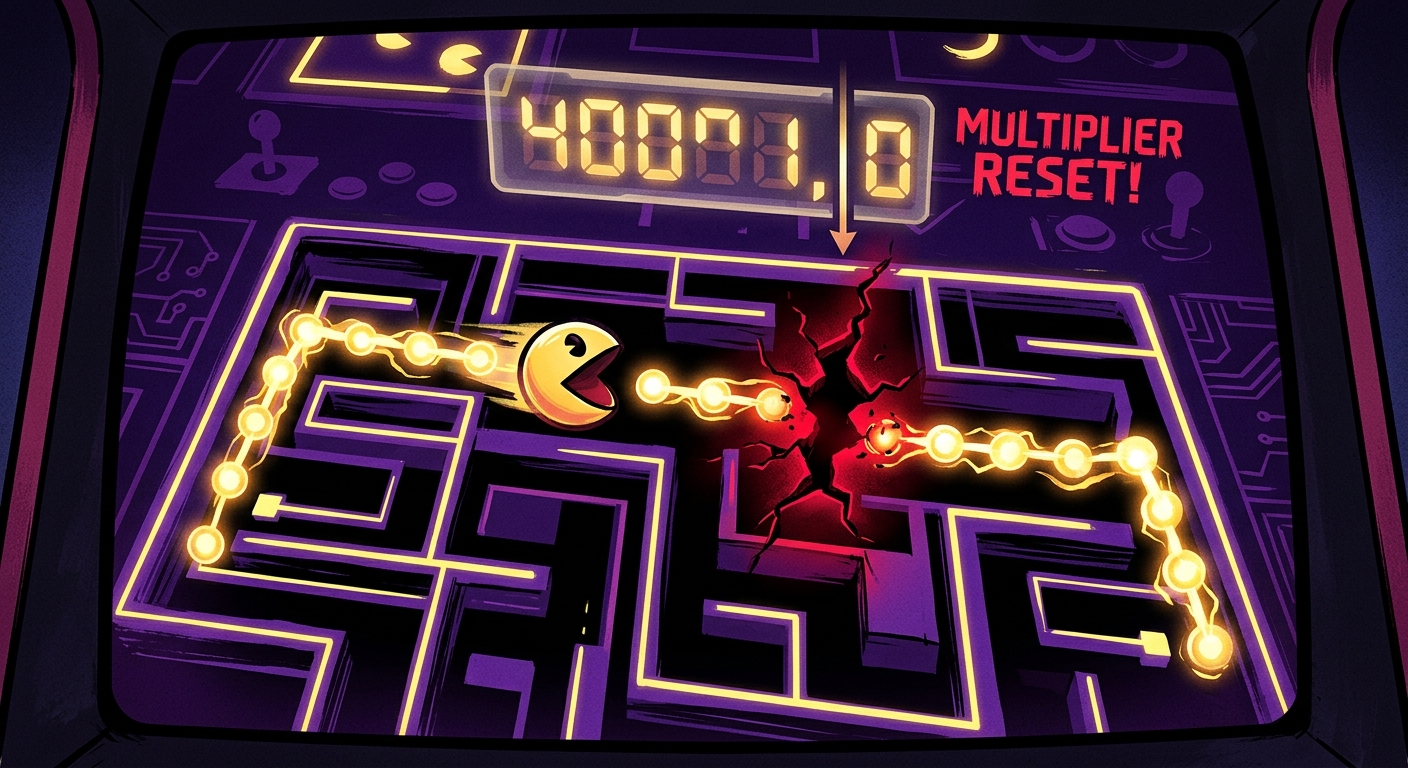
Your score in Dot-Chomper is not stalling because you are slow. It is stalling because the game's scoring engine punishes inconsistency far more severely than it rewards raw speed, and most players never realize the difference until they have already spent hours grinding the wrong habits into muscle memory. This guide breaks down exactly how the system works, then walks through the techniques that competitive players use to push from respectable runs into leaderboard territory.
How the Dot-Chomper Scoring Engine Actually Works
The game tracks two parallel counters at all times: raw dots consumed and chain-streak length. Those two numbers are not simply added together. They feed a polynomial formula that the game resolves at the end of each stage, which means a player who finishes quickly but breaks their streak even once will almost always score below a player who took a few extra seconds and kept the chain intact. The multiplier attached to each individual dot scales with how many consecutive dots you have collected without a gap in movement, so a single hesitation mid-corridor can cut a run's theoretical ceiling in half before you even reach the first junction.
That distinction, speed versus consistency, is the foundational insight. Everything else in this guide builds on it. If you internalize nothing else, internalize that the chain multiplier is the score, not the dot count.
Loop Prioritization and Board Compression
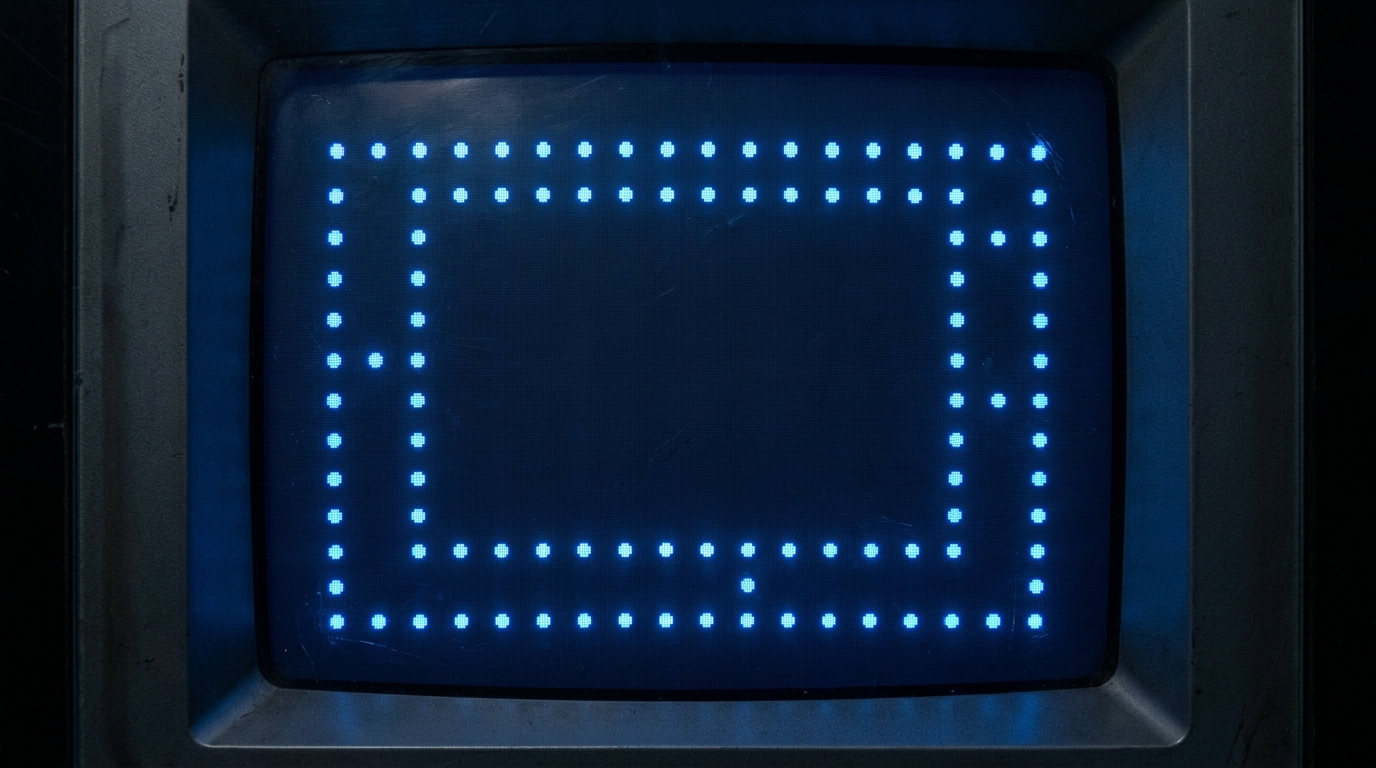
The single highest-yield tactic in the game is the closed-loop clear. Navigating a full rectangular path through a color cluster consumes every dot in that region simultaneously and triggers a burst bonus that can equal or exceed the value of a dozen individually collected dots. Loop recognition is as close to a shortcut as the game offers, and experienced players train themselves to spot loop geometry before they start moving, not during.
Board compression is the less glamorous technique that makes loops consistently available. Rather than grazing across the board indiscriminately, high-level players target one color at a time. Removing a color concentrates the remaining dots into tighter formations, which are geometrically easier to loop and visually easier to read under pressure. The approach feels counterintuitive early on because it means passing up dots that are right in front of you. The payoff is a cleaner board later in the stage when the multiplier windows open and every decision carries heavier consequences.
Compression also serves a defensive purpose. Dot-Chomper's difficulty ramp works primarily through visual clutter. A crowded board baits players into sloppy diagonal movements that break their streak. Keeping the board lean reduces that cognitive load and makes it harder for the game to trick you into a chain-break you did not intend.
Multiplier Windows and When to Sacrifice Speed
Each stage contains between two and four multiplier windows, brief intervals where the internal timer pauses and the per-dot value spikes. Learning exactly when each window opens is the difference between a solid run and a leaderboard entry. The timing is fixed per stage, not randomized, which means it is learnable and worth the time to learn.
During a window, the correct play is to slow down deliberately. Take slightly longer routes. Double back through already-cleared corridors if doing so allows you to enter the next high-density cluster at the precise moment the window closes. The bonus collected during that window will outweigh any time penalty the game applies at stage completion. Players who try to sprint through multiplier windows because they feel slow are leaving a significant portion of their potential score on the table every single run.
Outside of windows, the calculus flips. Aggressive speed becomes the priority. Later stages include dot regeneration mechanics, where cleared clusters slowly repopulate, and board compression work can be undone if you linger too long in low-value areas. Move fast enough to prevent enemy patterns from resetting and to lock in your loops before regeneration reverses them.
Enemy Pattern Reading and Threat Management
Dot-Chomper's antagonists operate on fixed behavioral cycles. Every high-level optimization strategy depends on having those cycles memorized well enough to treat enemy positions as a predictable resource rather than a hazard. That framing shift matters. Players who see enemies as obstacles route around them reactively and break chains constantly. Players who see enemies as predictable elements route with them proactively and barely break at all.
The most efficient approach is to move in an enemy's wake rather than perpendicular to it. Following a patrol route keeps you safe and simultaneously herds you through dot clusters in an order that naturally sets up loop opportunities. You are using the enemy's movement to do your path-planning for you.
When density forces a route deviation, one rule applies: do not break your chain to avoid a threat you could time around instead. A chain-break costs more expected score than the half-second it takes to wait for a patrol gap. Players who plateau in mid-tier almost always do so because they are making reactive, chain-breaking avoidance moves in situations where a brief pause would have preserved the streak and cost almost nothing. Games like Segment Storm and GoAndZap share a similar lesson about reading patrol logic before committing to a path, and time spent in either will sharpen the instinct.
Advanced Run Structure and Long-Session Stamina
Top scorers structure sessions around what competitive players call a clean-run block: a predetermined sequence of stages played in a specific order, designed to carry a high chain multiplier from one level's exit directly into the next level's entry. The game treats stages as separate units, but the multiplier state is not fully reset between them. Stacking bonuses across stage transitions is one of the less documented mechanics in the community, and it rewards players who plan their session as a single continuous run rather than a series of isolated attempts.
That inter-stage continuity requires one specific discipline: resist chasing stray dots in the final seconds of a stage. Arriving at the exit with a preserved streak is worth more than the handful of points those outlier dots would add. It is a discipline that requires deliberate practice because the instinct to vacuum up every visible dot is strong, and the game places those stragglers in locations that feel irresistible to collect.
Session length matters more than most players acknowledge. Dot-Chomper's later stages introduce faster enemy cycles and denser regeneration precisely when pattern-recognition speed is degrading from fatigue. Decision quality erodes silently during extended sessions, and the errors it produces look like bad luck rather than tiredness. Serious optimization work should happen in focused 20-to-30-minute blocks. Two clean, rested blocks will produce better scores than a single two-hour marathon every time the data is actually tracked.
The chain multiplier is the score. Dot count is just the material you work with.
Put the techniques together in sequence: compress the board early by targeting single colors, recognize loop geometry before you move, wait out multiplier windows instead of sprinting through them, read enemy cycles as routing guides rather than obstacles, and structure your sessions around streak continuity rather than raw collection volume. None of these are individually complicated. The difficulty is executing all of them simultaneously under the time pressure and visual noise that the game escalates precisely to stop you from doing that. Which is, of course, the whole point.
Sources

Priya Nambiar covers competitive gaming and emerging esports ecosystems for GoAndGame, with a particular focus on Southeast Asian scenes and grassroots tournament culture. She came up through community forums before moving into sports journalism, and that background shapes everything she writes.


