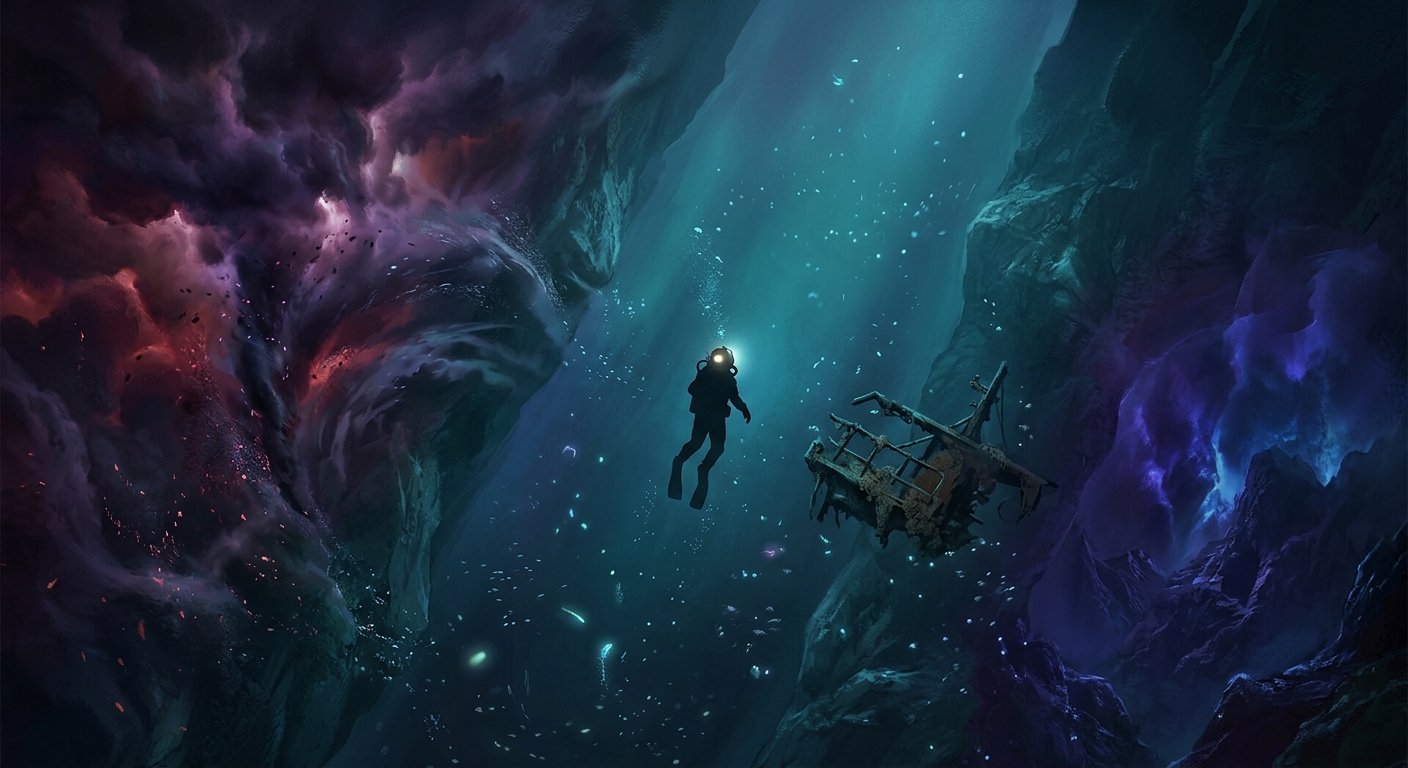
After a hard dive, Star-Dive gives you a corridor and a little time. The warning colors recede. The music loses its percussion. Something small and luminous drifts past the route ahead. You can move on immediately, but the game seems to ask for another second of attention. That second changes how the next plunge feels.
The pause between plunges
Star-Dive builds its rhythm from alternating demands. A dive asks for quick decisions, then a calmer navigational stretch lets the player regain a sense of direction. The passage has a practical job: after tracking hazards and reacting at speed, you need room to notice where you have arrived. Without that interval, one encounter would run straight into the next, and the depths would become little more than a sequence of threats.
The quieter stretches give the environment time to register. Slow parallax movement makes distant shapes feel far away, while a piece of wreckage or a passing creature can hold the eye without becoming a target. These details are easy to miss when playing for speed. That makes slowing down a choice with its own reward: a clearer impression of the place you have fought your way into.
When atmosphere becomes a reward
During danger, high-contrast color helps separate urgent information from the surrounding water. When cool teals and deep navy take over, the change feels almost physical. You can read the shift before you have fully identified why the pressure has eased. Star-Dive uses color to tell you when to scan for danger and when to look beyond the immediate path.
Sound completes that handoff. A thinner melodic line leaves room for the ambient wash, so the return of a hard beat has force. The effect depends on restraint. If every passage carried the same volume and urgency, the soundtrack would have fewer ways to surprise you. Quiet becomes something the player has earned, and the next burst of noise borrows its impact from those seconds of relative calm.
The story in the water
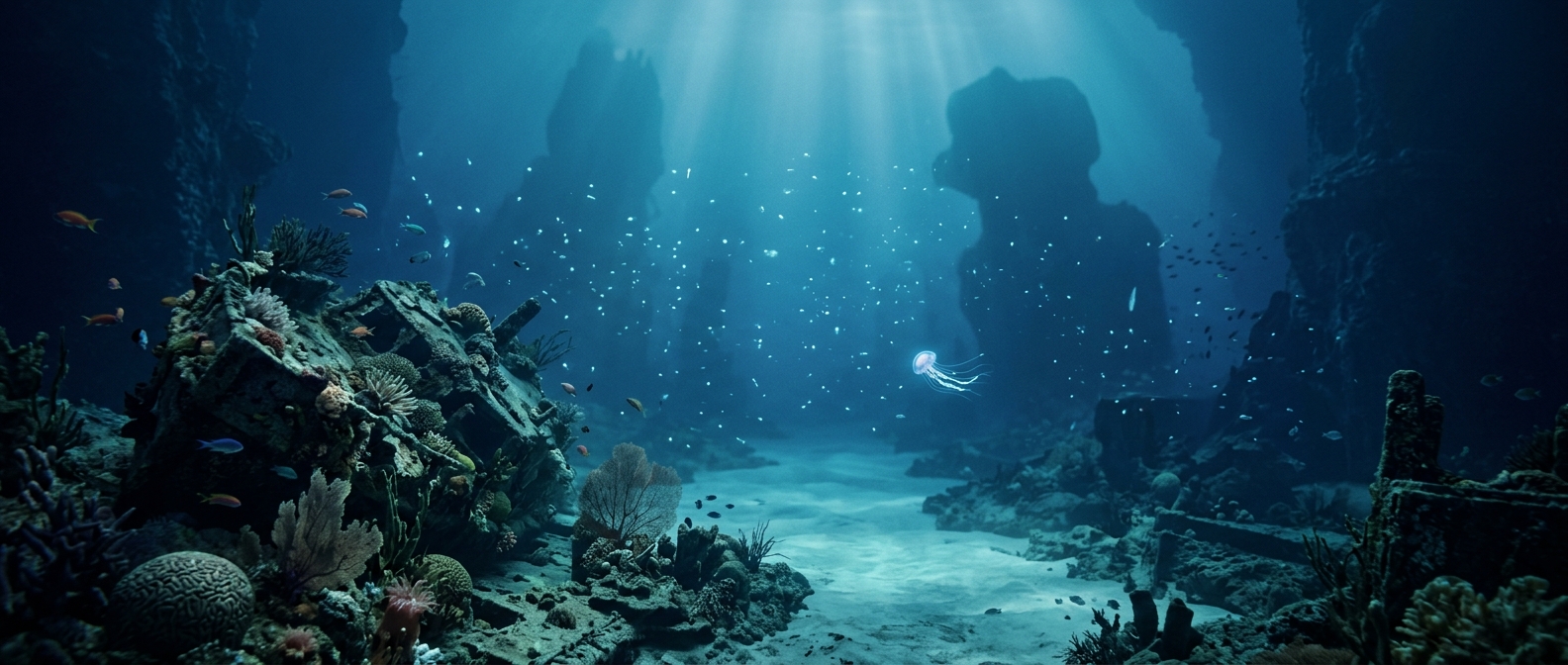
The slower passages also change how Star-Dive can tell a story. Wreckage is easier to read when no immediate hazard is demanding attention. The position of a broken structure can suggest what happened there; the movement of a harmless creature can suggest what has continued since. None of these observations requires a dialogue box, but they do require the player to remain present for a moment.
That leaves some of the narrative in the player’s hands. A quick run may leave an impression of color and motion. A slower one can turn the same route into a series of questions: who built this, what damaged it, and why is life gathering around it now? Environmental storytelling cannot guarantee that every player sees the same details. Its strength is that discovery feels tied to looking, rather than to reaching the next mandatory explanation.
What interrupts the rhythm
There is a useful distinction between a pause the world creates and one a menu imposes. A quiet corridor keeps you in the water, with the sounds and shapes of the game still working on you. An upgrade or reward screen asks for a different kind of attention. When those screens arrive too often, they can break the connection between a dangerous sequence and the stillness that follows it. Pacing includes everything that happens between encounters, not just the encounters themselves.
It is tempting to explain Star-Dive’s calmer stretches as a way to manage player stress, but the more immediate effect needs no measurement. After several seconds without a fresh alarm, a sudden percussive cue stands out. After time spent looking into the distance, a nearby threat feels near again. The game allows the senses to reset, then puts that renewed attention to work.
Making room in an arcade rhythm
Arcade action often prizes continuous pressure. That tradition can produce exhilarating minutes, but longer sessions give designers another option: vary the intensity without losing momentum. Star-Dive’s corridors do this by preserving movement while relaxing the demand for instant response. The player is still traveling, still watching, and still making small decisions about where to direct attention.
That is the quiet moment’s real contribution to the dive. It gives the next hazard a place to arrive from and gives the last one somewhere to settle. A dim shape sliding behind the player may stay in memory longer than an explosion because the game allowed enough space to see it. Then the beat returns, and the descent feels dangerous all over again.
Sources

Eliot Reed writes about the intricacies of virtual worlds, blending analysis with storytelling. As a house writer for GoAndGame, he delves deep into game mechanics and narratives, offering thought-provoking insights for players and developers alike.


