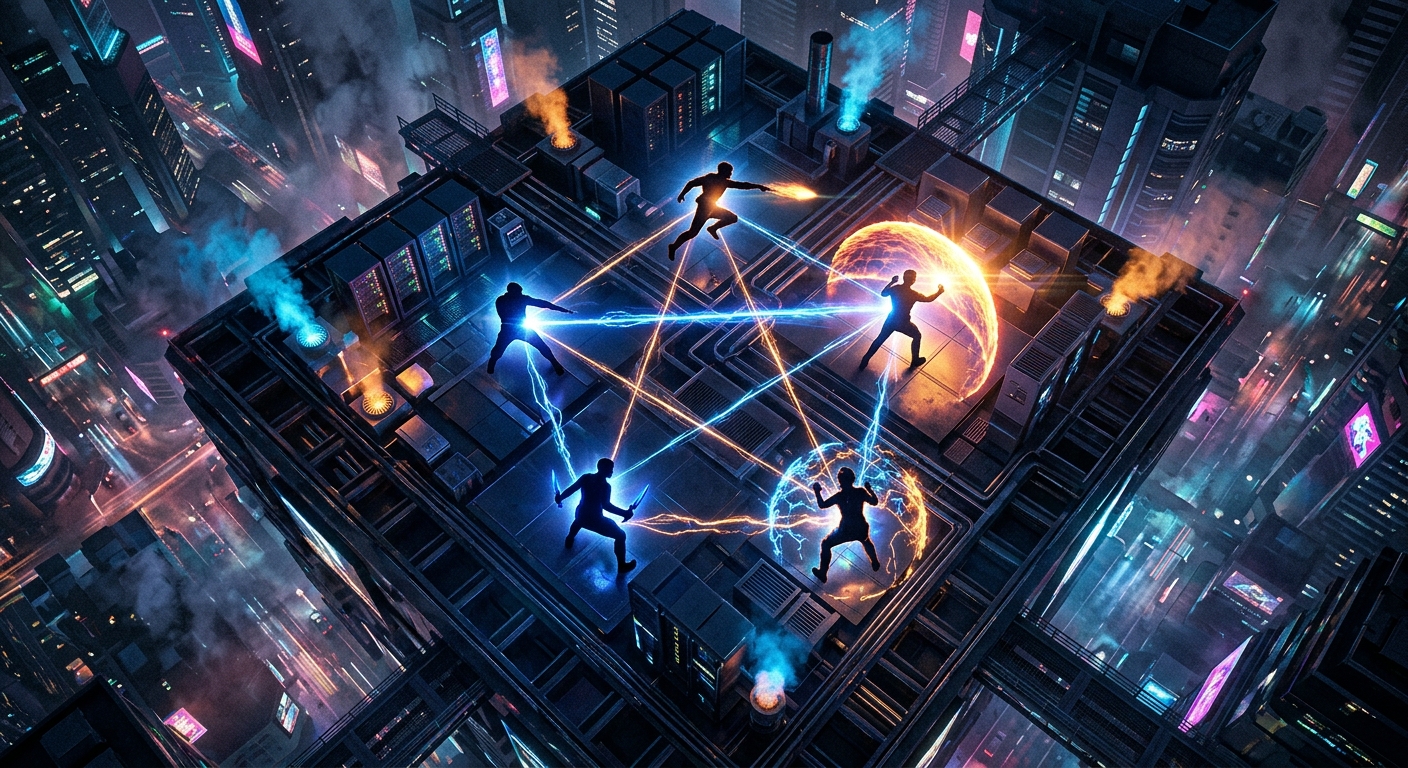
From tank-support pairings to role-locked communication, coordinated play separates winning teams from respawning ones in Overwatch 2. Understanding not just the mechanics, but the relationships between heroes can elevate your team’s game.
Understanding Role Identity Before the Match Begins
Every player queuing into Overwatch 2 selects a role before the game starts, but understanding its function within a five-person unit is crucial. This distinction separates casual players from coordinated ones.
Tanks are not just damage sponges; they are spatial architects of the battlefield who dictate the fight's flow. Their positioning allows supports to maintain sightlines while damage dealers can operate safely within their optimal ranges.
Supports carry a dual burden that many underestimate. They must project healing uptime onto fragile allies while simultaneously providing counter-pressure to deter enemy dives. This balancing act necessitates precise resource management and sharp positioning.
Damage heroes span a spectrum from close-range assassins to long-range snipers. Understanding their roles determines whether they engage at flanks, chokes, or from high ground, shaping the entire team’s strategic positioning
Tank-Support Synergies That Define the Current Meta
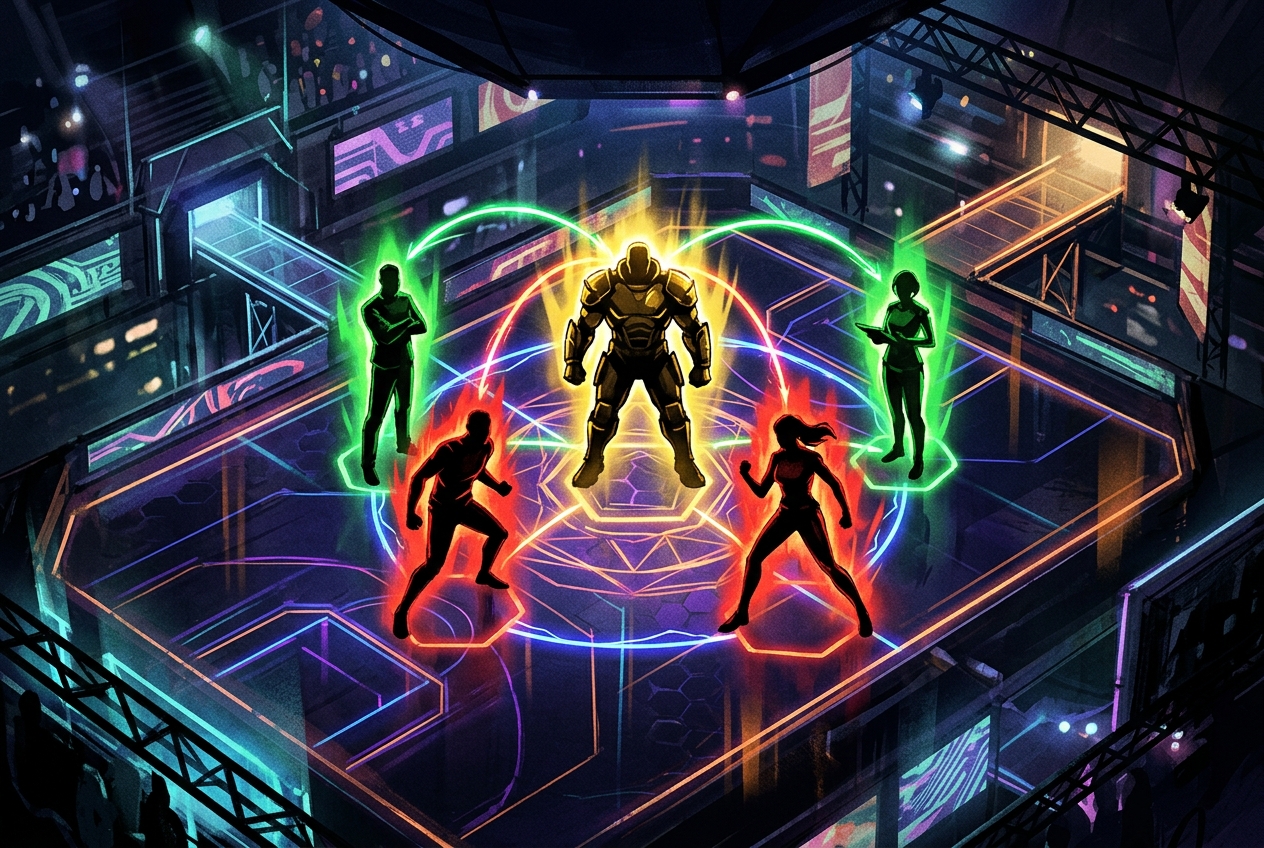
The tank-support relationship forms the backbone of any Overwatch 2 team composition. Certain pairings create synergy and tactical feedback loops potent enough to require specific counter-picks from opponents.
Consider the classic synergy of Reinhardt and Ana. Reinhardt's Earthshatter sets up an easy follow-up for Ana's sleeping targets, while his charge, enhanced by Ana's Nano Boost, turns a risky play into a potential team wipe. This illustrates the importance of cooldown communication.
In contrast, Orisa paired with Lucio fosters a sustained siege approach. Orisa’s Fortify creates a solid frontline while Lucio’s speed aura allows for fluid team repositioning. This enables teams to contest points aggressively, retreat, and then re-engage efficiently.
Winston and Zenyatta symbolize the dive archetype. Winston isolates priority targets with his leap and barrier, while Zenyatta’s Orb of Discord amplifies burst damage. This combination relies heavily on clear communication about timing to maximize effective dives.
In-Match Communication: Callouts, Cooldowns, and Tempo
Successful play in Overwatch 2 hinges on effective communication, specifically, managing cooldowns, sharing enemy locations, and coordinating target focus. This exchange of information is vital for success.
Effective callout culture requires brevity; clear announcements such as "sleep ready" or "Nano in five seconds" provide concise information without unnecessary detail. Lengthy explanations can create confusion and slow down gameplay.
Cooldown tracking extends beyond personal abilities. Players should flag critical enemy ultimates, allowing teams to bait or disengage effectively before a fight. Recognizing enemy ultimate timings helps to maintain an upper hand during engagements.
Understanding tempo, or the rhythm of movement, is equally important. A team that moves together as one organism places enemies in reactive positions, disrupting their planned strategies and forcing them into unfavorable situations.
Ultimate Economy and the Art of the Trade
In Overwatch 2, ultimates are currencies, not panic buttons. Teams that treat them as investments tend to out-trade opponents who impulsively use them. Effective management of ultimate abilities is a key aspect of strategy.
Combo ultimates require pre-fight agreements and discipline. An example would be pairing Zarya's Graviton Surge with Hanzo's Dragonstrike. Clear communication of when to engage ensures optimal effectiveness.
Defensive ultimates like Lucio's Sound Barrier should be banked for known enemy combos rather than used as a reaction to out-of-position players. This strategic restraint can lead to exchanges favoring the well-prepared team.
The psychological aspect of ultimate economy is significant. Teams that visibly hold onto ultimates create pressure, causing opponents to overcommit and waste resources. This mental game can shift the outcome even before an engagement begins.
Adapting Mid-Match: Counter-Picking and Compositional Pivots
A composition that dominates initially can falter quickly if not adjusted. Coordinated teams welcome mid-match assessments and are willing to adapt rather than cling to a failing strategy.
Counter-picking should address specific issues. Instead of reacting emotionally to a loss, players could switch to Sombra against an oppressive enemy Genji or opt for Sigma when countering a Reinhardt setup. Clear communication during these switches is vital to maintain team synergy.
Successful teams view hero select screens as opportunities for collaborative strategy discussions, allowing players to articulate their intended roles and objectives. This creates a shared understanding of the new composition’s win conditions.
Sources
- Overwatch 2 Team Synergies: Tank-Support Combinations | Jynx
- Overwatch 2 Strategy Guide · Cosmo Strategy Guides
- Best Overwatch 2 Team Comps That You Should Try | OW2 Winning Team Combos
- Overwatch 2: Best Team Comps You Should Try
- Overwatch (2023 video game) - Wikipedia
- Overwatch (2023 video game) - Wikipedia
- Composições de equipas poderosas (exemplos da meta de 2025) - La Esports

Eliot Reed writes about the intricacies of virtual worlds, blending analysis with storytelling. As a house writer for GoAndGame, he delves deep into game mechanics and narratives, offering thought-provoking insights for players and developers alike.


