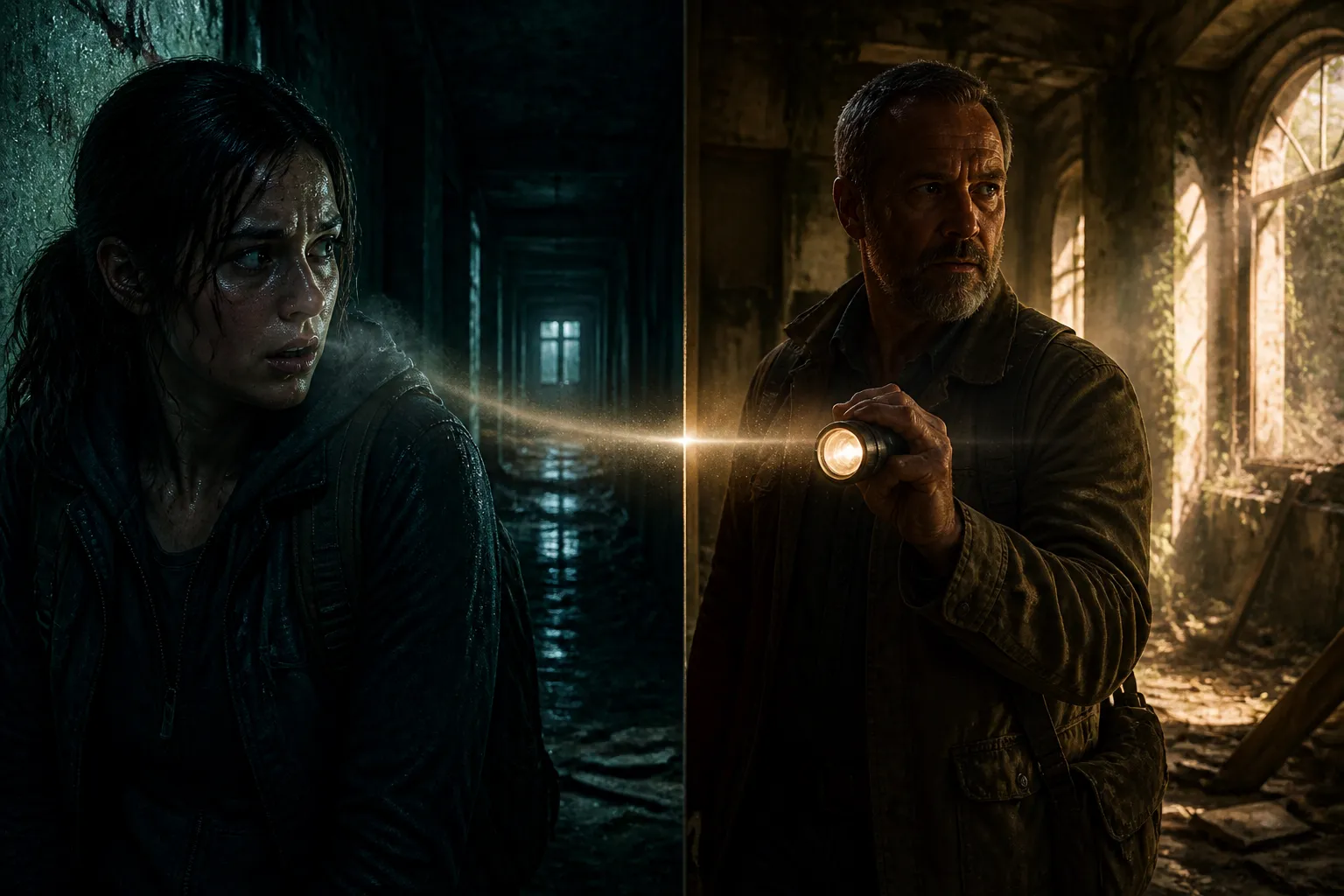
A frightened breath can change the size of a room. A steady hand can make the same room feel manageable, even if the danger has not moved. Resident Evil Requiem builds its pitch around that difference. Grace and Leon bring competing definitions of fear to the story: one rooted in vulnerability, the other in the possibility that experience will fail when it matters most.
- Grace's wager: Make the player attend to breath, light, and the feeling of being exposed.
- Leon's wager: Let competence invite danger, then ask how much it can withstand.
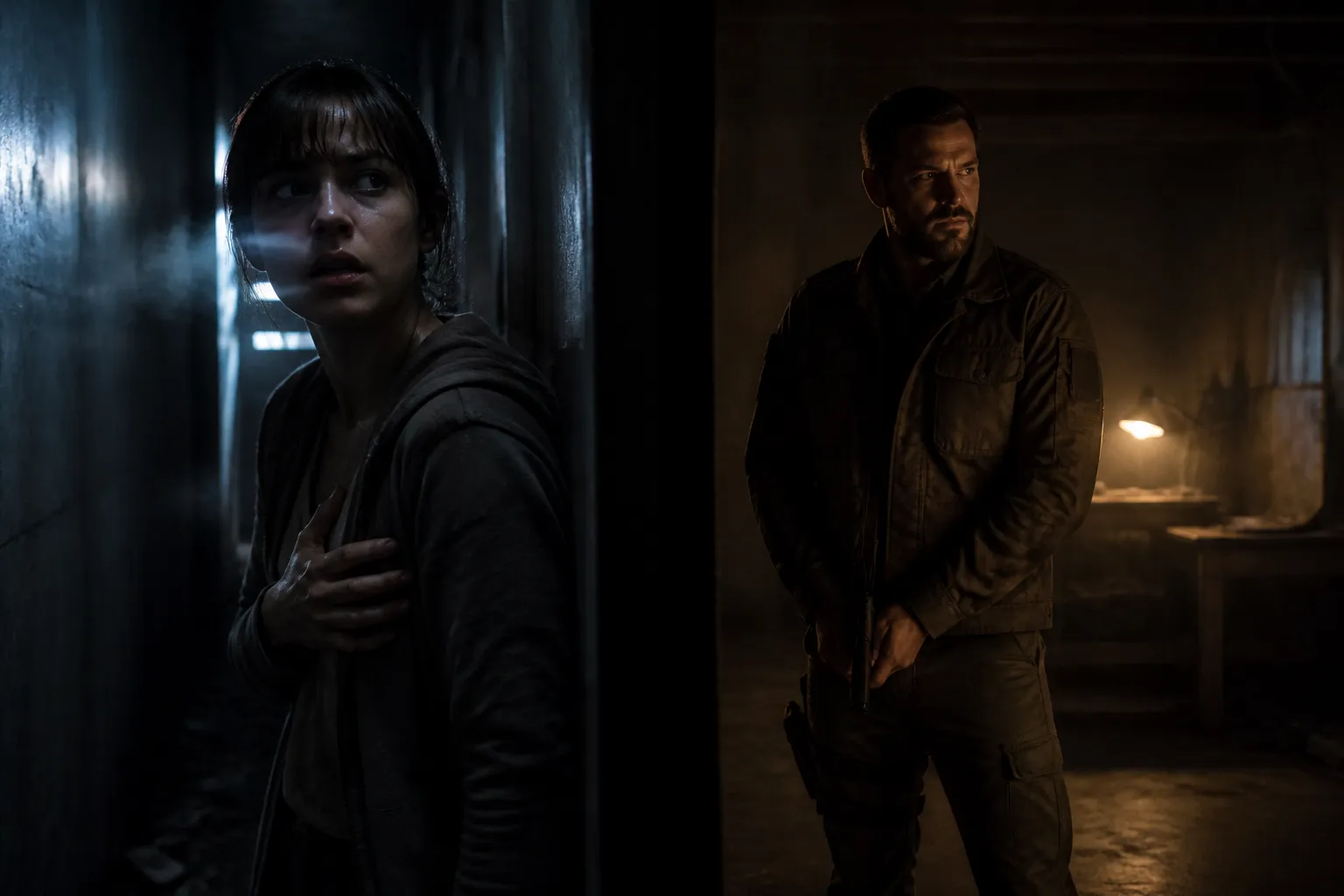
- Watch the pacing: Do Grace's and Leon's sections give dread and action room to develop?
- Watch the handoff: When their investigations meet, does each character change how the other feels?
Two protagonists, two theories of fear
Capcom's producer describes the dual-protagonist structure as a way to deliver both horror and action. The ambition is summed up in a promise to join “the most terrifying horror and the most thrilling action”. That is a design claim, not yet evidence that the two modes sit comfortably together. The interesting part is how plainly the characters announce the experiment.
Grace is presented as the series' most timid protagonist. Leon returns as a seasoned veteran, ten years after Resident Evil 6. Those descriptions establish different expectations before either character faces a creature. With Grace, fear may begin in the anticipation that she cannot control what comes next. With Leon, it may begin when a person accustomed to surviving finds a threat that resists his usual answers. One approach asks us to share a character's alarm. The other can make us fear the moment confidence runs out.
How Grace's fear is built
Grace's urgent breathing is more than a cue that she is frightened. It gives fear a rhythm the player has to hear. Lighting effects serve a similar purpose: what falls outside the visible space can occupy more of the imagination than what stands in front of her. According to the account of Capcom's December 2025 briefing, both details are central to her horror design. They position vulnerability as something the game can communicate moment by moment, rather than simply declare in dialogue.
That makes Grace a test of restraint. A timid protagonist could give players a powerful point of identification if the story allows her to respond and change. She could also become a shorthand for helplessness if every frightened breath tells us what to feel. The available descriptions establish her disposition but offer little detail about the shape of her storyline. We do not yet know how long her quieter stretches last, or how their pacing compares with Leon's. Those intervals will matter as much as any sudden encounter.
How Leon's action changes the experience
Leon still works for the Department of Security Operations and carries a secret that the briefing does not explain. His history makes action feel like a reasonable expectation. He has the bearing of someone who might enter a dangerous place on purpose, while Grace's characterization makes entering it sound like an ordeal. Yet a veteran can bring his own kind of unease to a horror story. If he knows what such investigations can cost, every decisive move might carry a private calculation.
Grace and Leon meet while investigating unexplained deaths across the United States. Their encounter gives the two styles a shared problem. It also raises the question of what each can see in the other that players cannot yet see alone. Leon's undisclosed secret could add weight to his action scenes, but its contents and effect on the story remain unknown. For now, it is more useful as a question than as an answer.
Raccoon City appears again, roughly 30 years after Resident Evil 2 and Resident Evil 3. That distance makes the setting a place where memory can work differently for the two protagonists. A veteran's arrival may carry the burden of history; Grace's fear may be closer to the immediate experience of standing there. How the game uses the city, rather than its return alone, will decide what that contrast amounts to.
Choosing where to stand
Players can switch freely between first-person and third-person views, using a transition technique introduced in Resident Evil Village. That choice concerns the camera, not a confirmed ability to switch freely between protagonists. First person can narrow attention to what Grace sees and hears; third person can keep a character's body in view as a reminder of their vulnerability or control. Those are possibilities suggested by the presentation, not measured effects of play. The same encounter might feel different from each distance.
The described personalities offer a practical guide to the two characters: Grace is the likely draw for someone seeking slower horror, Leon for someone drawn to action. Difficulty is a separate choice. Capcom says the game has settings intended to accommodate a range of experience, and the easiest adds aim assistance for firearms. The briefing does not name the other settings or explain their effects. Aim assistance may make a shot easier to land, but it says little by itself about the tension before that shot.
What the promise still has to prove
These details come from developer statements and coverage of a publisher-hosted briefing, not independent hands-on assessments. The briefing gave February 27, 2026 as the release date; the supplied reporting does not establish whether that date later changed. It also kept creature descriptions limited, although it mentioned zombies, chainsaw-wielding zombies, and creatures that move across walls and ceilings. The developers argued that meeting them in play would preserve immersion.
That withholding fits a game asking players to fear different things through different people. A surprise creature may unsettle Grace because she seems unready for it. It may unsettle Leon because readiness suddenly looks insufficient. The open question is how often Requiem earns both reactions, and what happens when its two protagonists finally have to face the same danger together.
Sources

Alexandra Rivet explores the intricate interplay of games and culture for GoAndGame. A passionate storyteller, she delves into narratives with depth and curiosity. Her pieces often highlight the stories behind the pixels.


