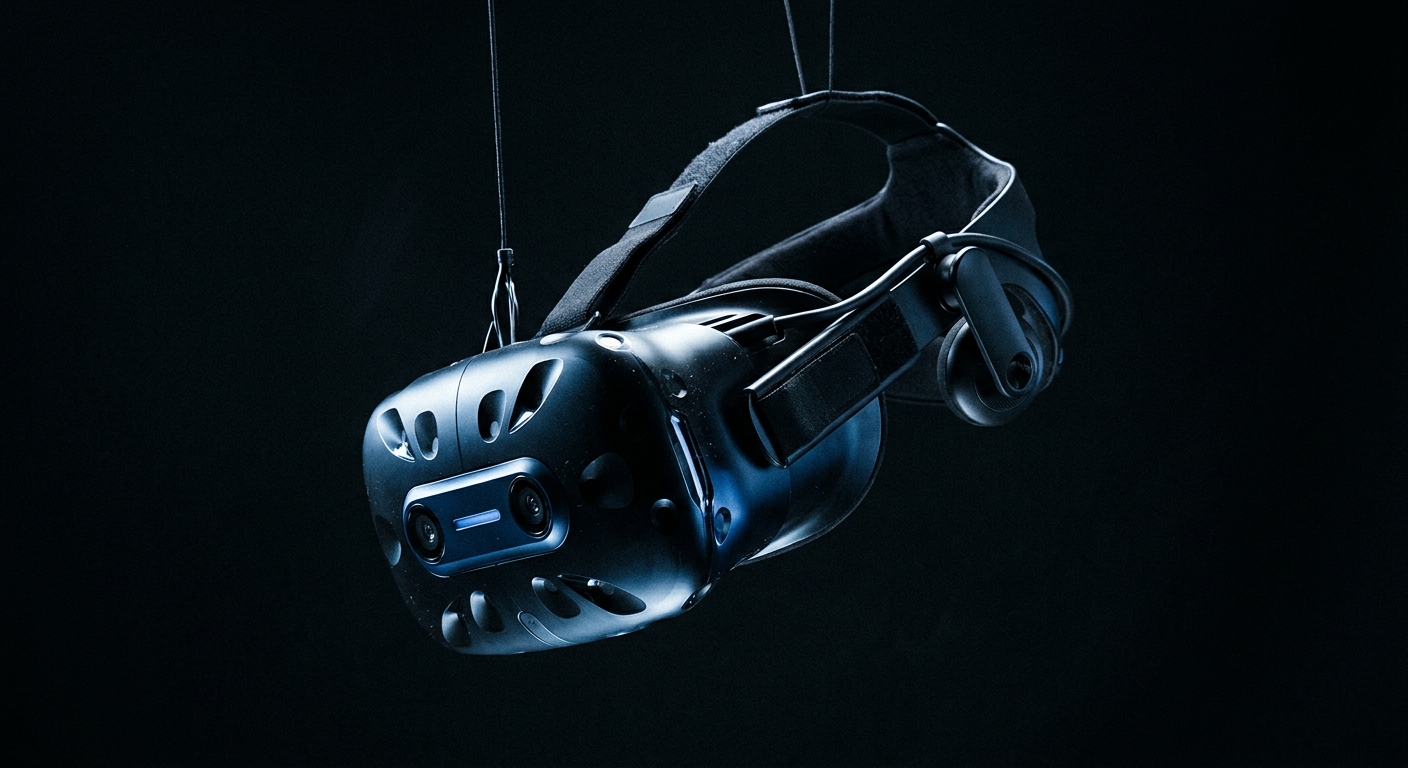
The Vortex VR headset arrives with considerable fanfare, promising a new era of immersive gaming. Its marketing materials paint a picture of untethered freedom and unparalleled virtual engagement. Yet, a closer inspection of its physical architecture and design choices reveals a more complex reality. This device, like many before it, raises pressing questions about the industry's commitment to genuine user comfort and inclusive access for all players. We must look beyond the initial gloss to understand the true cost of its design decisions.
Weight, Fit, and the Front-Heavy Problem
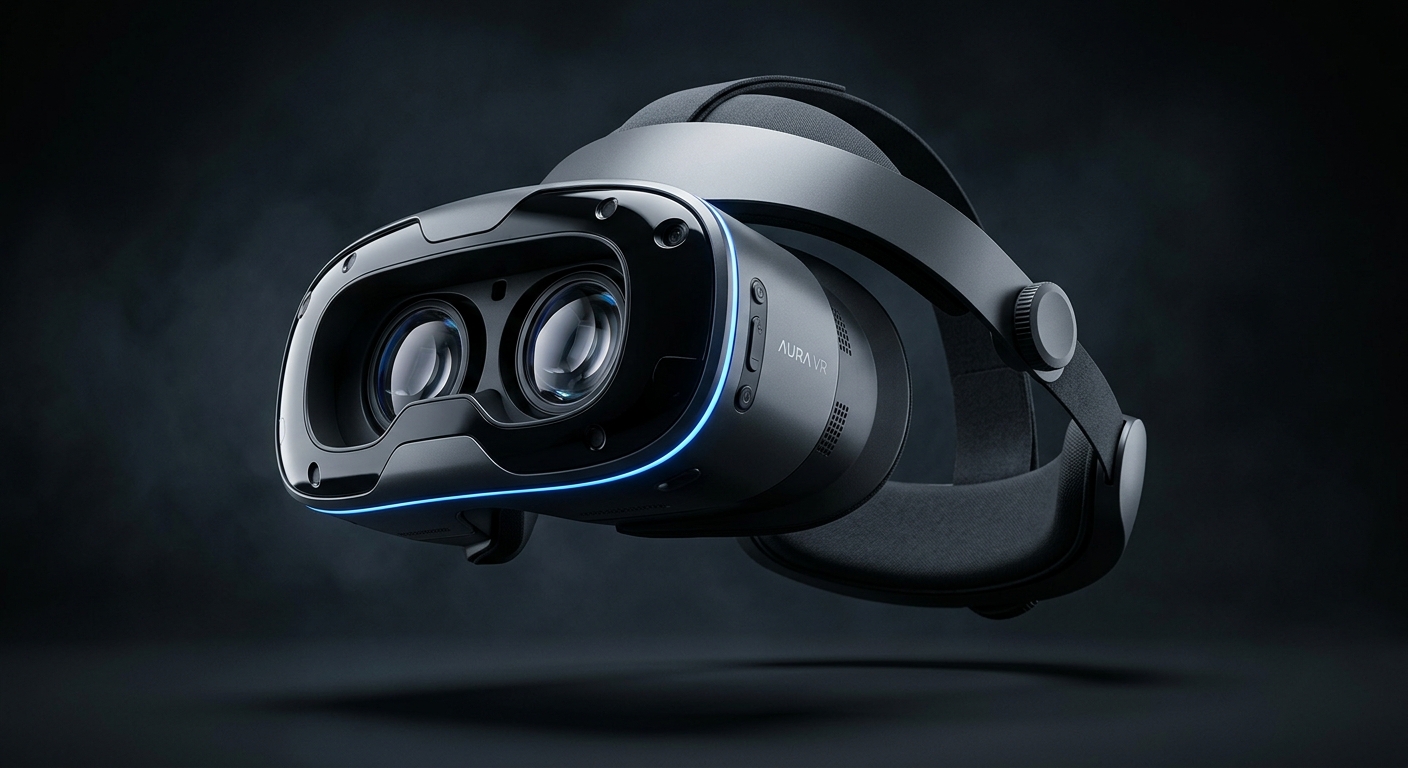
The Vortex VR headset continues a design paradigm that has long plagued standalone units: the front-heavy chassis. Critical components like the processor and display reside primarily at the front, creating an imbalance. This design choice places sustained, undue strain on the wearer's neck and upper cervical spine during extended use. It is a fundamental ergonomic flaw, inherited rather than innovated upon.
Research published through the National Institutes of Health, examining VR headset devices in demanding contexts, consistently identifies weight distribution and head-strap adjustability as critical variables. These factors determine whether users can tolerate a headset for more than thirty minutes. The Vortex VR's fixed rear band offers minimal compensation for its forward mass, failing to address this core issue. Players who remember the physical toll of early VR or long sessions with demanding arcade titles like Star-Dive will find discomfort accumulating rapidly. The foam facial interface attempts to redistribute pressure. However, users with facial geometries outside the assumed average will encounter insufficient eye-relief adjustment. This leads to pressure points around the cheekbones or forehead, transforming virtual worlds into an exercise in physical management.
Accessibility Gaps That the Industry Keeps Ignoring
Years of advocacy from disability communities and increasing regulatory attention to inclusive design appear lost on the Vortex VR. The headset ships with no dedicated one-handed controller mode. It lacks official support for alternative input devices, such as switch arrays or eye-tracking overlays. There is also no in-headset font scaling for users with low vision. These omissions are not oversights; they represent a fundamental lack of commitment to broad user access.
The controller grip design assumes a standard hand size and dexterity. Small trigger guards and recessed grip buttons are difficult to activate reliably for many users. Individuals with reduced grip strength, limited finger mobility, or conditions like arthritis or essential tremor will struggle. This demographic is significant among adults interested in gaming. Broader market analysis of the VR category, heading into the second half of the decade, notes accessibility remains an afterthought in hardware design cycles. This occurs even as software developers build more inclusive options. The physical device becomes the limiting factor before a user ever loads a game. For arcade-adjacent titles, such as Asteroids Remake or Segment Storm, these hardware barriers are particularly ironic. Many classic game concepts were designed for the broadest possible public audience standing at a shared cabinet.
Standalone Convenience Versus the Tethered Trade-Off
Vortex VR's standalone configuration removes the need for an external PC or console. The product page positions this as its defining advantage, promising a wire-free experience usable anywhere. This promise aims to eliminate setup friction. In practice, the standalone architecture compresses the performance envelope considerably. The integrated chipset handles dual demands: rendering stereoscopic visuals and running game logic simultaneously. The thermal throttling that results from this load, in sessions longer than forty-five minutes, produces visible frame-rate dips. This undermines the very immersion the headset is meant to create.
Buyers comparing standalone versus tethered options will find this distinction crucial. The VR accessory and comparison landscape, catalogued by retailers stocking cables and docking solutions, increasingly acknowledges standalone convenience has a performance ceiling. Enthusiast users will hit this ceiling faster than casual ones. The internal battery life, approximately two hours under active gameplay conditions, further bounds the freedom of the standalone design. A tethered setup, drawing power from a host system, does not face this limitation. This real-world constraint often surfaces only after an initial "honeymoon" period of ownership.
The Broader Question of Whether VR Hardware Is Keeping Up With Its Audience
The VR headset market, as it approaches 2026, faces a central consumer question. It is not whether VR is compelling in theory, but whether the hardware has matured enough. Does it justify the physical and financial investment for a general audience? Or is it still primarily for early adopters willing to accept friction? The Vortex VR headset, evaluated against this benchmark, sits in an awkward middle position. It improves upon first-generation standalone units in raw specifications. However, it carries forward ergonomic assumptions and accessibility blind spots. These suggest the design process prioritized feature lists over the full range of human bodies that might actually use the product.
Arcade gaming culture offers a useful design philosophy. It valued immediacy and the ability to hand a controller to almost anyone, making them functional within seconds. VR hardware makers have not yet fully absorbed this lesson. The barrier to entry should be the challenge of the game itself, not the challenge of wearing the device. Until headset manufacturers commit to ergonomic testing across broader population samples and build accessibility into the hardware specification, this pattern will continue. Leaving it to software patches and third-party adapters is insufficient. Reviews like this one will keep arriving at the same conclusion: the potential for VR is real, but its execution continues to exclude too many of the people it should be welcoming.
Sources

Julian Thorne is a seasoned house writer for GoAndGame, known for his deep dives into obscure game mechanics and industry trends. He often explores the sociological impact of gaming, blending critical analysis with historical context.


