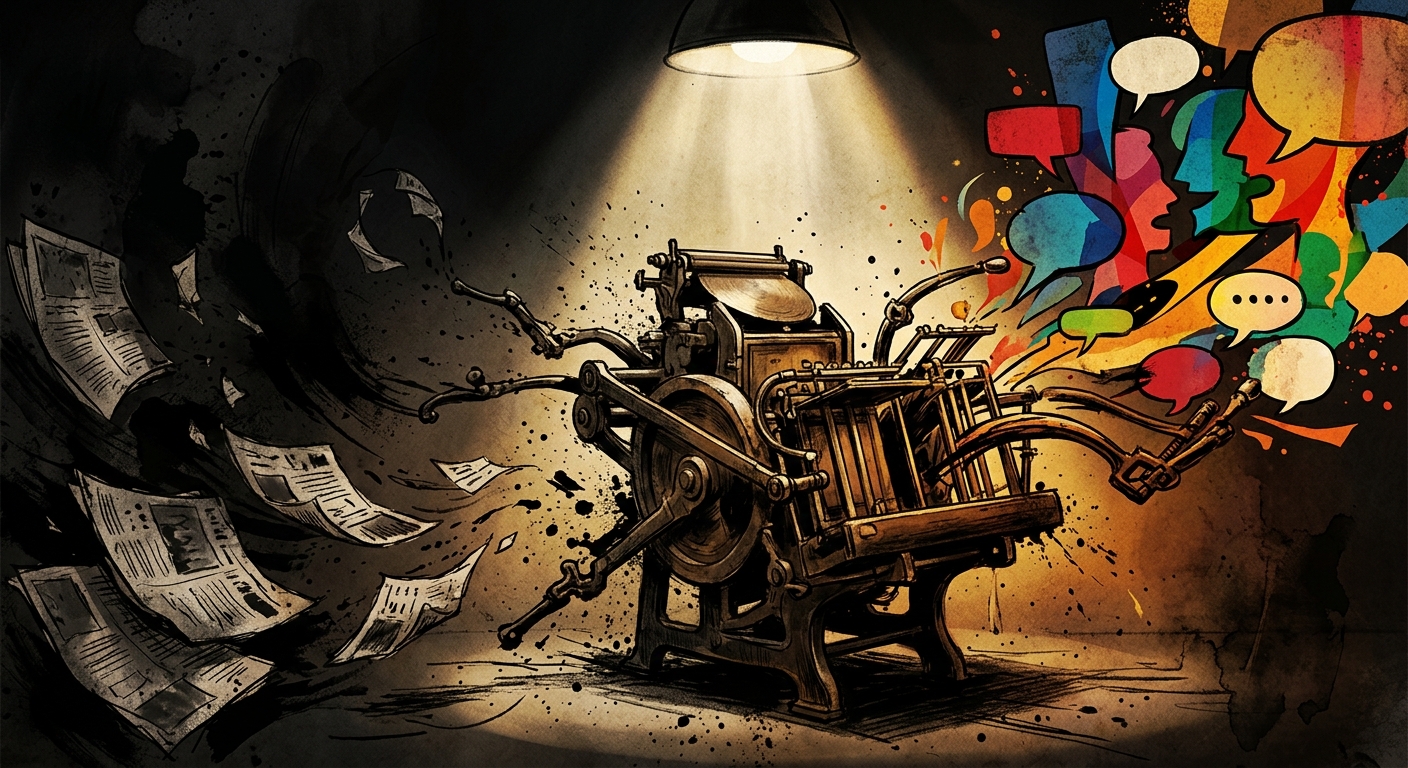
Opinion sections are vanishing from newsrooms, and the case for keeping them alive has never been more urgent. Across the country, publications are closing, consolidating, or defunding their opinion desks. The financial disruptions of the past decade accelerated that trend. What gets lost is not just column inches. What gets lost is the platform where a community argues with itself in public, on the record, under a byline.
The Quiet Erasure of the Editorial Voice
The Daily Tar Heel made the point plainly in January 2025: when opinion sections go silent, the channels of community self-reflection close up. Opinion writing connects reported facts to civic meaning. A news story can tell you that a city council voted to rezone a neighborhood. An opinion column can tell you who benefits, who loses, and why the vote happened at midnight with two members absent. Strip the opinion desk and you strip that second layer of accountability entirely.
The Reuters Institute's 2026 Digital News Report found that social media and video networks have, for the first time, surpassed both television and owned news websites as average sources of news. More people are now reaching for short-form takes than for considered editorial argument. That shift makes structured opinion journalism more valuable, not less. Platforms optimize for reaction. Opinion sections, at their best, demand a sustained position backed by evidence and signed with a name.
Why the Objectivity Argument Misses the Point
Those who push to remove opinion content often frame it as a matter of credibility. Explicit positions, the argument goes, compromise a publication's neutrality. That framing muddles two distinct roles. Reporters must present facts fairly. Publications also have a duty to foster democratic argument. Those are not the same job, and conflating them produces a troubling silence that tends to disadvantage the voices with the least institutional access.
Opinion journalism has its own craft standards. According to the University of Florida's journalism curriculum, effective opinion writing requires a clear stated position, evidence-backed reasoning, and rhetorical awareness of the reader. The goal is persuasion, not decoration. Kathleen Kingsbury, Opinion Editor at The New York Times, won a Pulitzer in 2015 for a series on restaurant workers, wage theft, and the hidden costs of tipping culture. That work did not undermine the Times's credibility. It added a dimension that straight news coverage could not carry alone. The Pulitzer Board recognized that distinction formally in 2026, creating a new Opinion Writing prize as a successor to the separate Editorial Writing and Commentary categories.
The Student Press as Laboratory for Public Argument
Student newspapers occupy a distinctive position in this conversation. Publications like the Daily Tar Heel cultivate not only future journalists but active civic participants. A student opinion column provokes an immediate response: letters, counter-columns, public rebuttals at the next editorial board meeting. That cycle is exactly how opinion journalism should function in a healthy public sphere. When universities defund opinion desks or discourage student columnists from taking hard positions, the lesson delivered is that advocacy carries professional risk. Students learn caution before they learn courage.
The damage compounds over time. Journalists trained to avoid stated positions carry that reflex into their careers. Editors who never ran an opinion section do not know how to build one. The institutional knowledge of how to solicit a guest essay, fact-check a column, and publish a robust letters section without legal exposure is not recovered easily once lost. The student press is where that knowledge gets transmitted. Cutting it at the training stage is a long-term subtraction from the profession.
Preserving Friction as a Feature, Not a Bug
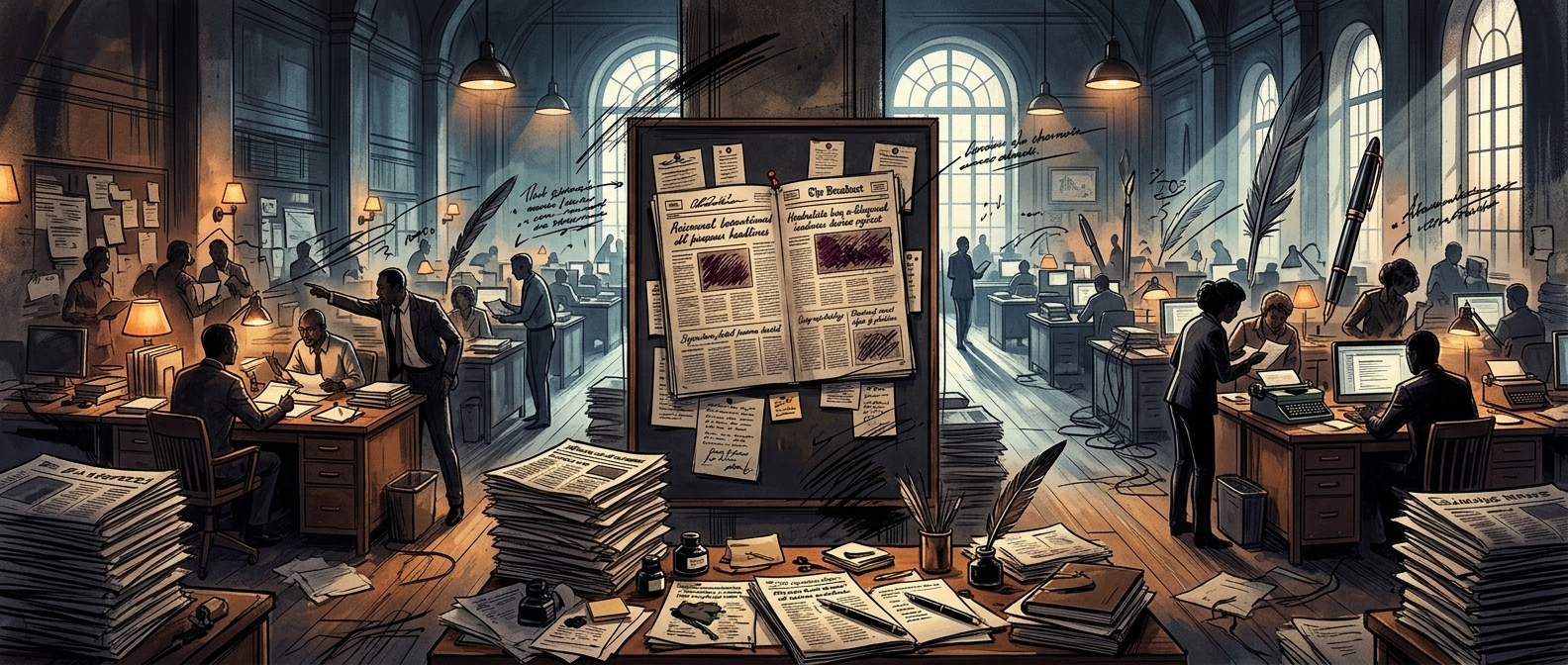
One concrete argument for maintaining opinion sections is their capacity to institutionalize productive friction. A good opinion page does not smooth over disagreement. It schedules it. It gives competing positions a common venue and a shared set of editorial standards. Consensus gets challenged. Assumptions get named. That function is genuinely difficult to replicate anywhere else in a publication's structure.
The 2026 Vested media trends report found that only 28 percent of Americans have a great deal or fair amount of trust in mass media. Audiences are increasingly seeking content with what the report calls a human touch, specificity, and defensible points of view. Generic, voice-free coverage is not winning trust back. Opinion writing, with its byline and its argument, is precisely the format that signals a human made a judgment and is willing to own it. Removing opinion sections in pursuit of a smoother, more neutral reader experience does not build trust. It removes one of the few remaining signals that a person, not an algorithm, is responsible for what appears on the page.
Writing opinion well is a discipline. It requires defending a position under editorial scrutiny, meeting evidentiary standards, and remaining fair to the opposing view without collapsing into false equivalence. Publications that abandon that practice do not become more trustworthy. They become thinner. The opinion section is not a liability to manage. It is a capacity to protect.
Sources
- Column: Don’t purge opinion writing from newspapers – The Daily Tar Heel
- Pulitzer Prize for Opinion Writing - Wikipedia
- Kathleen Kingsbury - Wikipedia
- The Unique Craft of Opinion Writing vs. Traditional Journalism • Journalism University
- Editorial Topics for College Students: 143 Good Editorial Ideas for Article Writing
- https://www.jou.ufl.edu/assets/syllabi/202601/jou/JOU4930-Special-Study-in-Journalism-Opinion-Writing-and-Editing.pdf
- Media in 2026: Trust, AI, and Attention - Vested
- Overview and key findings of the 2026 Digital News Report | Reuters Institute for the Study of Journalism

Eliot Reed writes about the intricacies of virtual worlds, blending analysis with storytelling. As a house writer for GoAndGame, he delves deep into game mechanics and narratives, offering thought-provoking insights for players and developers alike.


