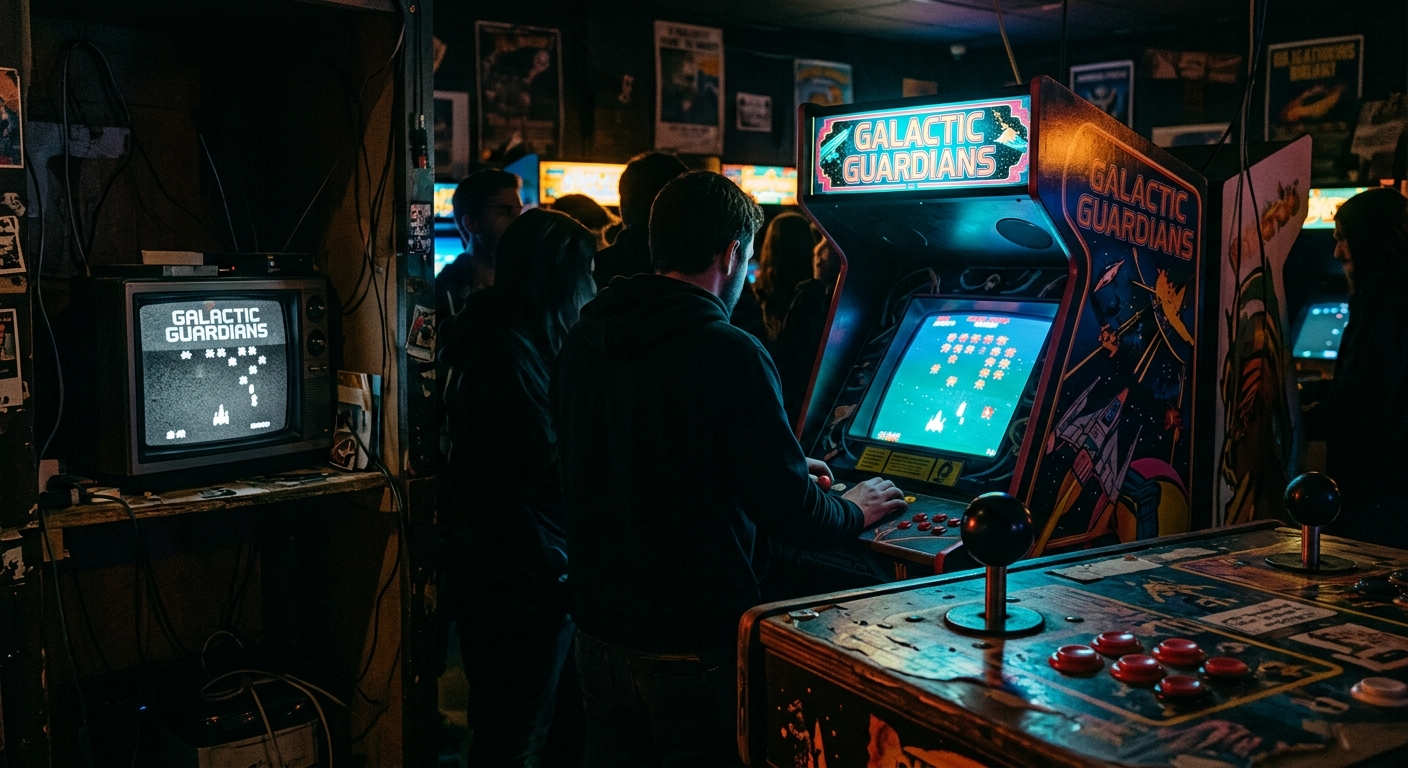
For a generation of players, the arcade was not merely a place to play games. It was an ecosystem. Each coin-operated machine stood as a monolithic testament to purpose-built design, merging custom electronics with unique physical controls and imposing cabinet art. The sensory bombardment, the social crucible of a crowd watching your high score attempt, and the constant threat of a swallowed quarter forged an experience impossible to transplant. Home conversions, regardless of intent, often amounted to a fundamental redefinition of the game itself.
The true spirit of a coin-op game resided not just in its code, but in the entire electro-mechanical apparatus, its physical interface, and the environment of its play. Extracting only the code was to lose its soul.
The Arcade as a Total Experience
The distinction between an arcade game and its home counterpart was not merely aesthetic. Arcade boards were specialized hardware, engineered to push visuals and audio beyond anything a contemporary living room system could offer. This meant a dedicated sprite chip, a powerful CPU, and custom sound hardware that domestic machines simply lacked. The gap in performance was inherent, a foundational hurdle for any conversion attempt.
Players interacted with these machines through specific interfaces. A flight stick, a trackball, or a light gun offered a level of physical immersion and precision that a standard gamepad could never replicate. The cabinet itself was part of the experience, from its thundering speakers to the unique feel of its microswitched joystick. These elements were not peripheral; they were integral to the gameplay loop, shaping the very rhythm and challenge of titles like Star Dive.
What the Hardware Actually Lost
When an arcade hit moved to the home, developers faced an immediate, often insurmountable, technical deficit. Early home consoles and computers lacked the dedicated hardware for complex graphics and sound. This forced painful compromises: fewer enemies on screen, reduced animation frames, a limited color palette, and sometimes, entire game mechanics stripped away to fit within memory or processing constraints.
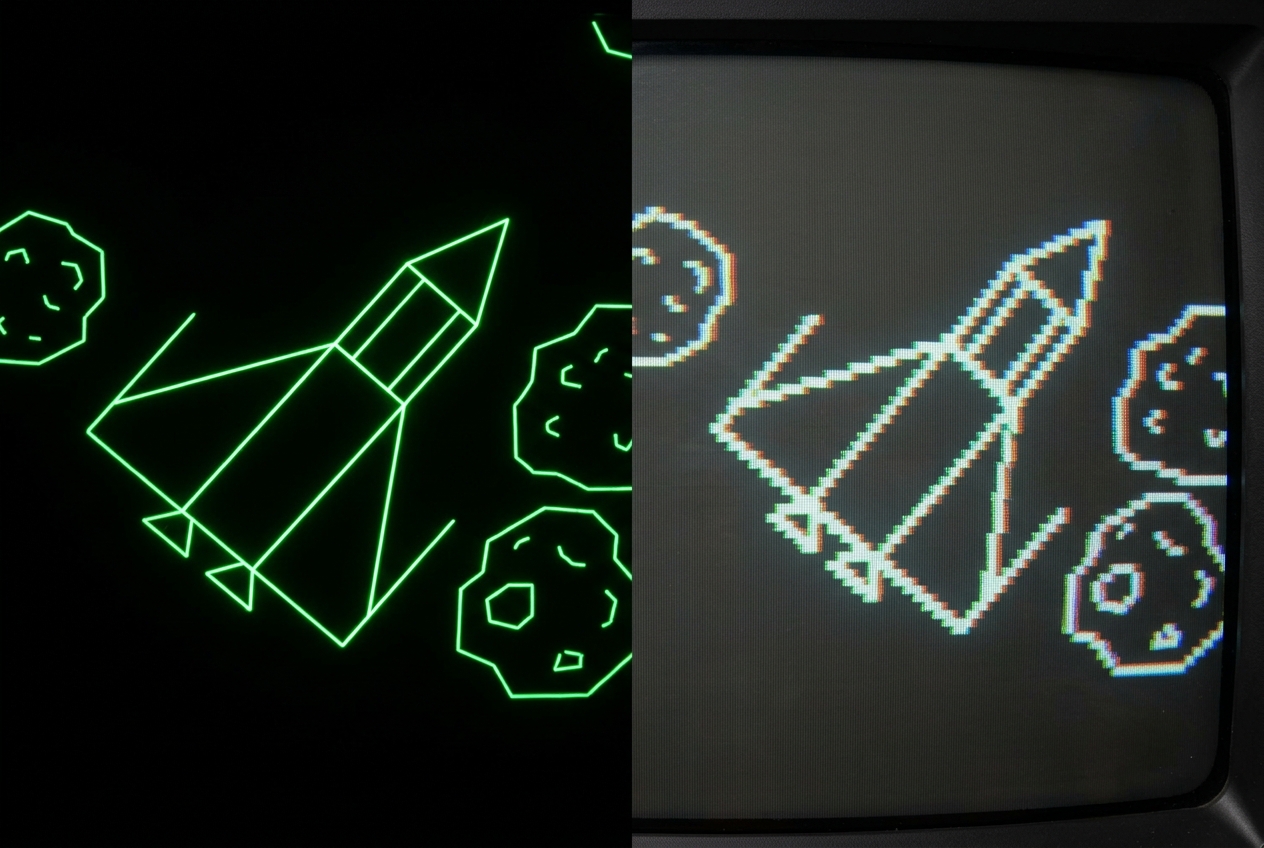
Consider the stark case of vector graphics. Games like Asteroids relied on crisp, geometric lines drawn directly onto a monochrome CRT. Home televisions used raster displays, which rendered images using pixels. Converting vector graphics to pixels inevitably collapsed their clean fidelity into blocky, often flickering, approximations. This was not a minor visual tweak, but a fundamental change to the game's identity and readability. Fast-moving maze games, like Dot Chomper, suffered from slowdown and flicker, demanding precision that the compromised ports could not deliver.
Controls: The Silent Killer of Conversions
The physical interface was perhaps the most brutal casualty of the conversion process. Arcade cabinets were built around bespoke input devices: optical spinners, trackballs, dual joysticks, or unique steering wheels. These controls were inseparable from the gameplay itself. Rotary shooters, for example, designed for a precise spinner, became entirely different, lesser experiences when forced onto a standard gamepad. The nuances of control, vital for mastering many coin-op games, vanished.
The tactile feedback of an arcade stick, with its satisfying click of microswitches, rarely translated to the spongy, limited throw of a home controller. This meant that skill-based games, which relied on lightning-fast reflexes and pinpoint accuracy, often felt sluggish and imprecise in their home iterations. The control scheme was not merely an input method; it was a core component of the game's challenge and enjoyment, defining the very interaction with a game like Segment Storm.
The Commercial Pressure to Ship Anyway
Publishers were not blind to these limitations. They licensed popular arcade titles knowing full well that home hardware could not deliver an equivalent experience. The calculation was simple: brand recognition sold units. Consumers, often with limited access to arcades, eagerly purchased these ports, perhaps unaware of the original's true form or simply accepting the compromise.
Development teams faced tight deadlines and meager budgets. They were tasked with translating complex arcade architecture onto vastly different home systems, often with little room to innovate or redesign. Marketing materials frequently exacerbated this problem, showcasing screenshots from the pristine arcade original rather than the often-diluted home version. This set consumer expectations that the final product could seldom meet, fostering a cycle of disappointment for discerning players.
The Rare Exceptions That Proved the Rule
Despite this bleak outlook, a few home ports managed to transcend their origins. These rare successes usually involved developers who were granted the time and resources to rethink the game for its new platform, adding content or refining design elements. As home consoles entered the 16-bit era, the technological gap narrowed significantly. Conversions became more faithful, and debates about which version was genuinely superior began to hold weight, rather than appearing absurd.
Ultimately, the consistent failure of many early home conversions underlined a crucial point: an arcade game was more than its software. This understanding fueled a demand for dedicated arcade hardware in the home, from systems like SNK's Neo Geo to modern FPGA-based solutions. These efforts represent a continuous pursuit to finally bridge the gap, to bring the complete, untranslatable art of coin-op into the living room without compromise.
Sources

Julian Thorne is a seasoned house writer for GoAndGame, known for his deep dives into obscure game mechanics and industry trends. He often explores the sociological impact of gaming, blending critical analysis with historical context.