The Nintendo Switch 2 launched on June 26, 2025, and the conversation around it keeps circling back to one thing: the sheer number of publishers who showed up. Not with ports from five years ago, not with scaled-down versions of their flagship games, but with real, day-one releases that treat Nintendo hardware as a first-class destination. That shift matters more than any single title on the shelf.
A Record-Breaking Third-Party Commitment
Nintendo has publicly acknowledged that the Switch 2 carries the largest third-party software lineup ever attached to a new Nintendo hardware launch. That is not a minor footnote. For anyone who remembers the Wii U years, or the early months of the original Switch when third-party support was polite at best, this represents a genuine reversal. Publishers who once hedged their bets on Nintendo platforms have committed major franchises to the Switch 2 launch window, and several of those releases are appearing day-and-date with their PlayStation and Xbox counterparts at a scale Nintendo has not seen before.
Nintendo president Shuntaro Furukawa addressed the shift directly in the company's November 2025 financial results briefing: "Not only have we already seen multiple hit first-party titles, but we have also had many software publishers on board from the very beginning, resulting in the most extensive launch-year lineup out of any of our dedicated video game platforms." He also noted that publishers had delivered a "rich lineup of titles" catering to both "gamers and families." That breadth is visible in the confirmed game list, which spans CD Projekt Red's Cyberpunk 2077, Bandai Namco's Elden Ring, Capcom's Resident Evil Requiem, and a Yakuza entry from SEGA, all scheduled for 2026 alongside ongoing launch-window releases.
The original Switch's commercial run built the trust that made this possible. Publishers could look at that install base and make a straightforward business case. The Switch 2 is the direct beneficiary of that goodwill, arriving with a level of third-party enthusiasm that its predecessors never enjoyed in their opening months.
Nintendo's Own First-Party Anchor
Mario Kart World is the flagship launch title, available as a standalone purchase and as part of a bundle with the console itself, per the official Nintendo Switch 2 product page. Leading with a racing game rather than a new Zelda or a mainline Mario platformer is a deliberate choice. Mario Kart is the franchise that consistently converts skeptical buyers into platform owners, and shipping a bundle option with a ready-made showcase experience means the hardware finds its audience faster. According to Nintendo's official November 2025 figures, Mario Kart World had already sold 9.57 million units.
Beyond the launch title, Nintendo's internal release cadence is unusually dense. Hyrule Warriors: Age of Imprisonment, Kirby Air Riders, and Metroid Prime 4: Beyond are all scheduled within the same calendar year. The company is not front-loading everything and then going quiet. That staggered pipeline gives third-party publishers the confidence to schedule their own releases without worrying about getting buried by a sudden Nintendo announcement. Donkey Kong Bananza reached 3.49 million units in the same reporting period, a signal that buyers are not stopping at the pack-in title.
Hardware Capabilities Driving Software Ambition
The Switch 2 supports 120fps output, and that capability has opened doors that were previously closed. Developers working on competitive shooters and fast-twitch experiences have cited the refresh rate headroom as a reason to bring genres that felt compromised on the original Switch hardware. The original console's performance ceiling meant certain kinds of games either skipped the platform or arrived in a noticeably reduced form. Publishers are now building around the absence of that ceiling.
The revised physical distribution format Nintendo introduced alongside the Switch 2, called Game-Key cards, has also factored into third-party planning. Larger open-world titles can ship a physical product while the bulk of their data downloads separately. That removes a logistical barrier that previously discouraged some publishers from committing to cartridge releases. The Ultra High Speed HDMI cable and the revised Joy-Con 2 controllers work toward the same goal: reducing friction between handheld and docked modes so that titles can adapt their feature sets depending on how the player is sitting that day.
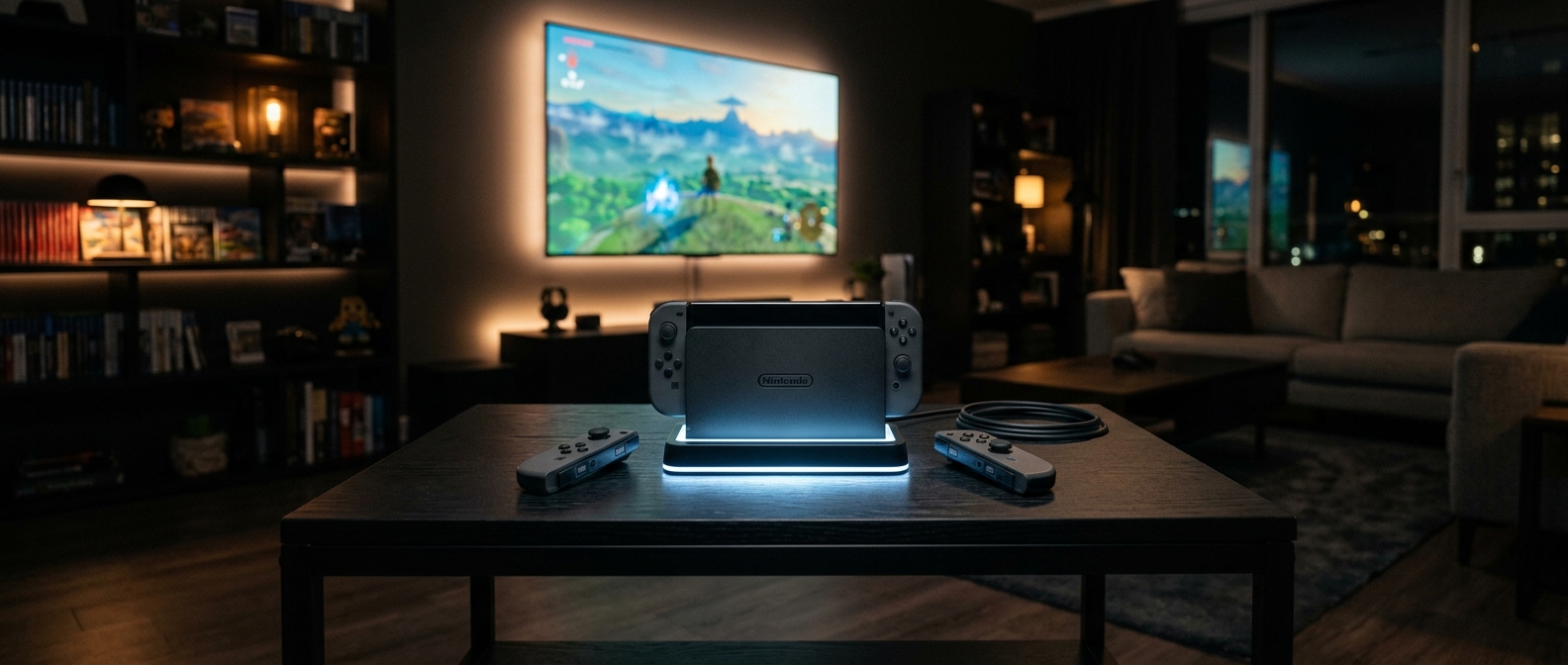
For players drawn to tight, score-driven loops built around short sessions, the portable flexibility is particularly meaningful. Games designed around replayable, reflex-forward mechanics fit the Switch 2's portable identity well. A five-minute session on a commute and a two-hour docked run can both feel complete, which is exactly the rhythm that genre demands. The arcade-style releases in our catalog reflect that same design philosophy, including Dot Chomper, Segment Storm, and Star Dive.
What the Lineup Signals for 2026 and Beyond
Nintendo has framed the Switch 2 launch window as extending well into 2026, and the software calendar already reflects that commitment. Confirmed 2026 arrivals include Elden Ring from Bandai Namco, Resident Evil Requiem from Capcom, and a Yakuza title from SEGA. That is not a list assembled from second-tier studios filling a gap. Those are marquee franchises from publishers with the resources to wait if they chose to. They are not waiting, and the confirmed games list at Nintendo Life tracks new announcements arriving on a near-daily basis.
Nintendo sold over 10 million Switch 2 units and raised its forecast, a signal that the install base is growing fast enough to justify continued investment from studios that need to hit sales targets. Analysts expect third-party commitment to deepen as hardware sales accumulate rather than taper off after initial enthusiasm fades. The breadth of genres already represented, from simulation and sports titles to action RPGs and arcade-style games, suggests publishers are treating Switch 2 as a primary platform rather than a secondary port destination.
The original Switch's early years were defined by late arrivals and reduced versions, games that showed up months after their console counterparts and occasionally missing features. The Switch 2's launch window reverses that pattern. Publishers are scheduling, not hedging. For players who spent years watching Nintendo platforms receive afterthought treatment from major third-party studios, the difference is hard to overstate. The next test is whether that momentum holds through 2026. Based on everything announced so far, the odds look better than they have in a long time.
Sources

Mara Solis is a staff writer at GoAndGame covering board games, tabletop strategy, and the culture around competitive play. She has spent years logging hours at game tables from local hobby shops to international conventions. Her writing blends practical insight with a genuine enthusiasm for the communities games create.


