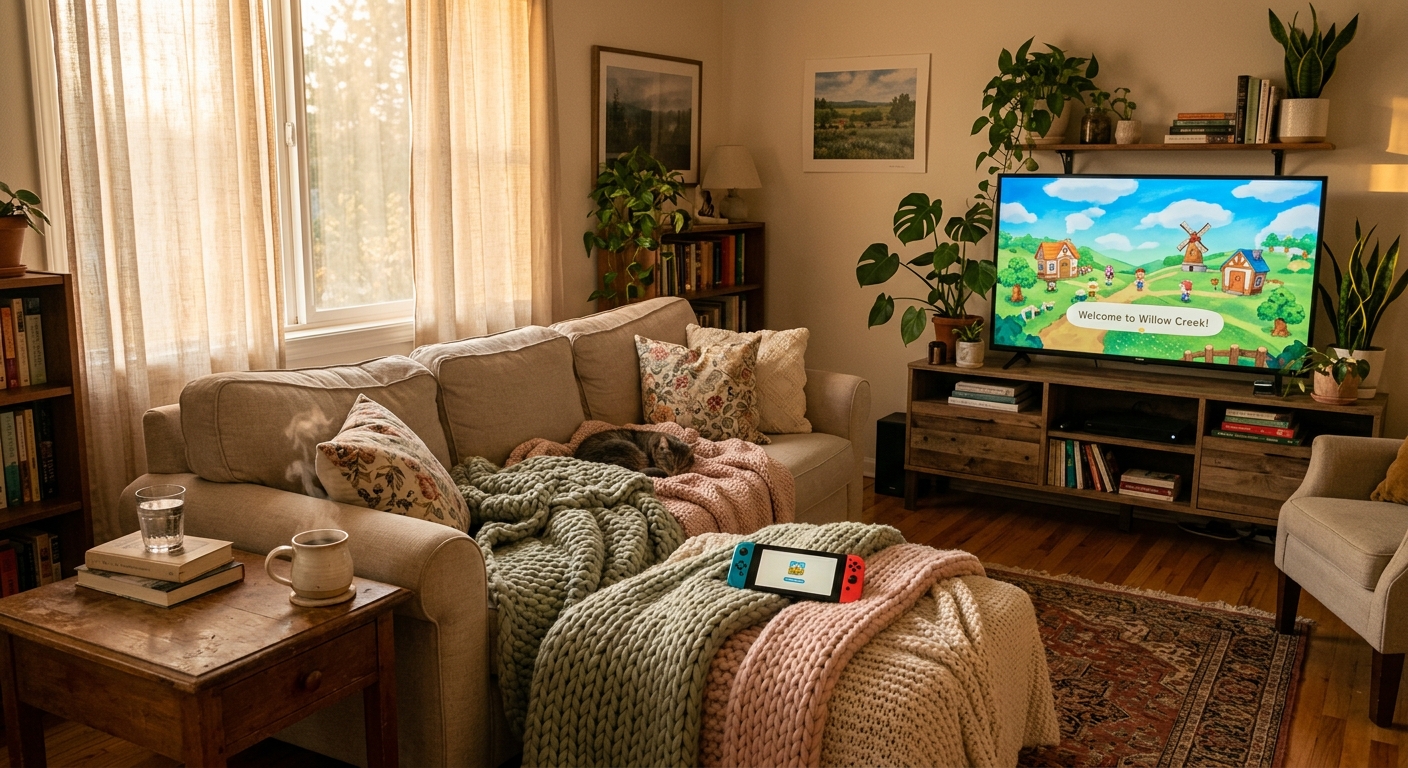
Once dismissed as casual fluff, cozy games like Animal Crossing: New Horizons have quietly reshaped who plays, what sells, and what the word "fun" even means in a post-pandemic gaming world. This unexpected rise from niche to mainstream has reshuffled a deck many thought stacked against it. The numbers, the science, and the demographics all point in the same direction: cozy gaming is not a phase.
The Genre That Snuck Up on Everyone
Cozy games defied skeptics by growing from a quiet curiosity into a mainstream category. Google searches for the term "cozy games" hit their highest point on record in 2023, according to Inverse, and that momentum carried into 2024 with no meaningful slowdown. The surge was not engineered by marketing budgets. It built organically through streaming clips, social media screenshots, and recommendations passed between friends who had never previously called themselves gamers.
Animal Crossing: New Horizons is the obvious origin point. It arrived in March 2020, exactly when the real world felt most hostile, and its bright islands offered something action blockbusters could not: a place to exist without urgency. The game has since sold over 43 million copies, outpacing that year's Call of Duty by 13 million units. That figure alone forced publishers to take the genre seriously. By 2024, dedicated cozy game showcases, storefronts, and curated platform tiers had become normal features of the industry calendar, not afterthoughts.
The Brain Science Behind the Comfort Screen
The staying power of cozy games is not accidental, and researchers have spent real effort explaining it. Kurt Squire, a games and education professor at UC Irvine, told Inverse that a well-designed cozy game creates "waves of calm across the brain and body," helping players regulate emotions and build feelings of contentment in the same way a long walk or meditation session might. The mechanism is physiological: less amygdala activity, lower cortisol, a quieter fight-or-flight response.
A 2021 study cited by Inverse found that Flower, a game where players guide wind through fields, was as effective at reducing blood pressure and self-reported stress as a structured mindfulness session. That is a striking result for something most people would call a video game. The catch, Squire notes, is that the benefit disappears when play tips into compulsion. The calm loop becomes an obligation loop, and obligation is precisely what cozy games are supposed to dissolve. Novelty matters too: research suggests that diverse, new experiences in games amplify the mental health benefits, which is one reason the genre keeps expanding its vocabulary rather than repeating the same farming sim template.
Who Is Actually Playing, and Why It Matters
Traditional gaming demographics have long skewed toward young men in North America and Europe. Cozy games have pulled in a significantly different crowd. Women, older adults, and players from regions that Western AAA studios rarely address directly are well represented in the cozy genre's audience, according to research from Sago. That is not a small correction to the existing map. It is a different map.
Media studies researcher Dr. Bettina Bódi frames the shift in cultural terms. Cozy games, she told Inverse, are "a direct response to our changing needs in late-capitalist society," shaped by hustle culture, climate anxiety, and a widespread hunger for control in an unpredictable world. Players are not retreating from reality out of weakness. They are choosing environments that let them set the pace. For brands outside gaming, that audience profile is attractive. Lifestyle and wellness companies have begun eyeing cozy game sponsorships as a way to reach consumers that conventional advertising channels consistently miss, though specific deals in this space remain largely unannounced.
The diversity of the cozy audience also complicates old assumptions about game monetization. These players are engaged and loyal. They return to the same title for months, sometimes years, not because of content updates alone but because the emotional regulation the game provides is genuinely useful to them. Retention metrics in this genre consistently exceed expectations set by other categories.
Room to Grow: Why the Peak Has Not Arrived
As PC Gamer has argued, the cozy games trend is highly visible but not finished. Markets in Southeast Asia, Latin America, and parts of Europe still represent largely untapped territory for developers willing to localize and design for local tastes rather than exporting a generic Western aesthetic. The infrastructure around the genre is also maturing: curated storefronts, subscription tiers, and dedicated festivals have given cozy games a commercial scaffolding that did not exist five years ago.
Designers are also pushing the genre's boundaries from the inside. Titles are borrowing from platformers, puzzle games, and light strategy without abandoning the low-stakes emotional core that defines the category. The farming sim is still there, but it is no longer the ceiling. Games like Magical Delicacy blend cozy aesthetics with Metroidvania structure, suggesting the genre's identity is elastic enough to absorb influences without losing what makes it distinct. That elasticity is probably the strongest argument against anyone who still expects cozy games to fade. Genres with this much room to mutate tend to last.
Cozy gaming has already changed who sits at the table and what they expect when they get there. The next few years will test whether the industry builds on that honestly or tries to sand the edges off into something safer and blander. Based on what independent developers are shipping, the honest version looks more likely. That is worth watching.
Sources

Alexandra Rivet explores the intricate interplay of games and culture for GoAndGame. A passionate storyteller, she delves into narratives with depth and curiosity. Her pieces often highlight the stories behind the pixels.


