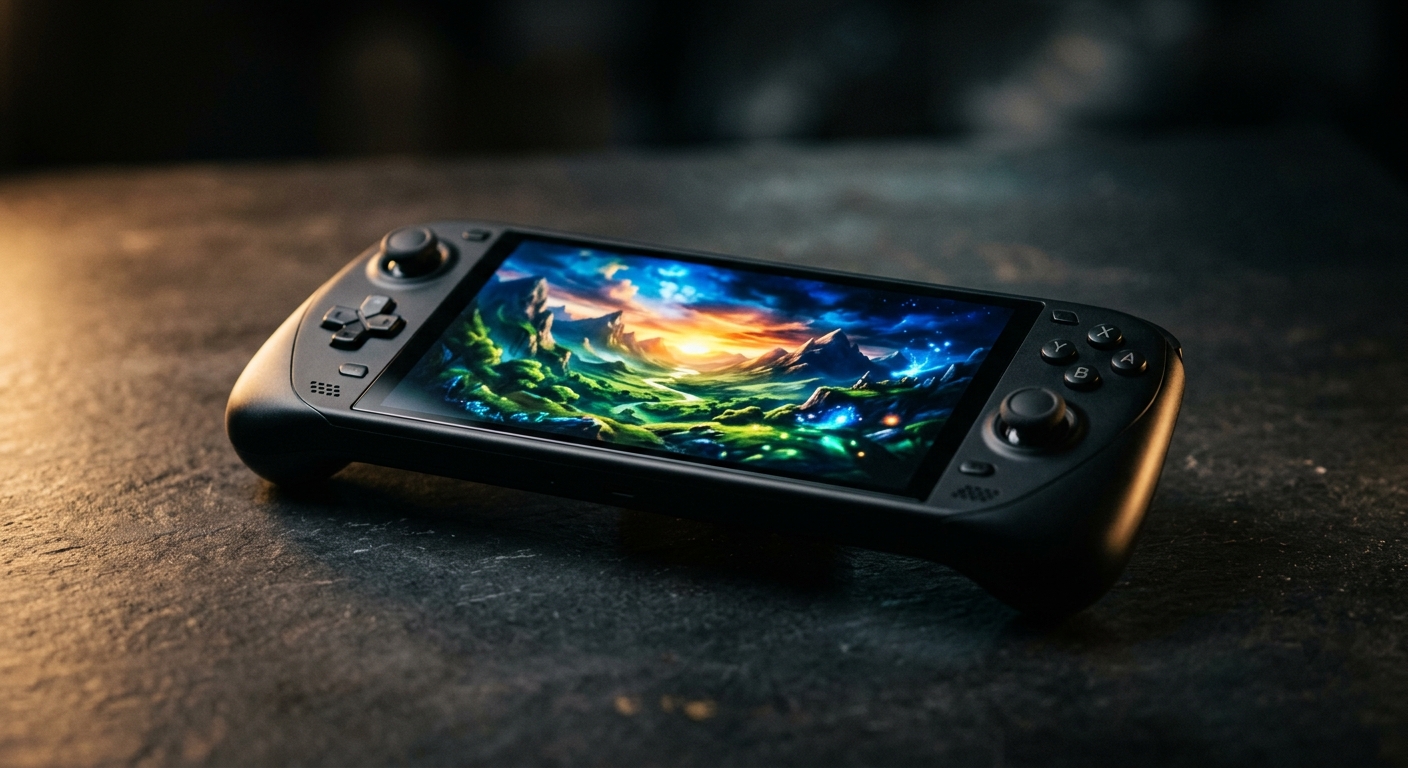
One year ago, Valve quietly made the Steam Deck into a different machine. Not a new one, exactly, but a better one in ways that matter to the people who carry a handheld on a commute, into a hotel room, or onto a couch at midnight. The Steam Deck OLED swapped the original LCD panel for a 7.4-inch HDR OLED display capable of hitting 1000 nits of peak brightness, bumped the battery, tuned the thermals, and shipped it at a price that still undercuts most of the Windows-based competition. A year of daily use from owners across the community has given us something more useful than a launch-week review: actual data on how the thing holds up.
A Brighter Picture, Literally
The display change is the one that hits you first. Colors that looked washed out or muddy on the LCD, especially in darker scenes or games built around rich saturation, now carry the kind of contrast ratio you expect from a dedicated gaming monitor. Reviewers who had spent serious time with the original model consistently described the OLED upgrade as the single most immediately noticeable improvement, outpacing even the battery changes in terms of sheer day-one impact. That reaction tracks. Contrast is one of those things you cannot unsee once you have seen it done well.
The panel also introduced a 90Hz refresh rate, a modest step up from 60Hz that made fast-moving games feel perceptibly smoother without demanding dramatically more from the GPU. It is not a revolution in frame rate headroom. It is a small, real improvement that adds up over long sessions. If you have spent time playing a game like Segment Storm or Star Dive where motion clarity matters, the difference between 60 and 90Hz is something your hands notice before your brain does.
Battery and Thermals After Extended Use
Valve's launch claim of three to twelve hours of playtime depending on workload has broadly held up over a year of real-world testing. The upper range of that figure is genuinely achievable for lighter titles. Players running indie games or older back-catalog entries at moderate brightness have reported five to seven hours before reaching for a charger, which puts the OLED model in a comfortable place for travel.
Demanding AAA titles remain the battery's real enemy, pulling runtime closer to two and a half hours. That is not surprising for the hardware class, but it is worth being honest about. What has been more impressive is how the thermal solution has held up. The fan profile Valve shipped has not required significant user intervention or third-party workarounds for most owners, which was a genuine concern in the months after launch. Community teardown reports and longevity threads suggest battery degradation sits around five to eight percent capacity loss for heavy users after a year, which is considered acceptable for lithium-polymer handhelds in this category.
Software Maturity and the SteamOS Ecosystem
SteamOS has continued to receive updates throughout the OLED's first year. Proton compatibility layers have improved to the point where a substantial portion of the Steam catalog runs without any user configuration. The Steam Deck Verified and Playable ratings system now covers tens of thousands of titles, giving buyers a clearer picture before they purchase whether a game will work well on the hardware. That is a genuinely useful consumer-facing improvement that the competing Windows handhelds have no equivalent for.
Desktop mode remains a real escape hatch for power users who want to install alternative launchers, emulators, or productivity software, and the community around that functionality has grown considerably since launch. One persistent criticism, that SteamOS still lacks the polished update cadence communication you get from console firmware cycles, has softened somewhat as Valve has leaned harder into patch notes and beta channels to explain what is changing and why.
Competition and Market Context
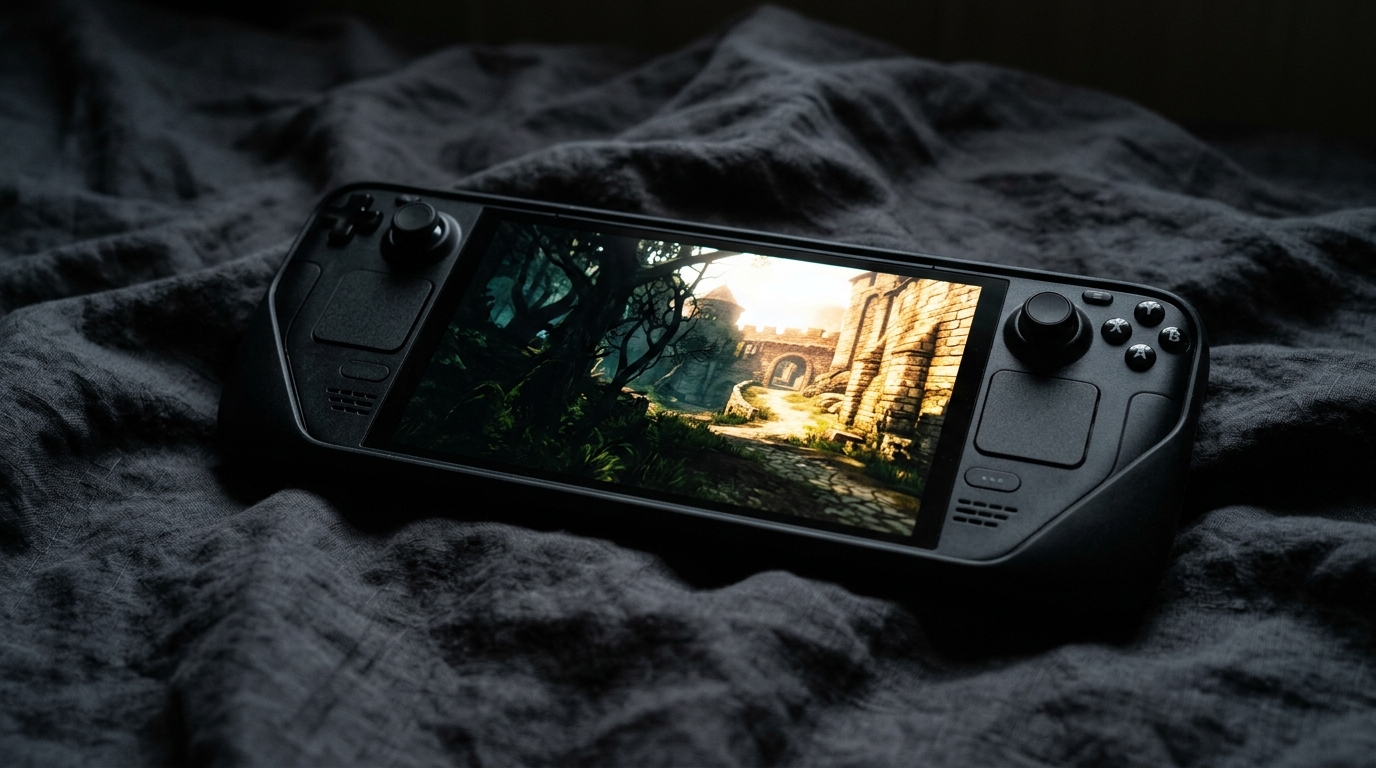
The ASUS ROG Ally and Lenovo Legion Go arrived in the months surrounding the OLED's debut, and that competition has sharpened scrutiny of every Steam Deck trade-off in productive ways. Windows-based rivals tend to win on raw game compatibility, since anything that runs on a Windows PC simply runs. They consistently lose on software polish, out-of-the-box usability, and the coherence of the gaming interface Valve has spent years building. The comparison is not flattering to either camp in isolation. Windows handhelds feel powerful and unfinished. The Steam Deck feels considered and occasionally limited.
Price remains one of the Steam Deck's most durable advantages. The OLED model launched at a premium over the LCD but still undercuts most comparable Windows handhelds when you compare equivalent storage configurations directly. A year in, that pricing position has not eroded. If anything, the broader market expanding and fragmenting has made the Steam Deck's value proposition clearer by contrast. You know what you are getting.
Who It Is For Now
First-time handheld PC buyers who skipped the LCD generation will find the OLED model an easy recommendation. The display alone justifies the price of entry for anyone who has spent time with OLED on a phone or television. The question of whether to upgrade from an LCD model is harder. The improvements are real, meaningful, and iterative rather than revolutionary. Owners who invested in accessories or modifications for the original form factor will find most of them carry over without issue, which softens the sting of the calculus.
Portable arcade and retro gaming use cases have benefited enormously from the combination of OLED contrast and the growing emulation community around SteamOS. Playing something like Dot Chomper on hardware this sharp, with contrast this deep, is a small reminder of why display quality matters even for simple geometry. Classics look their absolute best on a screen that handles black levels properly.
Valve has been quiet about a successor, which paradoxically strengthens the OLED's position right now. With no imminent replacement on the horizon, buyers can invest in the current hardware without fear of immediate obsolescence. That kind of stability is rare in a product category that has historically moved fast and iterated loudly. The Steam Deck OLED earned its year. The second one looks comfortable.
Sources

Mara Solis is a staff writer at GoAndGame covering board games, tabletop strategy, and the culture around competitive play. She has spent years logging hours at game tables from local hobby shops to international conventions. Her writing blends practical insight with a genuine enthusiasm for the communities games create.


