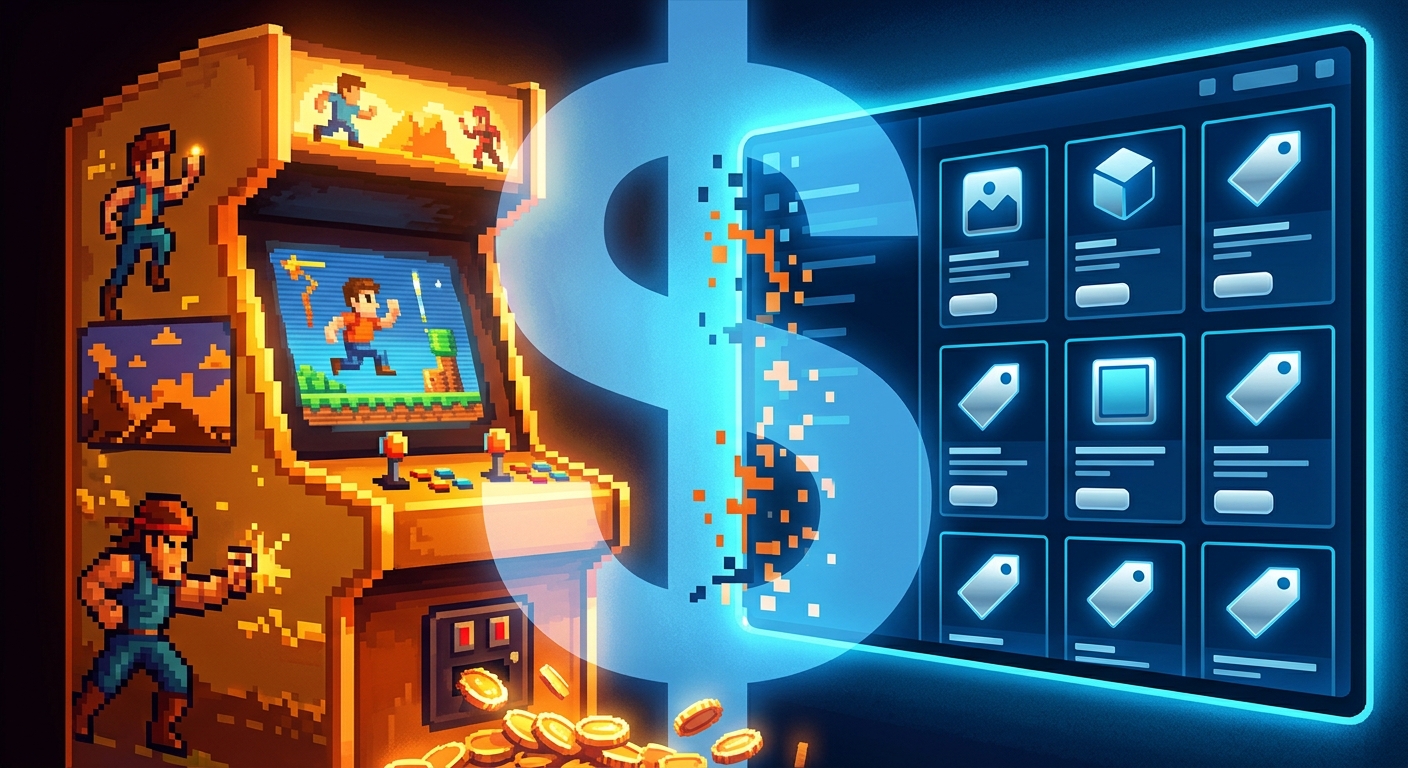
Somewhere between the third upsell screen and the "deluxe bundle" pop-up, the retro revival stopped feeling like a celebration. Publishers have spent the last few years turning nostalgia into a line item, and in 2025 the math has gotten hard to ignore: a game originally designed to eat quarters is now asking for forty dollars before you've touched a single button. The development overhead is a fraction of what a new title costs. The price tag rarely reflects that.
The Nostalgia Markup Is Real and It Is Growing
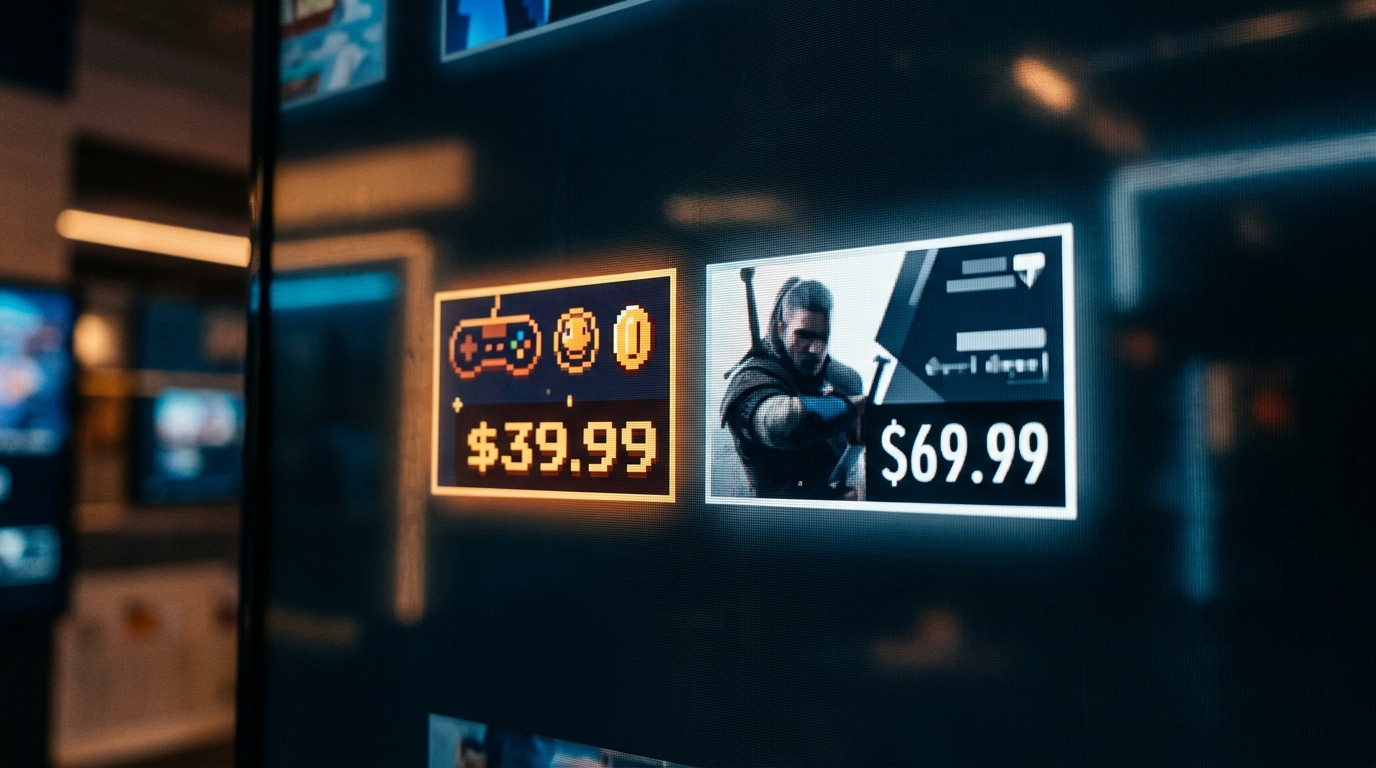
Back Market's 2025 retro gaming report captures the central irony of this moment neatly. People are turning to retro gaming in part because modern AAA titles now routinely cost $70 at launch, and older games feel like a reprieve from that pressure. Publishers noticed. Rather than meeting that appetite with accessible pricing, they have learned to treat the emotional pull of familiar IP as its own justification for premium rates. The result is a market where a remaster of a single-screen arcade game from 1981 retails comfortably above $40, with soundtrack upgrades and alternate color palettes tucked into a separate DLC pack.
The boom is real. The price discipline is not keeping up with it.
What Publishers Actually Spend, and What They Charge
Remasters occupy a uniquely comfortable position in the development economy. The core design is already done. The level architecture, the character concepts, the fundamental mechanical loop, all of it was paid for decades ago, often by a studio that no longer has any relationship with the current rights holder. What remains is modernization work: upscaling assets, rewriting audio pipelines, occasionally adding a rewind feature or an online leaderboard. That is real labor, but it is categorically different from building a game from nothing.
COGconnected's 2025 look at why retro remasters continue to matter makes the value proposition for publishers explicit: low overhead, built-in brand recognition, a fanbase primed to buy on announcement, and a critical culture that tends to grade against nostalgia rather than against the price-to-feature ratio. A new IP might burn through hundreds of millions of dollars before returning a single dollar. A beloved classic can be brought back for a fraction of that cost and still command a price anchored to the perceived cultural weight of the IP rather than any honest accounting of what resurrection actually cost.
Arcade-to-console ports sharpen this point further. The source material was designed around a per-credit revenue model, which means infinite replayability was already baked into the design for free. Publishers are now charging a premium upfront price for that same infinite loop and then layering optional cosmetic purchases on top, effectively running the per-play logic in two directions at once.
The Player Psychology That Makes the Markup Stick
Publishers are not pricing this way out of ignorance. They know exactly what they are doing, because they know exactly what nostalgia does to the calculation. Emotional memory inflates perceived value. When you are evaluating a remaster, you are not comparing the game's feature set against its production cost. You are comparing it against a specific afternoon in 1994, and that afternoon was perfect, and $49.99 suddenly feels like a reasonable price to get back there for a few hours.
This is the retro revival tax in its clearest form. You are paying for your own memory, and the industry has gotten very precise about figuring out how much that memory is worth before the first discount hits.
The deluxe edition has become the primary mechanism for this. Bundle the remaster with a PDF artbook, a digital soundtrack that shipped with the original game anyway, three alternate color palettes, and early demo access. Price the bundle at a figure that makes the standard edition look like the responsible consumer choice by comparison, even though the standard edition is itself arguably overpriced for what it delivers. The anchoring does the work.
Younger players without the nostalgic attachment represent a genuine structural risk to this model. Publishers have responded by manufacturing nostalgia where they cannot recall it, selling the aesthetic mythology of retro gaming to audiences who were not there for the originals. The emotional hook gets constructed through marketing rather than memory, and the price floor follows.
The Catalog That Exposes the Double Standard
The specific games driving the retro revival make the pricing double standard concrete. Titles that defined the arcade era through sheer mechanical simplicity, single-screen loops, a handful of enemy types, mechanics you can explain in one sentence, are being sold as premium experiences with price tags that implicitly claim equivalence with far more complex modern productions.
A re-release like Asteroids Remake or a score-chasing title like Dot Chomper asks players to engage with mechanics that have not substantively changed since the original cabinet. What has changed is the resolution, occasionally the audio, and the marketing spend required to remind you that you once loved this. Those three things together do not constitute the kind of creative labor that traditionally justifies a $40 floor.
Then look at something like Segment Storm or GoAndZap. These titles understand what they are. They price accordingly. They build genuine player communities on the strength of the experience itself, not on the nostalgia tax embedded in the sticker price. The contrast is not subtle once you start looking for it. There is a clear fault line between publishers who treat retro IP as a premium asset to be monetized to the ceiling and developers who approach the same aesthetic space with some pricing honesty.
What a Fair Market for Retro Games Would Actually Look Like
A fair pricing model would start with a different question. Not "what will the nostalgia bear" but "what did this actually cost to make, and what is a reasonable margin on that number." Transparent development cost accounting is not something publishers are currently in the habit of offering, but it would change the conversation fast. If a remaster cost two million dollars to produce and is projected to sell 500,000 units, the math on a fair price looks very different from the math derived by anchoring to a $70 AAA title and discounting thirty percent.
Subscription services have taken a partial swing at this problem by collapsing per-title pricing into library access fees. The retro tax survives there too, though, in the form of day-one exclusions, rotating availability windows, and the quiet removal of titles that makes genuine ownership, and the permanence that ownership implies, structurally impossible. Access is not the same thing as ownership, and the industry has been careful not to let players forget which one they are actually purchasing.
Games like Star Dive and Dirt Pump point toward what the indie and arcade-adjacent space has largely worked out on its own: that pricing a game at a figure reflecting its actual scope and production investment builds more durable goodwill than pricing to the ceiling of what nostalgia will bear in the short term. Players notice. Communities grow differently around games that feel fairly priced. The math on long-term catalog value tends to favor the developers who treat players as partners in preserving something worth keeping.
The retro revival tax is ultimately a bet against player intelligence, a wager that emotional pull will consistently override rational value calculation. For now, the bet is paying off. But the market for nostalgia is not infinite, and the players being asked to pay rent on their own memories are starting to read the lease more carefully.
Sources

Mara Solis is a staff writer at GoAndGame covering board games, tabletop strategy, and the culture around competitive play. She has spent years logging hours at game tables from local hobby shops to international conventions. Her writing blends practical insight with a genuine enthusiasm for the communities games create.


