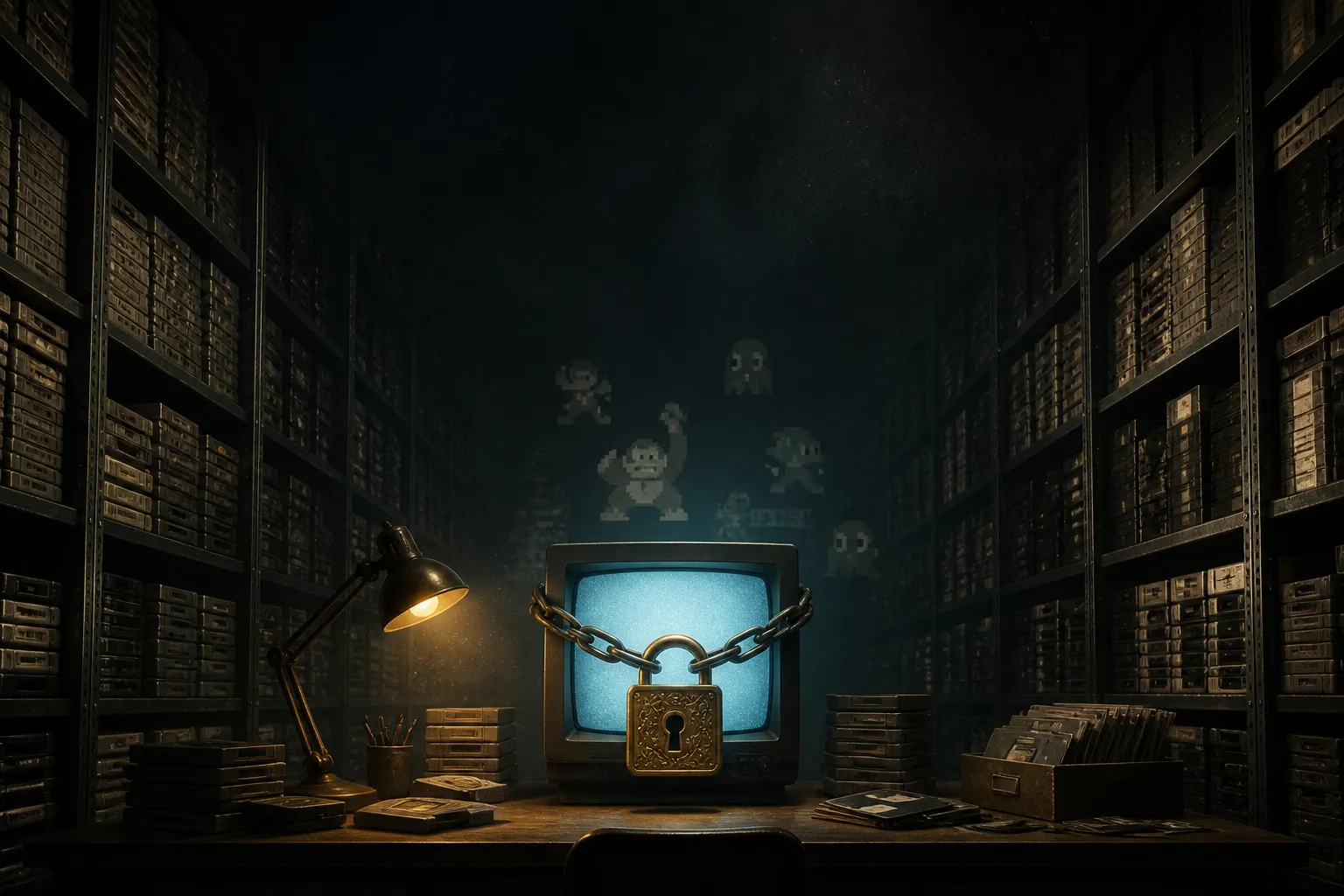
The digital age promised infinite access, yet the reality for video game preservation remains a struggle against legal frameworks and industry resistance. A recent decision by the U.S. Copyright Office, concluding its ninth triennial Section 1201 rulemaking in 2024, leaves libraries and archives without the critical ability to share out-of-print video games remotely for research. This outcome is not merely a bureaucratic detail; it is a fundamental challenge to the future of cultural memory, demonstrating a significant roadblock for institutions dedicated to historical preservation.
Section 1201 and the Preservation Dilemma
Section 1201 of the Digital Millennium Copyright Act (DMCA) establishes a broad prohibition. It makes it unlawful to circumvent technological measures that control access to copyrighted works. This includes a vast range of digital content, from software to video games. For libraries and archives, this presents a direct and often insurmountable obstacle. Copy protection mechanisms, designed to prevent unauthorized duplication, also prevent legitimate preservation efforts.
Consider a scenario where a library acquires a rare, out-of-print video game. To make that game playable for a researcher, the library might need to bypass its copy protection. Section 1201, however, criminalizes this act, regardless of whether the underlying use is noninfringing. This legal bind necessitates specific exemptions, which are painstakingly sought every three years. The law prioritizes technological control over cultural access, even when no commercial harm is present.
The Triennial Rulemaking Cycle
The process for obtaining these crucial exemptions is an intricate, cyclical mechanism. It begins with petitions for exemptions, followed by periods for written public comments. Public hearings then provide a forum for oral arguments, culminating in post-hearing materials that collectively form the administrative record. The Register of Copyrights reviews this extensive documentation and issues a Recommendation. Following this, the Librarian of Congress can adopt a final rule, a process that also involves a letter from the National Telecommunications and Information Administration (NTIA) of the Department of Commerce.
This entire structure underscores a critical point: any exemption granted is inherently limited and temporary. It covers only specific noninfringing uses for particular classes of works, and it expires after three years. This means the battle for preservation is never truly won; it is perpetually rejoined, requiring continuous advocacy and legal effort. This transient nature prevents stable, long-term strategies for digital archiving.
The 2024 Outcome for Game Preservation
The latest triennial Section 1201 rulemaking delivered a significant setback for video game preservationists. The U.S. Copyright Office concluded its 2024 cycle without granting a new exemption specifically for video game preservation. The Video Game History Foundation (VGHF) and the Software Preservation Network (SPN) had jointly petitioned for a crucial change: to allow libraries and archives to remotely share digital access to out-of-print games within their collections. This request was denied.
As a result, current Section 1201 rules still prohibit libraries and archives from breaking copy protection to make these games remotely accessible to researchers. The precise legal reasoning for this denial remains opaque in public statements, though the Register's Recommendation reportedly references the decision at pages 29 and 191. This lack of transparency only complicates future efforts, leaving preservation advocates to speculate on the specific barriers they must overcome.
The Scale of Lost History
The denial of remote access carries profound implications for the cultural record. A VGHF study, the Survey of the Video Game Reissue Market in the United States, revealed a stark reality: approximately 87 percent of video games released in the United States before 2010 are currently out of print. This statistic is not merely a number; it represents a vast, unpreserved history, a significant portion of interactive entertainment that is effectively lost to the public and to future scholarship.
Without reissues, these titles survive only in physical, often fragile, archival copies. The demand for remote access exemptions stems directly from this scarcity. If researchers cannot access these games from a distance, the vast majority of gaming history remains locked away, inaccessible to the very institutions tasked with its safekeeping. The gap between what exists physically in archives and what is available for study highlights a fundamental flaw in how digital cultural heritage is protected.
The Unfolding Challenge of Preservation
The struggle to preserve video game history faces not only legal hurdles but also significant industry opposition. The Entertainment Software Association (ESA), representing major game publishers, reportedly stated at a hearing that it would never support remote game access for research under any conditions. VGHF has characterized this stance as absolutist, drawing a clear line in the sand between commercial interests and public access.
Defining the Gaps
The current landscape raises critical questions for future consideration. Any renewed request for exemptions would need to clearly define its scope: will it cover remote research access, and under what specific conditions? Which classes of works will be considered, and what petitions, comments, and transcripts will support any decision? These are not minor details; they are the battlegrounds for future preservation efforts.
Many questions remain unresolved by the 2024 ruling. The full list of exemptions granted in the final rule is not widely detailed in available sources. Furthermore, clear pathways for libraries and archives to seek future exemptions, or to explore alternative legal avenues, are not explicitly laid out. The absence of a robust, industry-supported framework for preserving this significant cultural medium forces dedicated archivists and historians into a perpetual, uphill battle.
Preservation's Ongoing Dilemma
The current legal and industry environment places video game preservation in a precarious position. The 2024 Copyright Office ruling, by denying remote access for out-of-print titles, underscores a persistent conflict between intellectual property rights and the public interest in preserving cultural heritage. The overwhelming majority of classic games remain commercially unavailable, creating a reliance on archival efforts that are now further constrained.
For a medium with such pervasive cultural impact, the lack of a clear, functional pathway for historical access represents a significant failing. The long-term implications for scholarship, cultural memory, and even future game development are substantial. Until a more balanced approach emerges, a large part of video game history risks slipping into obscurity.
Please seek a professional. This article is general information, not legal advice. Please seek a licensed attorney in your state about your own situation.
Sources

Julian Thorne is a seasoned house writer for GoAndGame, known for his deep dives into obscure game mechanics and industry trends. He often explores the sociological impact of gaming, blending critical analysis with historical context.


