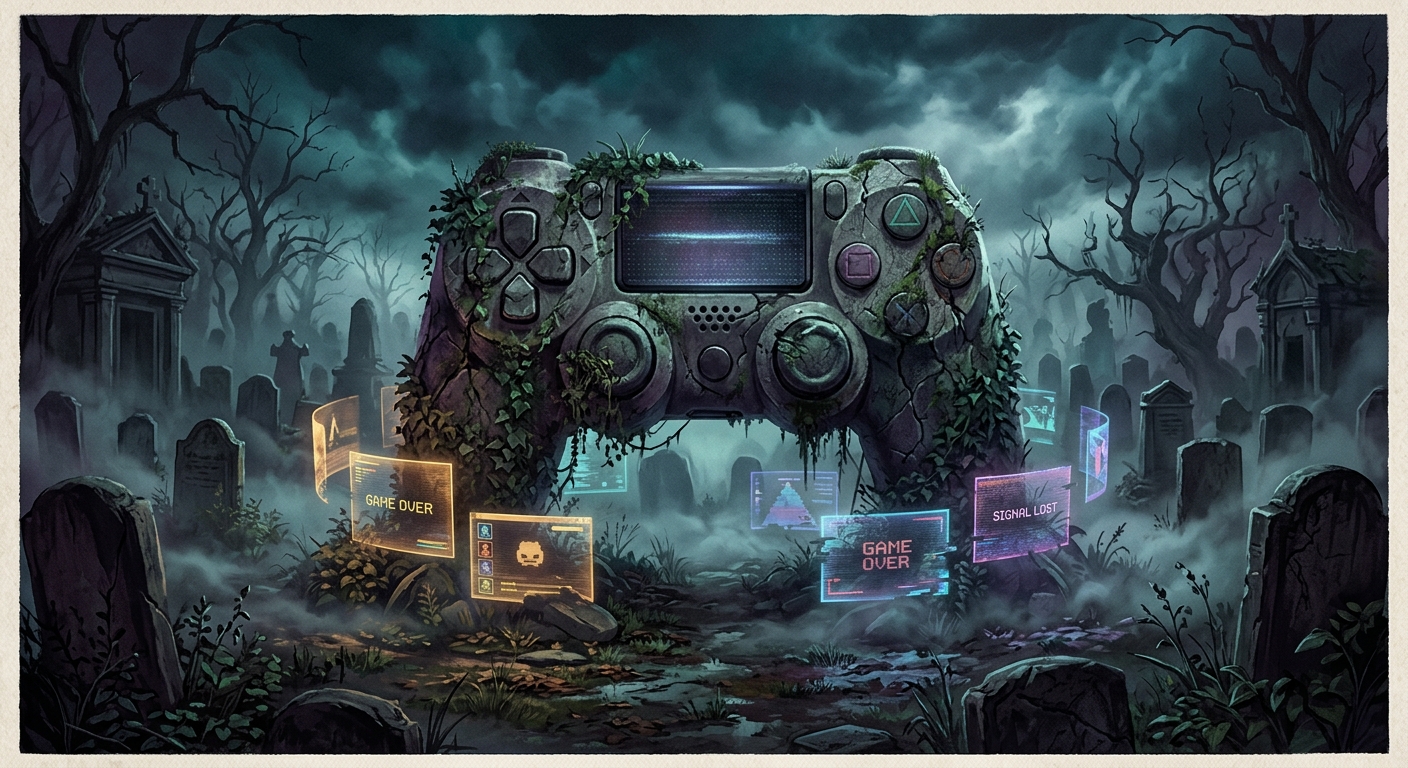
The video game industry faces a perpetual engagement trap. Studios chase the endless revenue streams of live-service models. Yet, the graveyard of failed experiments grows larger each year. This pursuit of sustained attention often undermines the fundamental appeal of finite, handcrafted stories. It sacrifices creative integrity on the altar of daily active users and seasonal battle passes. The question is no longer if this model is sustainable, but why the industry remains so committed to it.
The Live-Service Graveyard Keeps Growing
Analysis of recent years' releases paints a stark picture. Nearly every new live-service title launched during 2024 and 2025 experienced dramatic player attrition within months. This raises serious questions about the model's structural viability. Many studios seem compelled to take this recurring gamble, despite repeated failures.
Industry veteran Scott Hartsman, speaking at GDC, argued that the core economics of live-service development are often misunderstood. Even inside the studios creating them. The overhead to keep a game alive with seasonal content, balance patches, and community management often exceeds its original development budget within two years. This is a quiet, ongoing cost that many fail to account for.
This pattern is not new, but its scale is accelerating. A failed live-service experiment once meant a single product cycle loss for a mid-tier studio. Today, a misfire can trigger widespread layoffs, studio closures, or the cancellation of unannounced projects. These projects often quietly funded the next would-be hit, creating a precarious dependency.
What Players Actually Want (And Keep Saying)
MIDiA Research's October 2024 survey data provided unusual clarity. It contradicted many industry assumptions. A majority of gamers across platforms actively prefer single-player experiences. This preference is most pronounced among players aged 25 and older. They cite limited leisure time as a primary driver, valuing complete, self-contained narratives.
The commercial success of titles like Black Myth: Wukong served as a live datapoint. This wholly single-player, narrative-driven action RPG launched with no battle pass, no seasonal roadmap, and no multiplayer component. It demonstrated that the audience MIDiA described is not a niche. It is a plurality, capable of generating enormous revenue when served correctly.
There is a clear disconnect. Surveys and sales data repeatedly show a preference for single-player games. Yet, major publishers continue to greenlight live-service products. This suggests the live-service imperative is driven less by player demand. It is more about the financial modeling preferences of investors and platform operators, who equate daily active users with long-term asset value.
How the Imperative Corrupts the Creative Process
When a single-player game is developed within a studio also operating a live-service product, a design leakage often occurs. The vocabulary of perpetual engagement tends to seep across the firewall. Progress systems get stretched. Collectibles multiply. Endings are softened into 'content update opportunities' rather than genuine narrative resolutions. The very structure of the game bends to external pressures.
Scott Hartsman's GDC remarks touched on what he called the 'systems-first trap.' Live-service thinking encourages teams to build engagement loops before they build a world worth engaging with. This reverses the creative priority that historically produced the games players remember decades later. A rich world and compelling story are secondary to a retention mechanic.

The toll on writers and narrative designers is often underreported, but it is significant. Story teams inside live-service-adjacent projects increasingly describe being handed mechanical constraints. Session lengths, retention hooks, and FOMO-triggering calendar beats arrive before they have been asked what story they actually want to tell. The narrative becomes a container for mechanics, not the driving force.
The Arcade DNA That Understood Endings
There is something instructive in looking back at the cabinet era. A game's design was ruthlessly shaped by the coin slot and the high-score table. These constraints forced economy of expression. They taught players to find meaning in finite, repeatable arcs, not in endless progression ladders.
Classics like dot-eating maze runners, vector shoot-'em-ups like Asteroids Remake, and scrolling segment-based shooters such as Segment Storm were complete experiences in two to five minutes. Their designers could not hide weak fundamentals behind a season pass. The result was a kind of brutal honesty about what made moment-to-moment play rewarding.
That honesty is precisely what the live-service imperative tends to erode. When the goal is to keep a player inside the product indefinitely, there is no longer any incentive to make a strong, clean ending. Without the pressure of an ending, both narrative and mechanical design lose one of their most powerful organizing principles. The satisfaction of completion is replaced by the treadmill of continuation.
A Path That Still Exists, If Studios Choose It
The evidence that a non-live-service path remains commercially viable is substantial and growing. Mid-budget single-player titles with defined scopes, honest marketing, and genuine narrative completion consistently outperform their projected sales. This occurs when the underlying craft is present. It suggests the risk calculus has been systematically overweighted against them.
Hartsman and other industry voices have begun arguing publicly that the studios most likely to survive the next contraction are those that can articulate clearly what their game is. They must state when it ends, and why that ending is worth the price of admission. This is a pitch that the live-service model structurally cannot make; it always promises more, never a definitive conclusion.
For players who grew up feeding quarters into machines that asked for skill and rewarded completion, the appetite for that kind of honest transaction has never gone away. The question is whether enough decision-makers inside the current industry can remember what it felt like to walk away from a screen satisfied, rather than merely scheduled for the next update.
Sources

Julian Thorne is a seasoned house writer for GoAndGame, known for his deep dives into obscure game mechanics and industry trends. He often explores the sociological impact of gaming, blending critical analysis with historical context.


