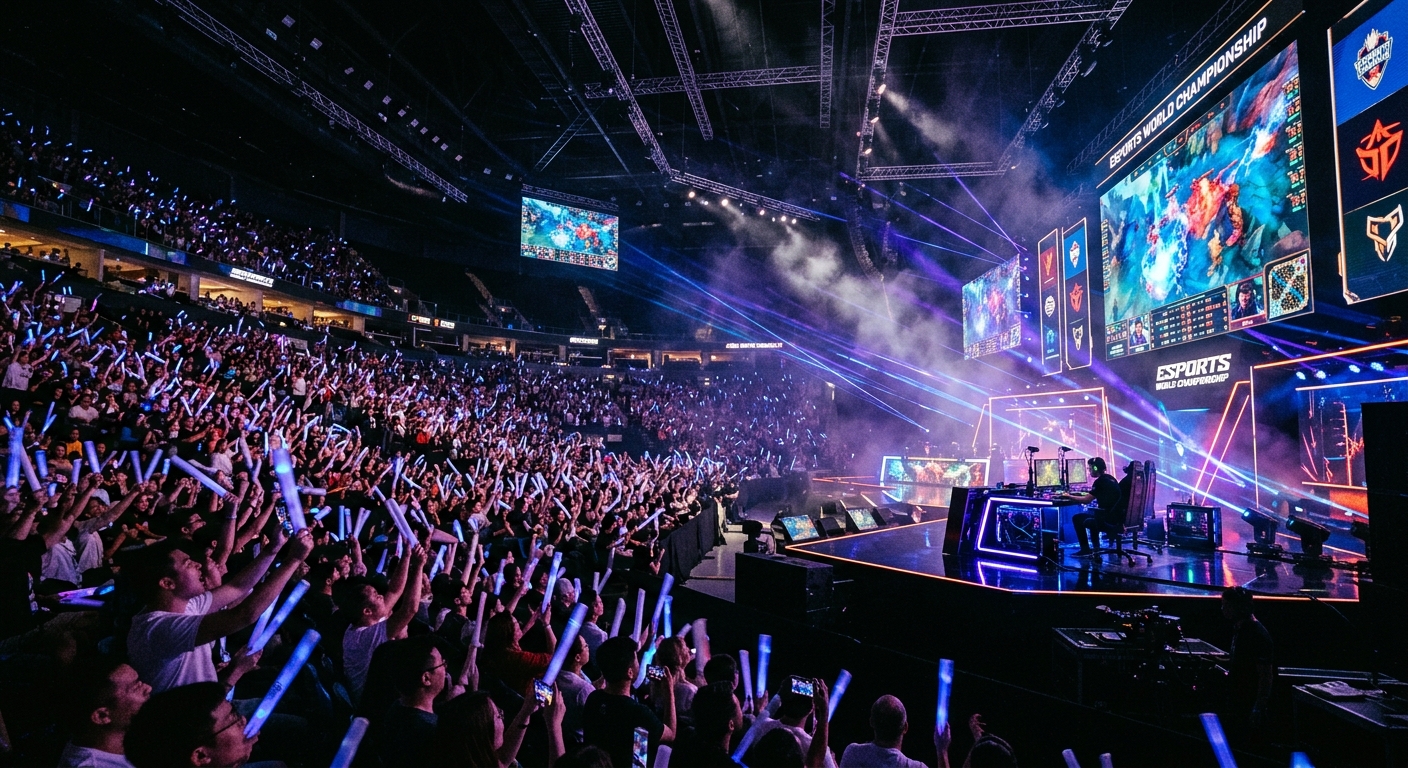
From a projected $55 billion market to grassroots foundation programs, competitive gaming is reshaping entertainment, sponsorship, and the very definition of sport. The dynamics have evolved dramatically, driven by technological shifts and changing consumer behavior.
A Market Growing Faster Than Almost Anyone Predicted
Analysts now project the global esports market will reach $55.41 billion by 2035, a figure that would have seemed fantastical even a decade ago when the industry was still fighting for legitimacy in boardrooms and broadcast deals. A separate 2026 industry analysis places the current market at $17.42 billion, underscoring that the growth curve between now and 2035 is steep but grounded in concrete revenue streams, including media rights, merchandise, ticket sales, and an increasingly sophisticated sponsorship ecosystem.
Mobile gaming is identified as one of the primary accelerants, democratizing access to competitive play in regions where console and PC infrastructure has historically lagged. This shift has effectively added hundreds of millions of potential viewers and players to the addressable audience in a short span, compressing what might have taken traditional sports decades to accomplish geographically.
Brand Investment Moves From Experiment to Strategy
Major brands that once treated esports sponsorships as speculative marketing experiments are now committing multi-year, multi-million dollar partnerships, treating competitive gaming with the same strategic weight previously reserved for traditional sports leagues like the NFL or the Premier League. The demographic appeal is central to this shift, since esports audiences skew younger and are notoriously resistant to conventional advertising formats.
This creates a rare opportunity for brands to integrate authentically into tournaments, team jerseys, and streaming broadcasts. Endemic brands, such as hardware manufacturers and energy drink companies, remain dominant sponsors. Non-endemic entrants from sectors like automotive and finance are accelerating their presence, seeking to engage an audience that has matured enough to carry general consumer spending power rather than just gaming purchases. The sponsorship model is no longer a bet on future relevance. For many brands, it is already the primary channel reaching audiences under thirty.
The Esports Foundation and the Infrastructure of Legitimacy
Behind the spectacle of sold-out arenas and seven-figure prize pools lies a quieter institutional layer. The Esports Foundation, a Saudi Arabian nonprofit funded by the Public Investment Fund and chaired by Crown Prince Mohammed bin Salman, works to establish governance frameworks, player welfare standards, and pathways for national representation in competitive gaming. Founded in October 2023 and formerly called the Esports World Cup Foundation, it renamed itself in March 2026 and now organizes both the annual Esports World Cup in Riyadh and the Esports Nations Cup. The 2024 Esports World Cup featured a $62 million prize pool, making it the largest professional esports event by total payout on record.
Programs like the Club Partner Program help regional clubs develop talent systematically. Critics argue that such institutionalization risks calcifying an industry that thrives on decentralization and community-driven origins. Governance structures borrowed from traditional sports may not account for the rapid shifts in game titles that define competitive relevance in any given year. The Foundation's state backing and Riyadh headquarters also invite scrutiny about whether a centralized, government-linked body is the right steward for a global, community-rooted culture.
What Legitimacy Means for Players and Fans
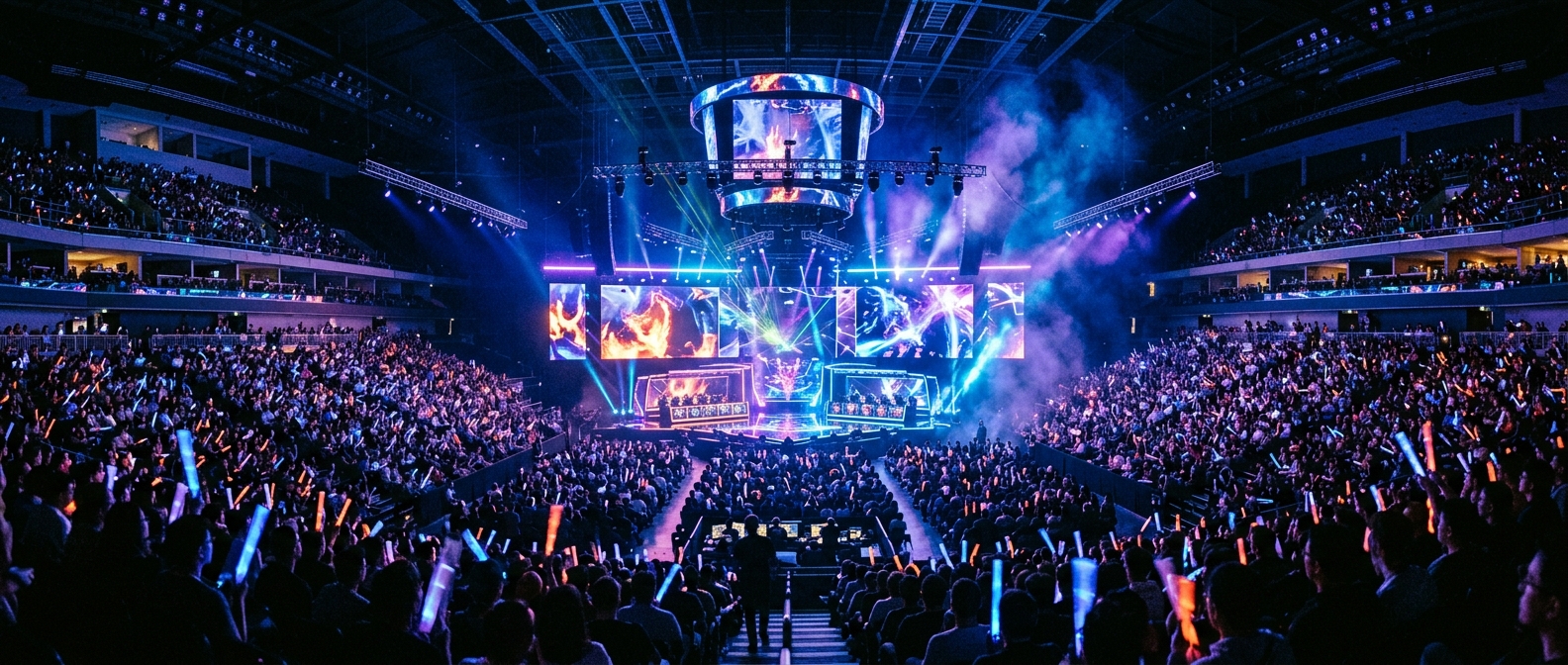
The maturation of esports infrastructure translates into tangible improvements for players. Longer contracts, access to sports psychologists, and structured practice environments are becoming standard at top organizations rather than rare perks. In the industry's early years, player protections were thin at best, and career security was largely informal. The move toward standardized agreements and player welfare programs mirrors what traditional sports unions fought to establish over generations, compressed now into a much shorter institutional timeline.
Fans benefit from higher production values and more consistent broadcast schedules, making it easier to follow favorite teams without hunting across obscure streaming platforms. The longer arc of legitimization points toward esports occupying a permanent space in mainstream sports media calendars, not as a novelty segment wedged between highlights but as a primary programming block with dedicated analysts and replay culture. Whether that future arrives by 2030 or takes longer depends heavily on which titles hold competitive audiences and whether the governance layer can stay nimble enough to follow them.
The Arcade DNA Running Through Competitive Gaming
The competitive instincts driving billion-dollar esports ecosystems trace a direct lineage back to the arcade cabinets of the 1970s and 1980s, when players crowded around screens to beat high scores and establish local dominance in games built on fast feedback loops and visible scoring. That reflex economy, quick punishment, transparent ranking, repeatable challenge, remains the structural blueprint that modern esports titles scale into spectator sports. A crowd watching a tournament final is responding to the same basic tension a teenager once felt watching a stranger chain together a perfect run on a single glowing cabinet.
Understanding that continuity helps explain why competitive gaming feels intuitive even to people who have never considered themselves sports fans. The games change. The formats expand. Prize pools grow by orders of magnitude. The underlying pull stays consistent. As the industry institutionalizes, the challenge is to preserve that raw, immediate energy inside structures built for scale. The best competitive titles still manage it, putting one player against a crowd of millions and making every decision feel consequential in real time. Titles like Asteroids Remake, Segment Storm, and Star Dive carry that same arcade spirit forward.
Sources

Eliot Reed writes about the intricacies of virtual worlds, blending analysis with storytelling. As a house writer for GoAndGame, he delves deep into game mechanics and narratives, offering thought-provoking insights for players and developers alike.


