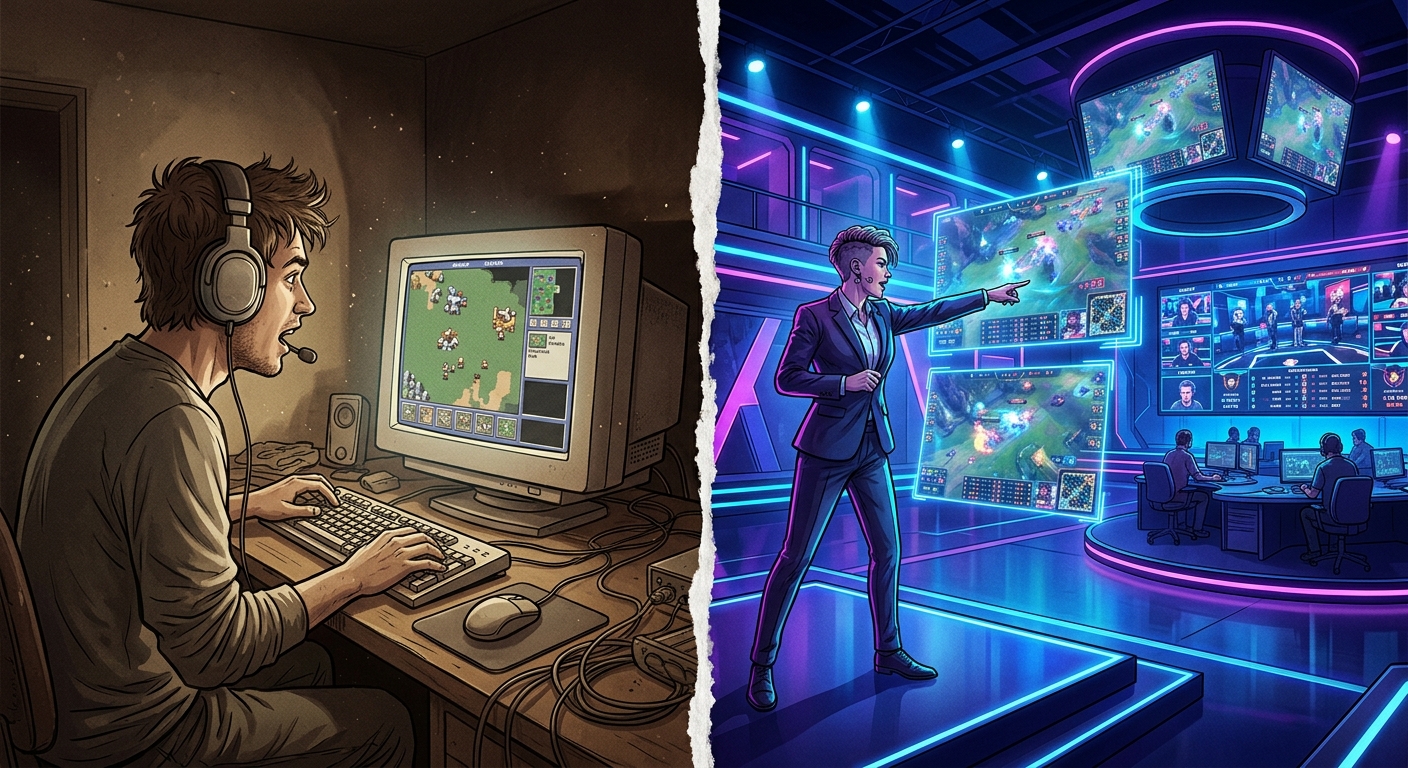
Esports broadcasting has traveled a long road from bedroom streams captured on consumer webcams to arena productions with dedicated camera crews, motion-graphics departments, and six-figure commentary contracts. The pace of that change has not slowed. Heading into 2026, every assumption about how competitive gaming reaches an audience is being stress-tested by new technology, fractured monetization, and viewers who want something television never offered them.
How the Broadcast Baseline Changed
Traditional sports television spent decades building around a single idea: one camera feed, one commentary team, one channel. Esports shattered that template before it ever had a chance to settle. Streaming platforms gave tournament organizers direct access to audiences without a network contract, and they gave individual players the same reach as entire production companies. By the time dedicated esports arenas started appearing in major cities, the audience had already been trained to expect interactivity, chat windows, and the option to switch between casters mid-match.
That expectation has matured into something broadcasters now have to plan around. A single championship match in 2025 can run simultaneously across an official stream, a dozen co-streams from prominent personalities, and regional language broadcasts, each with its own commentary team and visual style. Rights holders have had to loosen co-streaming restrictions or risk watching the audience migrate entirely to unlicensed coverage. The result is a broadcast ecosystem that is plural by design, not by accident.
AI and Real-Time Data Are Changing the Screen
The integration of machine-learning tools into live production is the single biggest technical shift in esports broadcasting right now. Systems that recognize clutch moments and standout plays almost instantly have compressed the gap between an action occurring and its delivery as a highlight clip. A producer no longer has to catch every moment manually. The algorithm flags it, clips it, and queues it for the replay package before the crowd noise has finished echoing.
Real-time statistics overlays have moved well beyond simple kill counts. Win-probability meters, heat maps of player positioning, and per-round economy breakdowns now appear on screen the way batting averages and field-goal percentages appear in traditional sports coverage. The editorial question this raises is genuine: when an algorithm decides which numbers appear on screen, it also shapes the story the viewer constructs about the match. Broadcasters are still working out where human editorial judgment ends and automated curation begins, and that negotiation is happening in public, one tournament at a time.
Monetization Has Not Caught Up to the Audience
The advertising model that funds linear television does not translate cleanly to a streaming audience that grew up with ad blockers and subscription tiers. Long tournament broadcasts test viewer patience during commercial breaks, and the drop-off in concurrent viewers during those interruptions is measurable. Broadcasters know it. Sponsors know it. The workaround strategies range from branded overlays that stay on screen throughout play to mid-game sponsored segments woven into analyst desk content.
Subscription access, merchandise bundles tied to broadcast milestones, and in-game cosmetic drops that activate during live events have all entered the mix. None of them has replaced advertising revenue on their own. Analysts at timesofgames.com, citing a CapitalCrest Insights report, project the broader esports market could reach a compound annual growth rate of 7.5 percent through 2026, but that growth is spread across sponsorships, media rights, and merchandise rather than concentrated in any single broadcast revenue line. Prize pools with multimillion-dollar payouts draw viewership spikes, but the funding behind those pools often operates on margins that leave broadcasters with little room for infrastructure investment.
Immersive Formats Are the Next Wager
Because esports exists entirely in a digital space, it can do things with augmented reality that physical sports cannot. There is no ball to track through real air, no field whose dimensions conflict with a virtual overlay. Tournament operators have already piloted AR elements that render ability animations directly onto the broadcast frame, letting a viewer who has never played the game understand a fight sequence at a glance. Virtual studio environments allow remote production teams to appear together on screen without sharing a physical building, cutting travel costs for events that span multiple continents.
Interactive co-watching is the format drawing the most genuine experimentation. Platforms are testing features that let viewers vote on which replay angle runs next, unlock behind-the-scenes feeds, or receive personalized stat breakdowns based on which player they are following. The passive broadcast model, where a director decides everything and the audience watches, is being replaced by something closer to a live game itself. That shift carries real production risk; building a broadcast that handles viewer input without breaking the live feed is a harder engineering problem than it looks. Still, several major tournament operators have moved past the pilot stage, which suggests the passive model's days as the industry default are numbered.
Setup
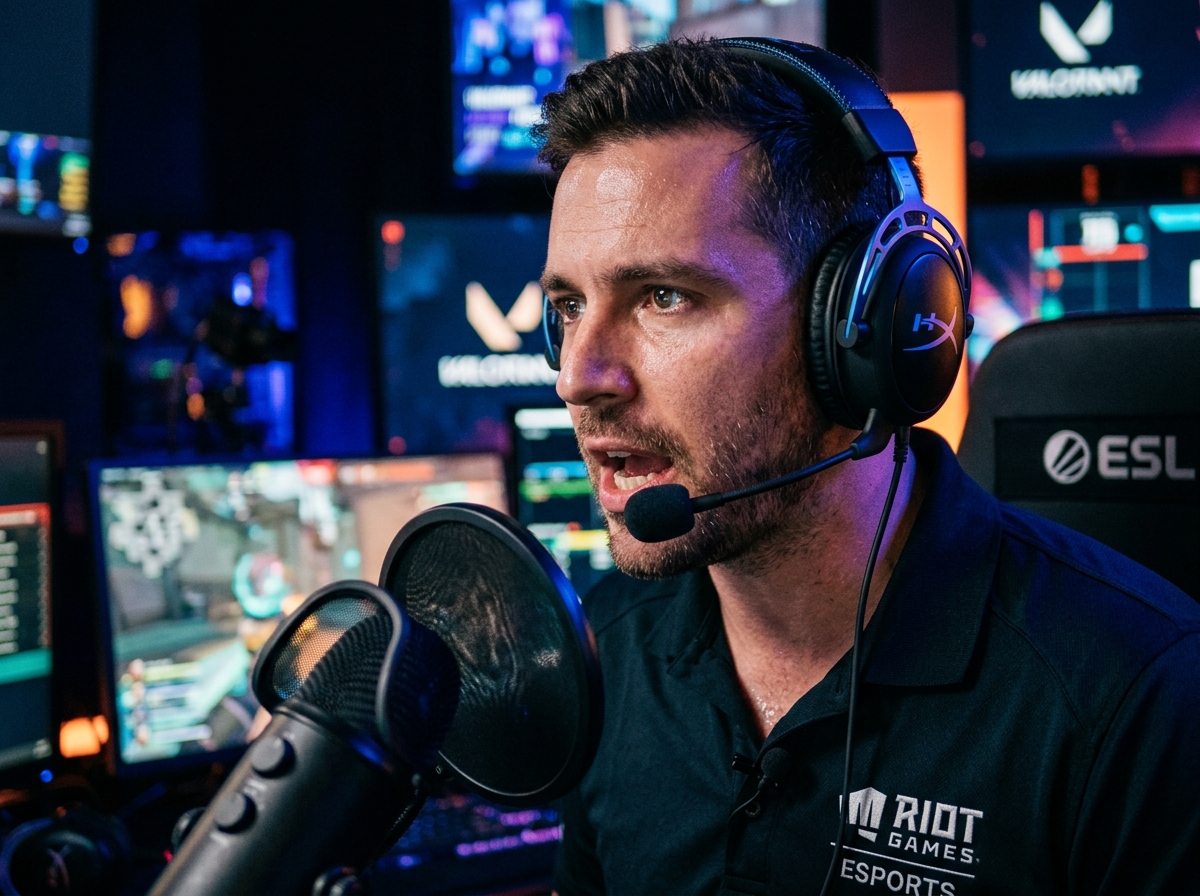
The broadcaster in a purpose-built studio, calling a match under RGB lighting, represents the infrastructure layer esports spent years building. That layer now exists. It is no longer the story. The story is what gets built on top of it, and the next construction phase will be defined by interactivity, data, and the willingness to let the audience inside the production in ways television never permitted.
Payoff
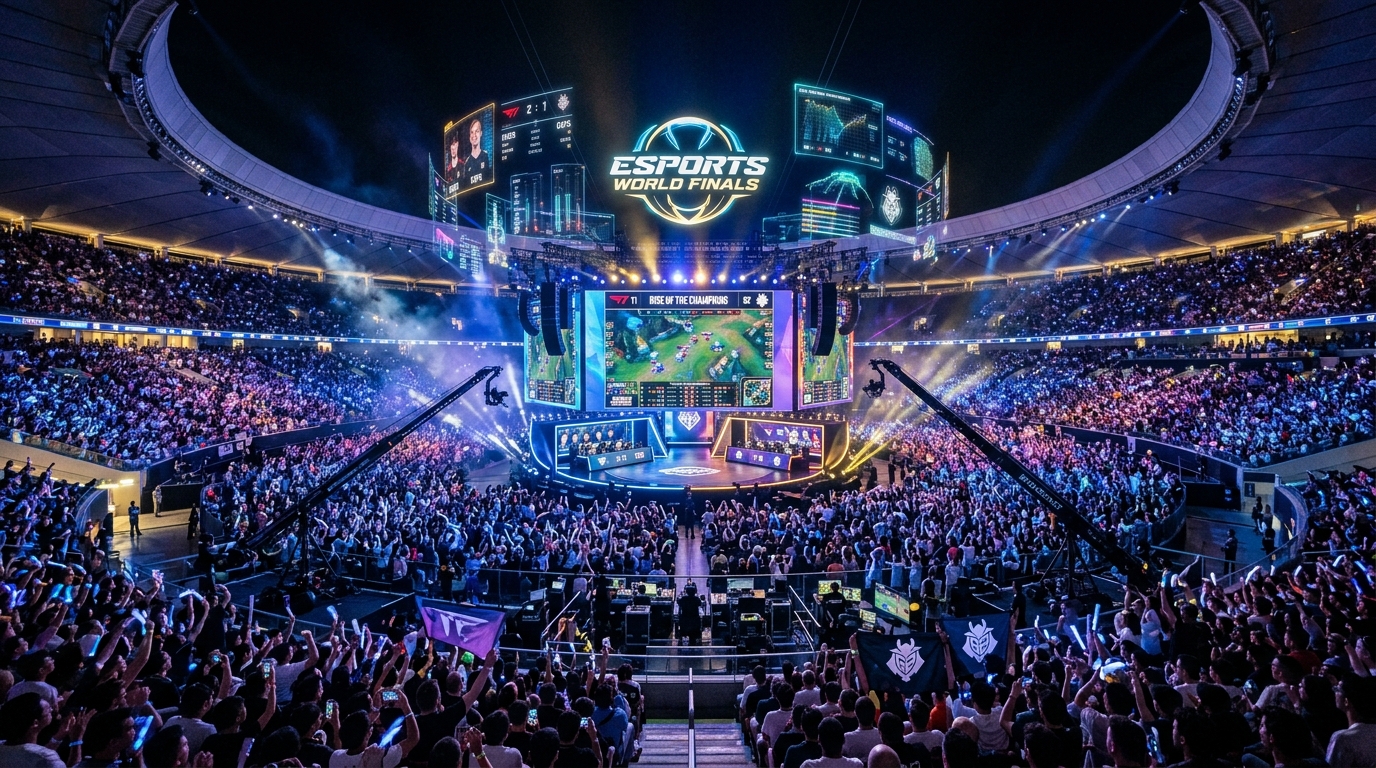
The packed arena shot, with LED walls and holographic overlays rising above thousands of spectators, is what the industry points to when it wants to prove legitimacy. But the viewers filling those seats are the same people who will watch the next major event from a VR headset, or through a co-streamer with forty thousand subscribers, or through a personalized feed that never shows them the angles they find boring. Esports broadcasting earned the arena. Now it has to earn something harder: an audience that chooses it over every other option it has built for itself.
Sources

Eliot Reed writes about the intricacies of virtual worlds, blending analysis with storytelling. As a house writer for GoAndGame, he delves deep into game mechanics and narratives, offering thought-provoking insights for players and developers alike.


