
From split-screen living rooms to seamless online worlds, cooperative games are rewriting the rules of shared storytelling, and the results are stranger, richer, and more human than anyone expected.
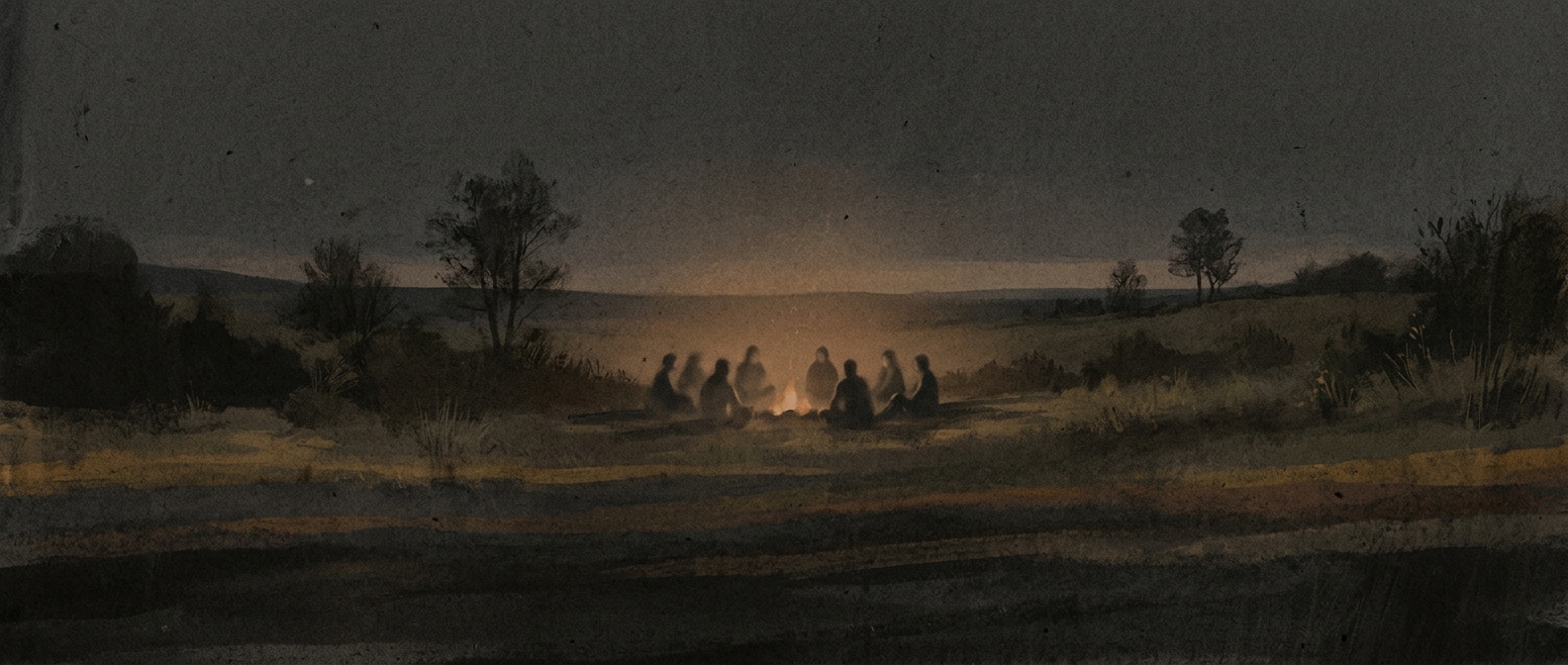
The Campfire Problem: Why Shared Stories Are Hard to Tell
For most of gaming history, narrative was a solitary contract between designer and player, a single protagonist moving through a single authored arc, with no one else at the table to complicate the journey or redirect the campfire light.
Cooperative multiplayer shattered that compact without immediately replacing it with anything coherent, leaving early co-op titles caught between a designed story meant for one and a play-space suddenly occupied by two, four, or dozens of people with competing instincts and attention spans. The tension that emerged, between authored meaning and emergent chaos, is the central creative problem that cooperative narrative design has spent the better part of two decades slowly, imperfectly, and sometimes brilliantly learning to solve.
Understanding how designers eventually bridged that gap requires going back to the structural assumptions that made single-player storytelling feel natural in the first place, and then watching what happened when those assumptions were deliberately, systematically broken.
Parallel Tracks: Early Experiments in Shared Protagonist Space
The first generation of co-op narrative experiments tended to resolve the multiplayer problem by simply multiplying protagonists without multiplying story, think of two characters with different color palettes moving through identical cutscenes, their individual perspectives acknowledged in name only.
What those early games discovered, often painfully, was that players refused to behave like passive recipients of story; they talked over cutscenes, wandered off during dialogue, and used the presence of another human being in the space as permission to treat every solemn moment as an opportunity for chaos.
Rather than reading this as a failure of player respect, a younger generation of designers began reading it as data, evidence that co-op spaces generate their own spontaneous narrative grammar, one built from interpersonal dynamics, shared mistakes, and the specific texture of two people trying to solve a problem together under pressure. Titles documented in cooperative game retrospectives increasingly show designers leaning into asymmetric information, giving each player knowledge the other lacks, forcing conversation, negotiation, and occasionally magnificent misunderstanding as the actual engine of story progression.
The shift was quiet but seismic: story was no longer something that happened to players, but something that happened between them.
The Architecture of Elsewhere: Building Worlds That Remember Who Was There
Projects like Elsewhere Electric, documented on Wikipedia as an exploration of cooperative puzzle-adventure design, represent a more mature phase of this evolution, one where the world itself is structurally aware that multiple consciousnesses are inhabiting it simultaneously and builds its mysteries accordingly.
The architectural challenge is formidable: a game world that tells a coherent story must somehow remain coherent when two players are standing in different rooms, discovering different fragments of that story at different speeds with different emotional registers.
One solution that has gained traction is what designers informally call 'narrative debt', the world withholds full meaning from any single player's perspective, requiring the literal act of reunion, of players finding each other and comparing notes, to generate the complete picture. This transforms communication from a tactical tool into a narrative medium; the story isn't in the environment alone or in either player alone, but in the specific conversation that happens when two people who have been separated by the game's architecture finally come back together and start talking.
The emotional payoff of that reunion, the 'you won't believe what I found' moment, is something single-player design cannot replicate by definition, and its discovery represents one of the genuine formal innovations that cooperative narrative has contributed to the art form.
Genre Crosscurrents: How Arcade DNA Shapes Cooperative Storytelling
It would be a mistake to treat cooperative narrative evolution as solely the province of prestige indie studios working in introspective puzzle-adventure spaces, the arcade tradition, with its emphasis on score, survival, and spatial mastery, has contributed structural ideas that keep co-op stories kinetic and legible even under chaos.
The rhythm of arcade design, clear objectives, escalating pressure, the constant possibility of failure and the immediate invitation to try again, maps surprisingly well onto cooperative narrative because it gives shared experience a shape, a before-and-after, a moment of crisis that both players remember identically even if they processed it differently. High-score mechanics, wave structures, and the compressed mythology of arcade worlds create what might be called 'incident memory', the session becomes a collection of shared incidents that players narrate back to each other afterward, constructing meaning retrospectively in exactly the way oral storytelling cultures have always worked.
The best contemporary co-op games are the ones that have learned to honor both traditions simultaneously: the depth and patience of authored narrative and the fierce, immediate, repeatable clarity of arcade structure, letting each register amplify the other rather than compete for the player's attention.
As cooperative play continues to mature as a form, the most interesting design conversations are happening at exactly this intersection, between story and score, between meaning and mastery, between the campfire and the cabinet.

Eliot Reed writes about the intricacies of virtual worlds, blending analysis with storytelling. As a house writer for GoAndGame, he delves deep into game mechanics and narratives, offering thought-provoking insights for players and developers alike.


