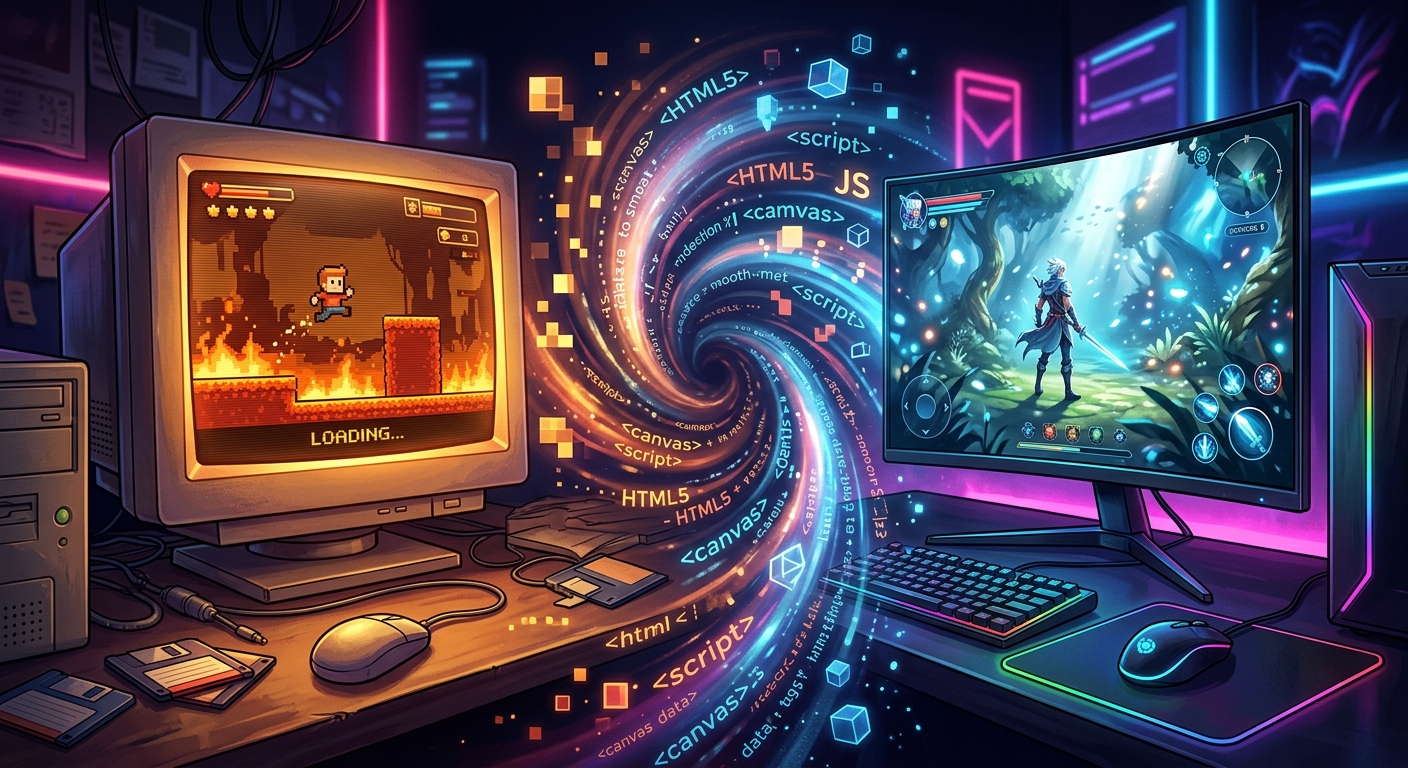
The world of browser games has undergone a remarkable transformation. Once dominated by Adobe Flash, this form of entertainment has adapted and evolved through various technological shifts. Today, HTML5 serves as the backbone for many games, ensuring the spirit of arcade classics lives on.
The Flash Era: A Golden Age With an Expiration Date
- Adobe Flash dominated browser gaming through the 2000s, enabling rich animations and interactivity that plain HTML could not touch.
- Flash's proprietary nature and persistent security vulnerabilities made it a target for criticism even at its peak popularity.
- Adobe's 2017 end-of-life announcement for Flash sent shockwaves through the casual gaming community, threatening to erase thousands of titles.
HTML5 Steps Into the Void
- HTML5, paired with the Canvas API and WebGL, gave developers open, plugin-free tools capable of matching and often exceeding Flash's visual output.
- Mobile-first design requirements accelerated HTML5 adoption, since Flash never ran natively on iOS devices.
- Performance improvements in modern JavaScript engines meant that even physics-heavy or particle-rich games could run smoothly in the browser.
Arcade DNA Lives On
- Many HTML5 games deliberately echo classic arcade mechanics — score chasing, tight input loops, and single-screen clarity — proving the formula is timeless.
- Preservation projects and open-web advocates worked to port or recreate beloved Flash titles so they would not vanish entirely after the plugin's shutdown.
- Instant-play convenience remains the browser game's killer feature: no download, no install, just click and go.
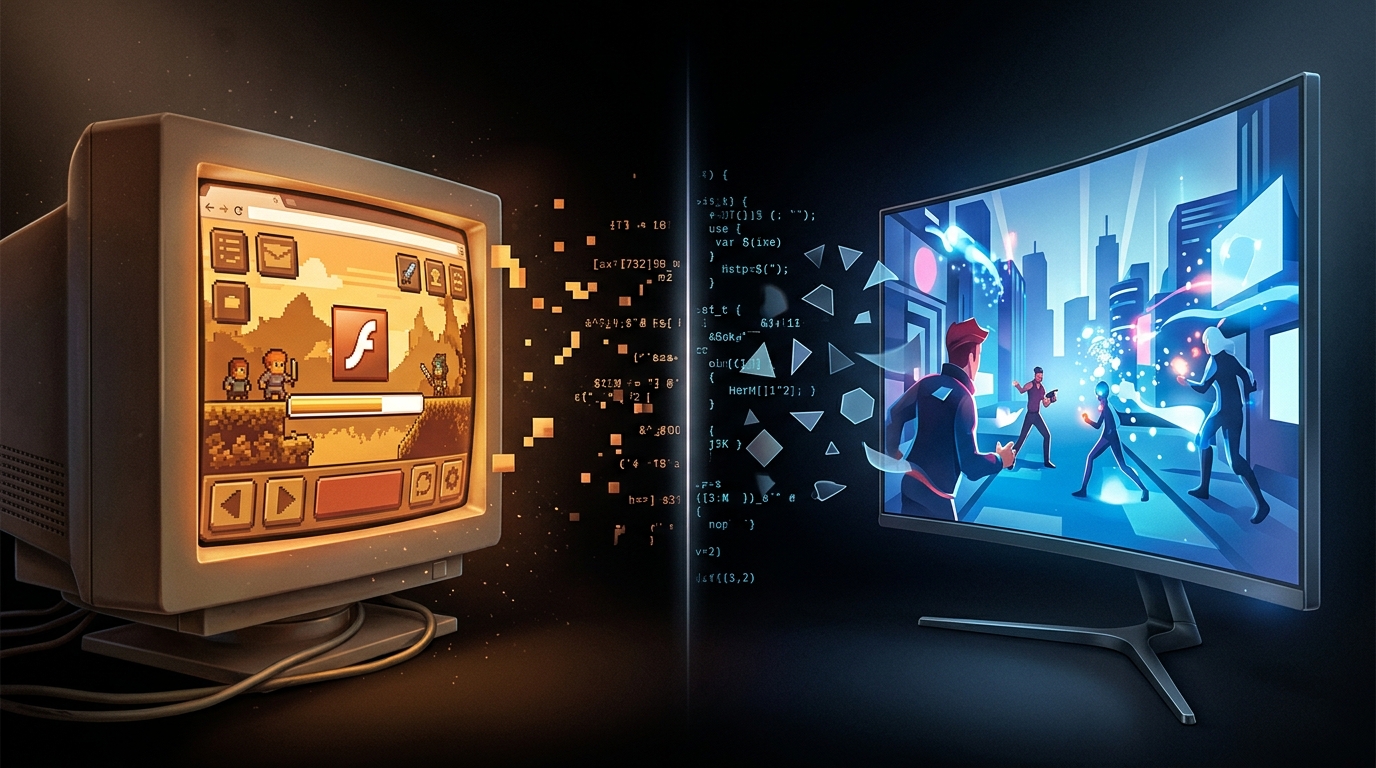
What Comes Next
- WebAssembly is enabling near-native performance in the browser, opening the door for more complex game engines to compile directly to the web.
- Cloud gaming and progressive web apps are blurring the line between browser games and full desktop or console experiences.
- Independent developers continue to find the browser an attractive low-barrier platform for experimenting with arcade-style concepts.
As we look to the future, the possibilities are endless. Browser games remain a dynamic part of our digital landscape, creatively adapting to technological advancements while retaining their nostalgic roots.
Sources
- https://hackernoon.com/the-evolution-of-browser-games-from-flash-to-modern-times
- Browser-Based Games: From Flash to HTML5 - Cool Games
- The Evolution of Online Gaming: From Flash to HTML5
- EVOLUTION Games 🐵 - Play Free Online EVOLUTION Games - Gamaverse.com
- Top Emerging Trends in HTML5 Game Development for 2025 | Melior Games

Eliot Reed
Eliot Reed writes about the intricacies of virtual worlds, blending analysis with storytelling. As a house writer for GoAndGame, he delves deep into game mechanics and narratives, offering thought-provoking insights for players and developers alike.