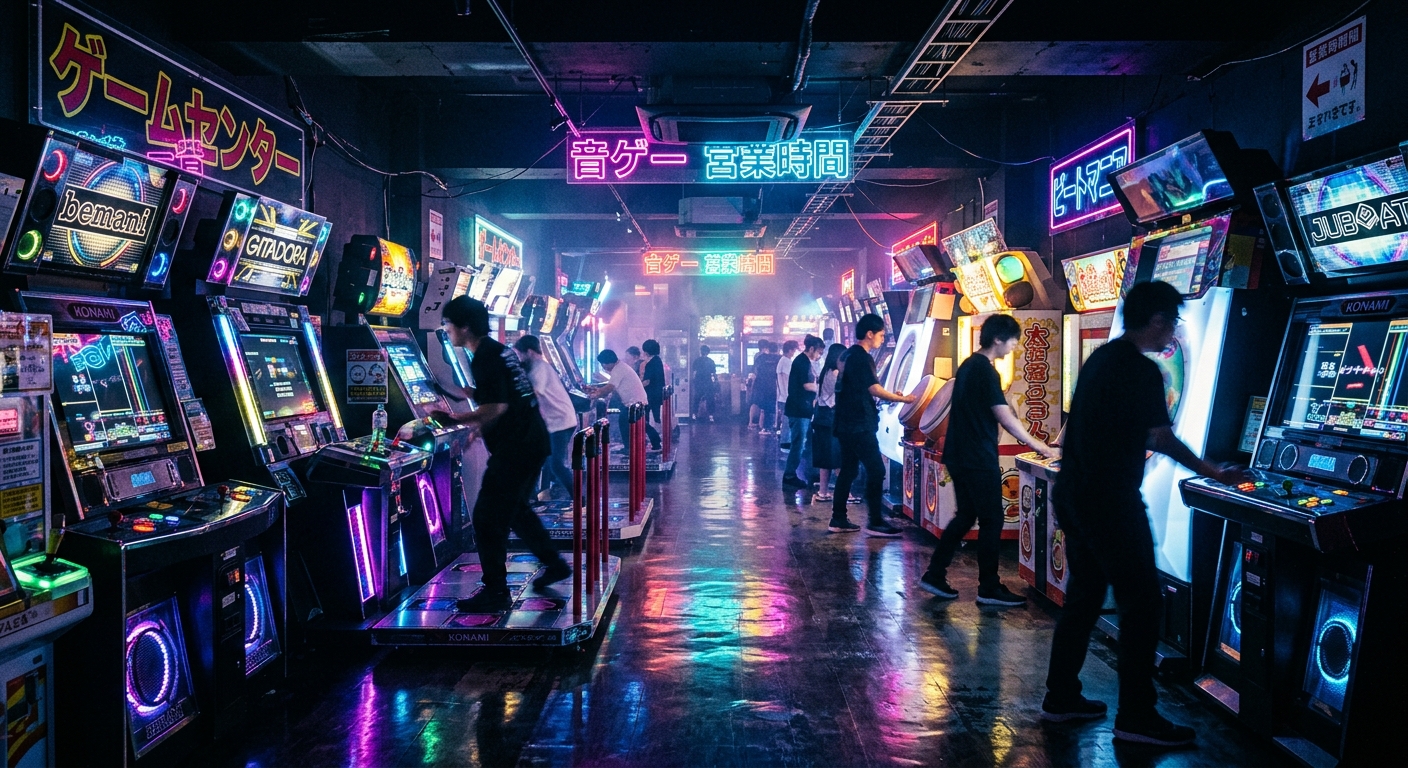
Japanese rhythm games have transformed arcades, streets, and online spaces with their infectious beats and demand for split-second timing. A glance into their history reveals layers as vivid as the neon signs crowding the game centers of Akihabara and Shinjuku. The story is not only about scores and button presses. It is about hardware obsession, licensing headaches, and communities that formed in the gap between plays.
The Cabinet as Cultural Institution
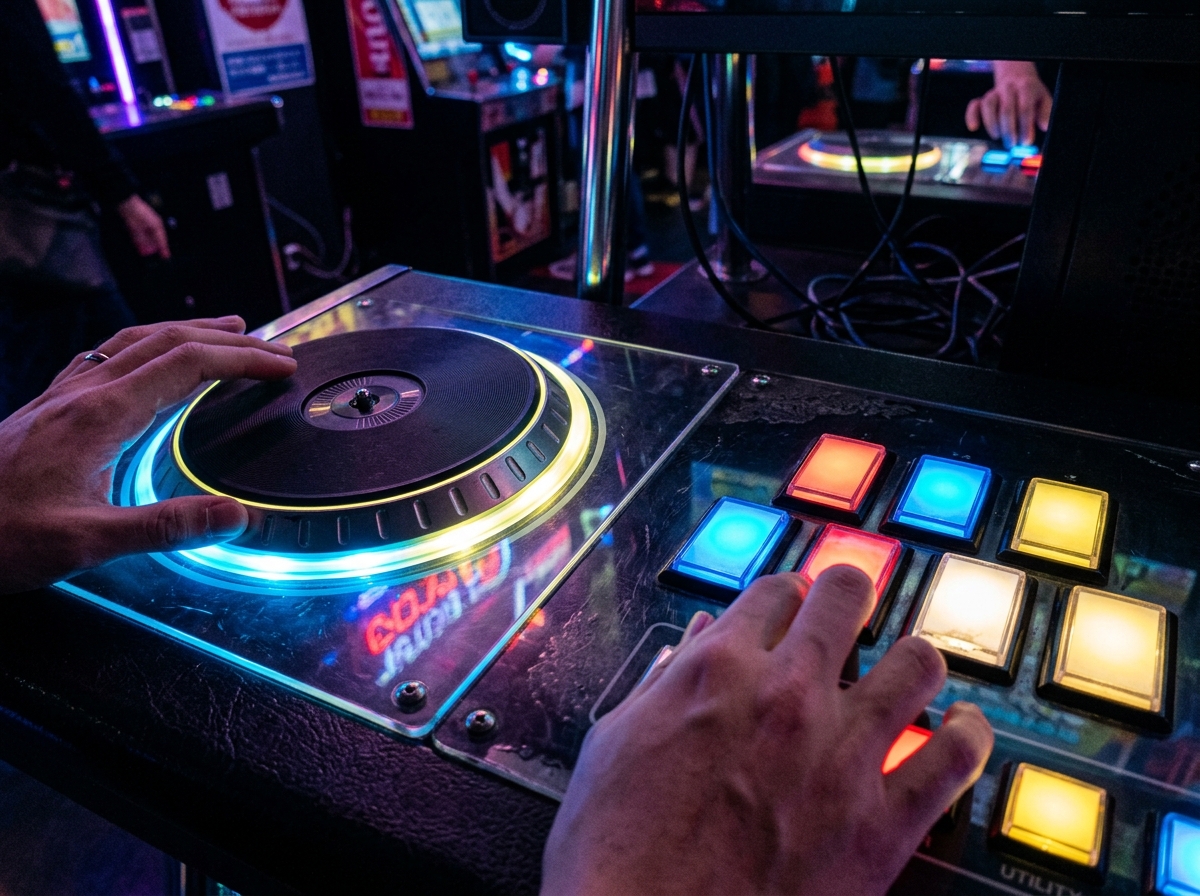
In Japan, arcades function as social infrastructure. Rhythm game cabinets, with their towering speaker stacks and backlit panels, turned individual play into something closer to a public performance. Beatmania debuted in 1997 and pulled DJ culture off the street and onto a controller anyone could reach. Dance Dance Revolution followed and made the whole body the instrument. Crowds gathered not just to play but to watch, and that visibility created regional competitive circuits long before streaming made spectators out of everyone.
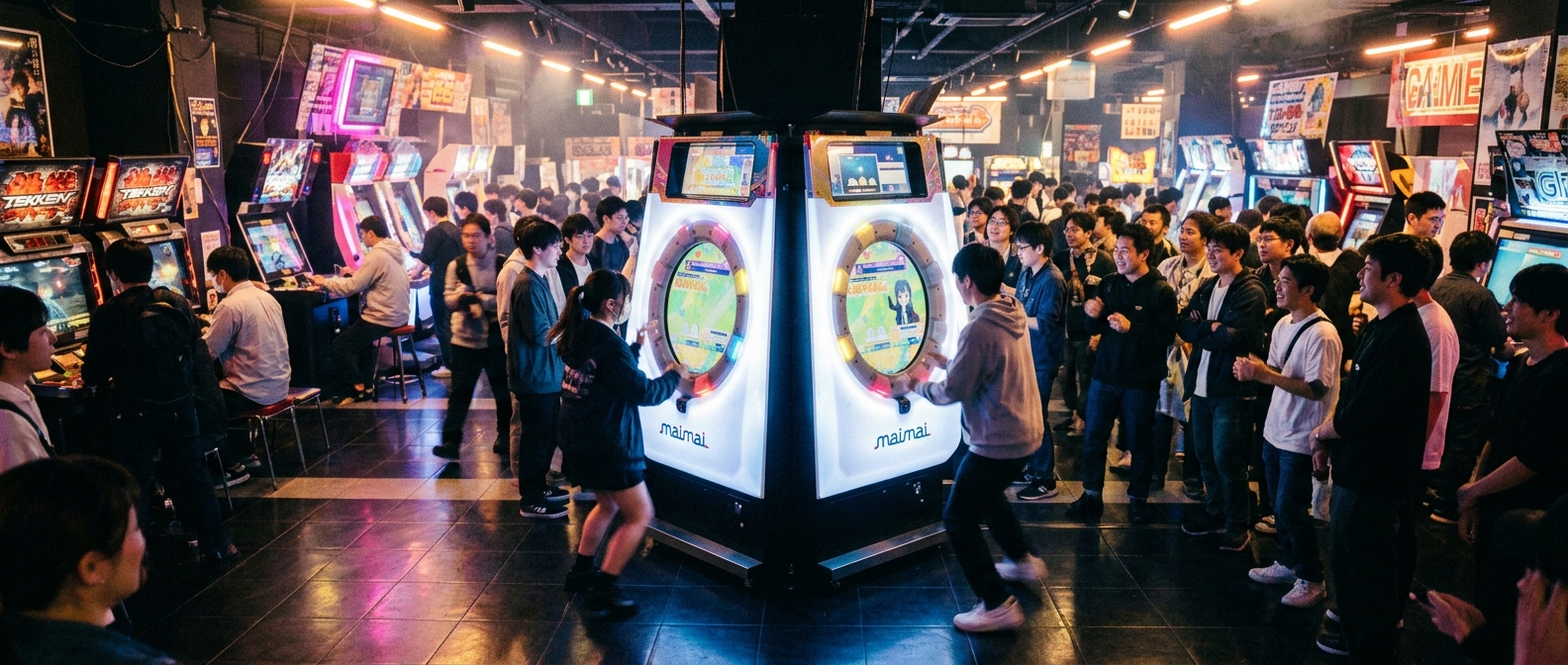
The cabinet design itself carried meaning. A Beatmania unit planted near an arcade entrance drew passersby the way a street musician does. Sega's maimai cabinet, shaped like a front-loading washing machine with a circular touch screen, looked strange enough to stop a stranger cold. That strangeness was the point. These machines announced themselves, and the players who mastered them became local figures worth knowing.
The Hardware Engineers Nobody Talks About
The kinesthetic satisfaction of a well-timed press owes everything to engineers who spent years tuning sensor arrays and button mechanisms. Konami's BEMANI series required buttons that could survive thousands of impacts per session without losing responsiveness. The turntable on a Beatmania controller needed enough resistance to feel like vinyl without slowing a skilled player's scratches. Getting those tolerances right took iteration across multiple cabinet generations.
Sega's approach with maimai pushed in a different direction. The circular screen demanded new thinking about how a player's hands move through space at tempo. Cabinet ergonomics, screen refresh rates, and touch sensitivity all had to align or the game felt dishonest about what it was asking. These engineering decisions shaped what music was even possible to map onto a chart. A song with a fast hi-hat pattern lands differently on a pressure pad than on a touch panel, and composers inside game studios began writing with specific hardware in mind.
Licensing Labyrinths and the Songs That Never Crossed the Pacific
Music licensing is where a lot of the genre's hidden drama lives. Regional rights agreements meant that tracks central to the Japanese arcade experience often disappeared entirely from Western releases. Publishers sometimes had to strip out a third of a game's tracklist before it could ship abroad. That loss was real for players who had heard about specific songs through forums and arrived at a North American cabinet to find them gone.
The workaround became an art form. Composers working inside BEMANI Sound Team and similar groups began producing original music tied exclusively to the games, music that had no label overhead and no territorial restrictions. Those tracks built fan bases that existed almost entirely outside mainstream chart culture. The composers became known quantities, recognized by handle rather than legal name, and their releases inside game updates were treated as events. That ecosystem developed its own critics, historians, and archivists, independent of any award body or radio playlist.
Street-Level Communities and the Scene Between the Scores
High scores measure one kind of achievement. The communities that formed around rhythm games measured others. Players developed unwritten protocols for how to queue at a popular cabinet, how to acknowledge an exceptional run without disrupting the player's focus, and how to offer advice without condescension. These customs varied city by city, arcade by arcade, reflecting local character the way any subculture does.
The shift toward mobile rhythm games thinned arcade foot traffic, but the core community adapted rather than collapsed. Online forums and streaming platforms extended the reach of skill-sharing that once required a train ride to the right district in Tokyo. Veteran players became informal historians, documenting cabinet variations, regional rule differences, and the gradual disappearance of games that lost their licensing. That preservation work matters. It keeps accessible the context a new player needs to understand why a particular song or chart design is considered significant, and it ensures the genre's depth does not get flattened into nostalgia.
Sources

Alexandra Rivet explores the intricate interplay of games and culture for GoAndGame. A passionate storyteller, she delves into narratives with depth and curiosity. Her pieces often highlight the stories behind the pixels.


