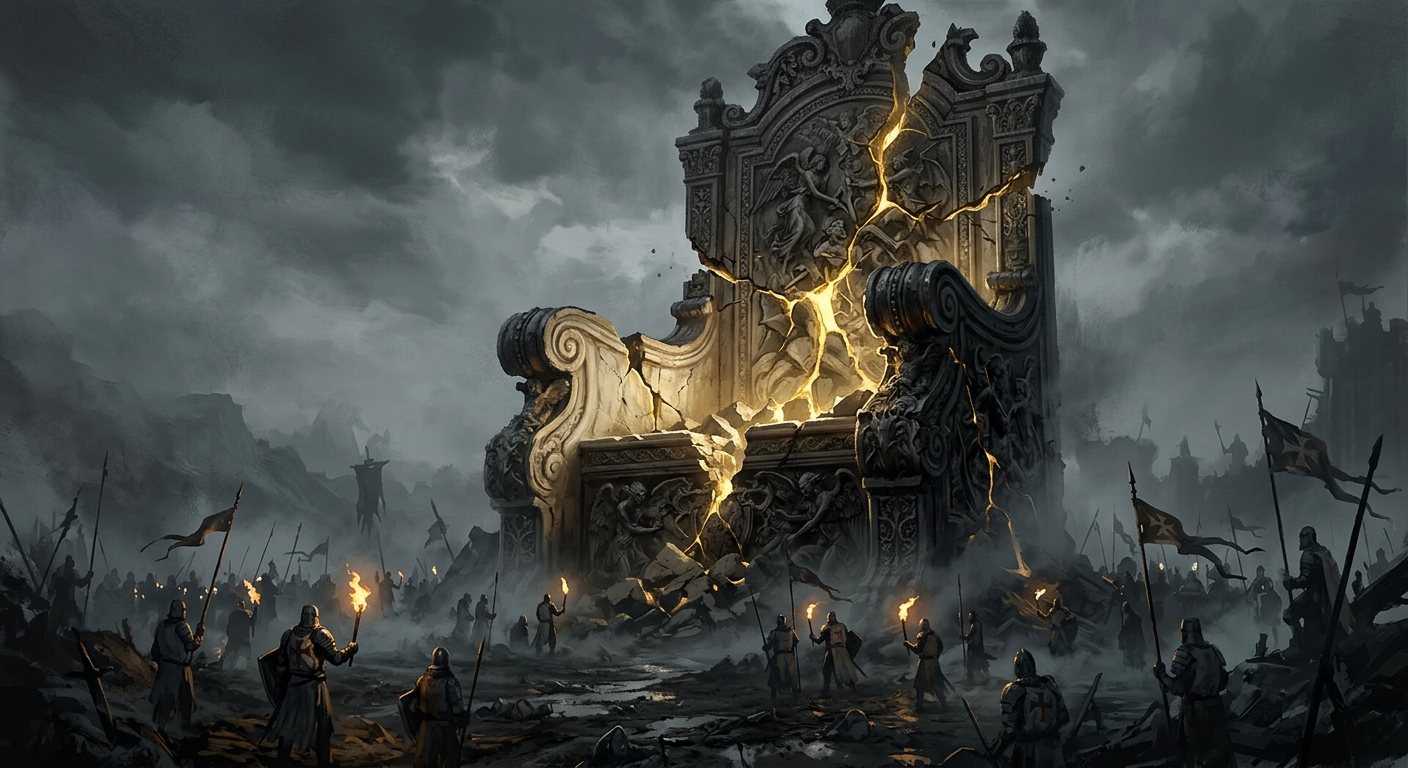
When Owlcat Games returned to the Worldwound for its Enhanced Edition updates, the studio did not bring a celebratory fanfare or a cinematic pivot. It brought maintenance notes, UI passes, and gamepad support. That low-key posture matters. Wrath of the Righteous was never an understated game; it is an exhausting, baroque simulation of crusader politics and planar warfare, weighed down by dozens of overlapping rules systems and hundreds of spell entries. Yet the revision arrived with the quiet discipline of a long-term utility project. It treats the game less like an artifact to be sealed away and more like an ongoing laboratory for the genre's favorite dilemma: the corrupting weight of ultimate authority.
A Quieter Kind of Relaunch
The appearance of the update around events like LudoNarraCon signaled where Owlcat wants to locate its work. This was an invitation to look at narrative architecture rather than raw spectacle. The technical additions, while practical, subtly reframe the experience. Adding full gamepad functionality acknowledges that the audience for sprawling tabletop adaptations has moved beyond desks and mechanical keyboards. Navigating menus with thumbsticks changes your physical posture toward the game. You lean back, survey the slaughter from a distance, and manage crusade logistics from a sofa.
Alongside the controller support, the update introduced an intricate camera suite. As PC Gamer observed in their appraisal of the patch, the inclusion of a dedicated photo mode felt like a surprise standout for an isometric computer roleplaying game. It was not merely a marketing gimmick. Giving players free control over framing, depth of field, and pause-state observation turned a chaotic tactical screen into a study of personal ruin.
The Mythic Path as Moral Thought Experiment
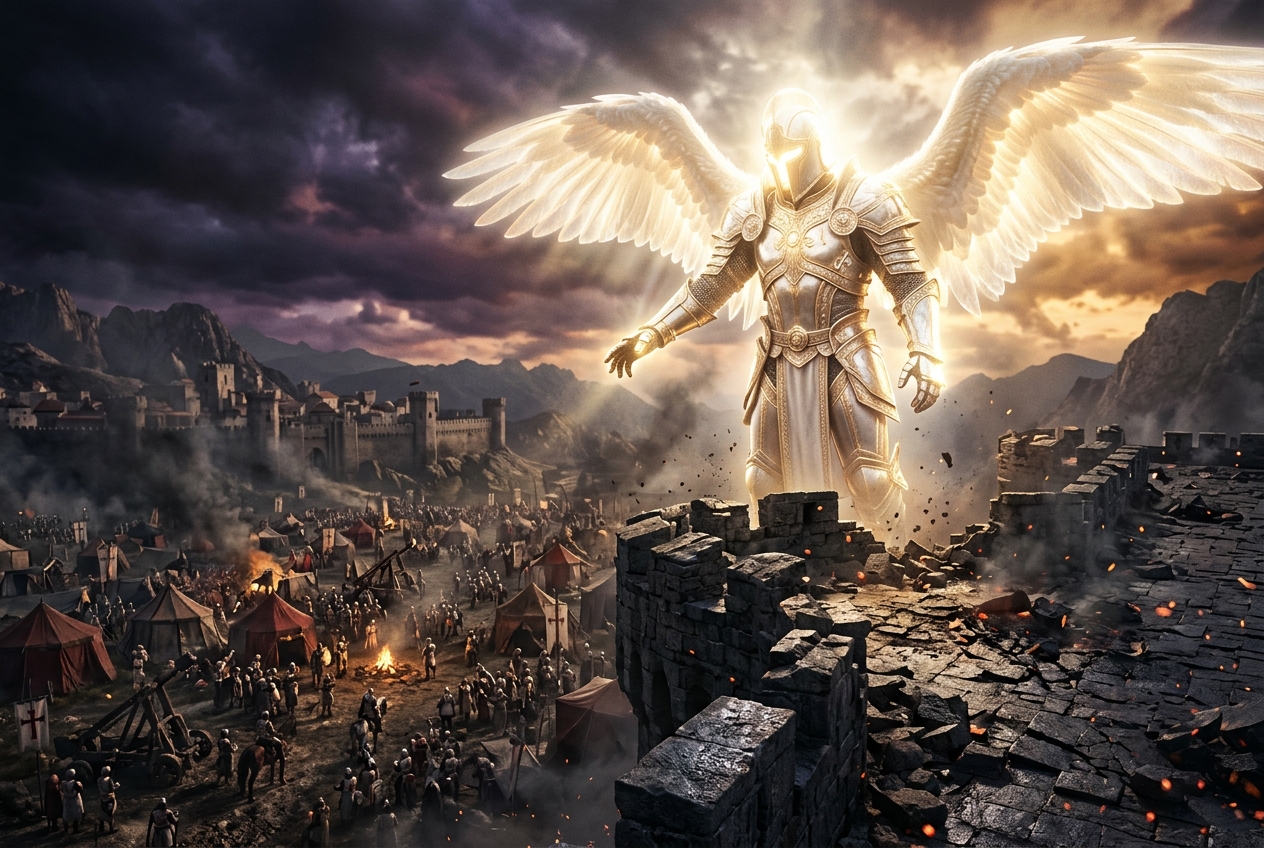
The central spine of Wrath of the Righteous is the mythic path system. In standard fantasy fiction, ascension is an end state, the reward handed out during the epilogue when the dragon falls. Owlcat made it the midgame pivot. By Act Three, your mortal commander is no longer just an adept fighter or clever spellcaster. You are funneling cosmic energy into an avatar of divine order, demonic fury, trickster chaos, or undead preservation. The mechanical stat boosts are absurd by design, but the narrative cost is immediate.
Crucially, the paths refuse the neat safety of binary alignment. Choose the Lich path, and the game does not simply ask you to cackle in a dungeon. It demands administrative efficiency. You build a necropolis because living soldiers die, eat rations, and break under terror, while skeleton pikemen simply hold the breach. Choose the Angel path, and the narrative tests your tolerance for holy retribution. Mercy becomes an operational liability when an entire city is infiltrated by shapeshifting cultists. Righteousness, taken to its logical extreme, looks remarkably like authoritarian terror. The power does not corrupt by tricking you; it corrupts by making monstrosity the most logical solution to an impossible military situation.
Photo Mode as a Lens on Apotheosis
This is where the photo mode stops being a trivial toy and becomes an interpretive tool. In typical play, an isometric CRPG keeps the player emotionally distant. You watch miniatures clash on a grid, tracking hit point bars and combat logs. You pause to issue move orders, not to contemplate the protagonist's face.
By letting players zoom into ground level and freeze the frame, the camera forces an uncomfortable reckoning. You can inspect the literal anatomy of your character's transformation. The gold-rimmed feathers of the celestial wings reveal blood spatter on the breastplate. The necrotic skin of the lich shows the rot creeping along the jawline. The Swarm-That-Walks ceases to be an abstract tactical choice and becomes a grotesque swarm of insects crawling over discarded crusade banners. The camera lets you look directly at what you agreed to become, capturing the exact aesthetic boundary where mortal vanity turns into planar atrocity.
Why the Genre Keeps Returning to Godhood
Computer roleplaying games have chased apotheosis since the days of the Infinity Engine. The climax of the Bhaalspawn saga asked whether divine blood could ever be separated from divine slaughter. Obsidian explored similar waters across two Pillars of Eternity entries, dissecting how faith functions when the gods are revealed to be engineered constructs. There is a deep, persistent desire in roleplaying game design to elevate the protagonist past petty village disputes and set them directly against cosmic law.
Owlcat distinguishes itself by the breadth of its answers. Rather than offering one canonical ascent, it fractures the journey into a dozen distinct ideologies. You can reject godhood entirely and remain a stubborn, mortal Legend, tearing through mythic beasts purely on the back of training and grit. Or you can submit to the alien logic of the Aeon, rewriting history itself to erase deviations from cosmic law, even if that erasure wipes out innocent lives you spent forty hours saving. The scale makes reload-optimism difficult. You cannot fix every failure with a polite dialogue check. The systems are too large, the stakes too heavy, and the trade-offs permanent.
What Comes Next for Owlcat's Flagship
The continued maintenance of Wrath of the Righteous establishes it as Owlcat's canonical touchstone. Even as the studio moves on to other licensed universes and distinct mechanics, this sprawling campaign remains its masterclass in structural ambition. By refining the presentation, smoothing controller inputs, and adding visual inspection tools years after release, the developers are validating the idea that deep computer roleplaying games deserve long lives.
A game that interrogates power so thoroughly benefits from distance. The original launch was noisy, dominated by discourse about balance patches, crusade mini-games, and complex character builds. With those rough edges smoothed over, what remains is an austere, challenging meditation on what mortals do when granted the authority to remake the world. The answer Wrath of the Righteous offers is rarely reassuring, and that is precisely why it endures.
Sources

Julian Thorne is a seasoned house writer for GoAndGame, known for his deep dives into obscure game mechanics and industry trends. He often explores the sociological impact of gaming, blending critical analysis with historical context.


