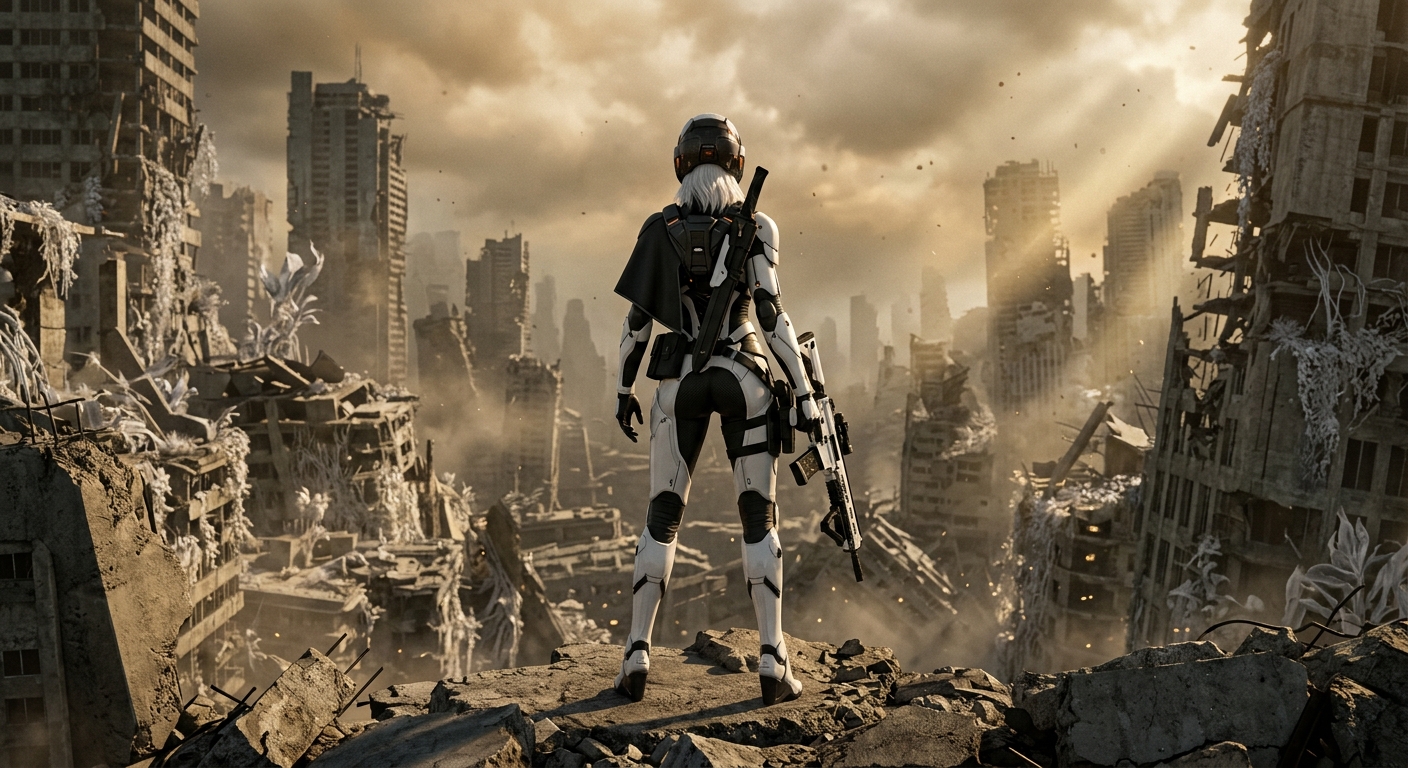
Stellar Blade drops players into a post-apocalyptic Earth that wears its decay like haute couture, pairing crumbling megastructures with a protagonist, EVE, whose design reads as a deliberate provocation from the first frame. This initial aesthetic clash, a ruined world populated by a hyper-stylized figure, is not incidental. It is the core tension the game presents, inviting questions about its intentions from the outset.
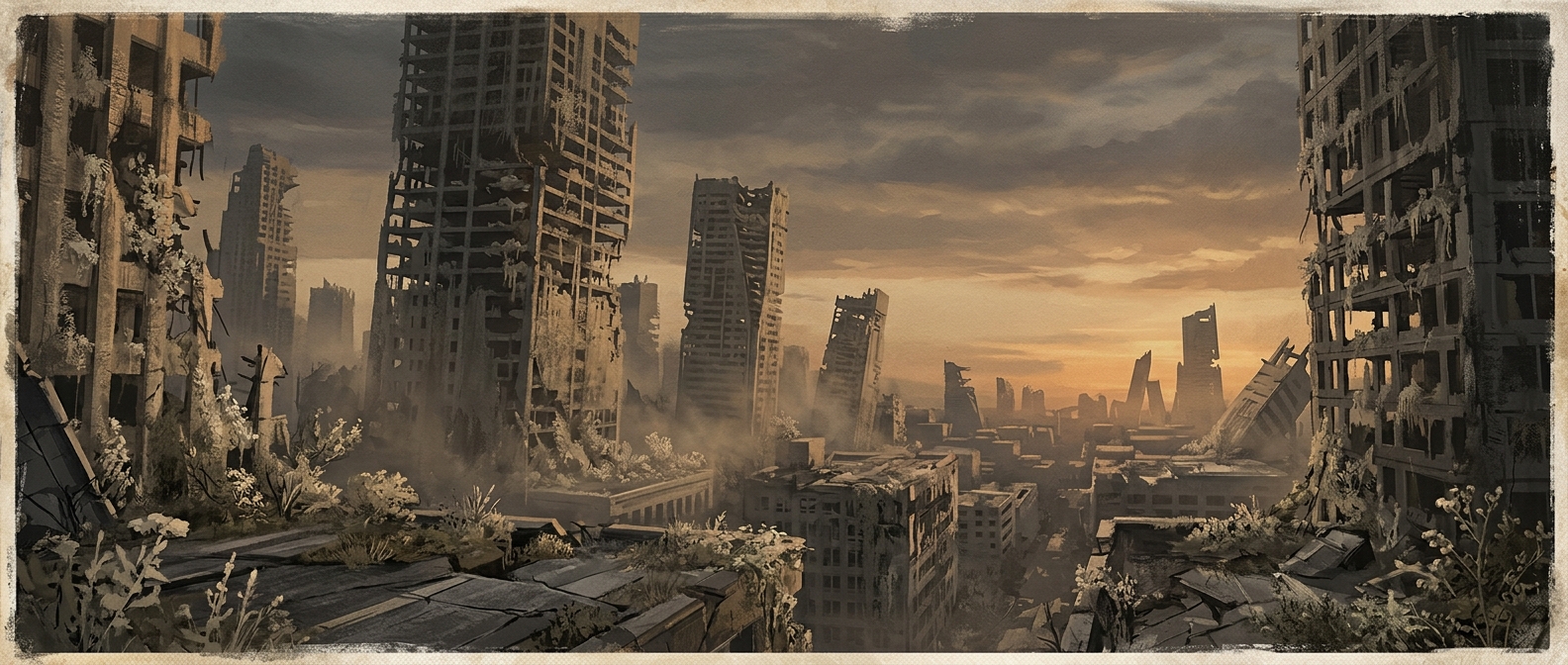
A World Built on Beautiful Ruins
The ambience of Stellar Blade will feel immediately familiar to fans of NieR: Automata. Reviewers at Digitally Downloaded described the game as "undeniably well-made," a technical assessment that nonetheless frames a larger debate. NieR's android protagonist, 2B, became a flashpoint for discussions on embodiment and artistic intent, and Stellar Blade actively courts that comparison. The decaying world, riddled with decrepit structures and monstrous Naytibas, serves as a backdrop against which EVE moves with lethal grace. Her hyper-feminized body creates a stark contrast that either deepens or cheapens the experience, depending on the thematic weight the narrative can bear.
Understanding whether this aesthetic is a statement or merely shorthand requires a careful look at the world itself. The ruins and fragments of human civilization EVE traverses suggest a society that once valued beauty, perhaps even as a survival mechanism. This framing lends at least a skeletal argument to the visual language, positing that extreme aesthetics might be a lingering echo of a prior culture's values. The question is whether the game earns that reading or simply assumes it.
EVE as Icon, EVE as Object
The central tension in any critical reading of Stellar Blade revolves around EVE's identity. Is she a character with genuine interiority, or a beautifully rendered surface onto which players project meaning? The game offers evidence for both readings simultaneously, and that ambiguity could be interpreted as sophisticated or, conversely, as a strategic hedge on the part of its creators.
Josh Tolentino of RPG Site spent roughly fifty hours with the game, including thirty in the main story, and his extensive engagement highlights the need for considered interpretation beyond initial aesthetic reactions. The frequent comparisons to Bayonetta are instructive here. Bayonetta's sexuality is coded as power and self-determination, weaponized by the character herself. EVE's design originates from the male-led studio Shift Up. As Digitally Downloaded observed, the camera's relationship to her body does not always convey the same sense of the character owning the gaze.
Yet dismissing EVE as purely passive ignores the combat system that defines her. Her body is a weapon in a literal, mechanical sense. The game's most spectacular moments demand that players interpret her physicality as capability, not merely spectacle. RPG Site noted that every move EVE makes is "lovingly rendered, with graceful and balletic animations," and that the difficulty of the parry and evasion system forces active engagement with her movement rather than passive observation of it. That distinction between competence and passive display matters for any balanced assessment.
The Grammar of Provocation: Trope or Critique
Digitally Downloaded characterized the game as having "big assets" with deliberate irony, acknowledging that Stellar Blade traffics in aesthetic conventions laden with cultural baggage. The pertinent question becomes whether the game does anything interesting with that baggage or simply carries it forward without introspection. Design tropes inherited from earlier action games, such as revealing outfits, impossible proportions, and a lingering camera, feel less radical in 2024 than they did in 2017. Stellar Blade's failure to substantially evolve these conventions risks making what could be commentary feel like a nostalgic echo of a less scrutinized era.
Digitally Downloaded put it plainly: EVE's most obvious immediate peers are sexualized for specific, thematic, and artful reasons. NieR: Automata's narrative centers on the search for the perfection of the human form and psyche, and 2B is a physical manifestation of that discussion. EVE, by contrast, is beautiful and sexy in ways the narrative does not consistently account for. That gap between the game's visual ambition and its thematic follow-through is where the most productive critical friction lives. The Naytiba monsters, depicted as grotesque fusions of flesh and machine, do create a "beauty and the beast" contrast that RPG Site identified as a conscious aesthetic choice by Shift Up. Within that framing, EVE's exaggerated humanity reads less as fantasy fulfillment and more as a survival argument, though whether that reading is actively authored or merely available through generous interpretive labor remains an open question.
Fifty Hours and What They Earn
The depth of engagement demonstrated by RPG Site's review, which logged fifty hours across main story and side content, underscores a critical point: Stellar Blade rewards extended play with narrative texture not immediately apparent in its opening hours. The Soulslike scaffolding, also identified by Digitally Downloaded, forces players into repeated, tactile encounters with the world's hostility. It is through these accumulated moments of difficulty, triumph, and discovery that EVE transitions from a character model showcase into a protagonist with tangible stakes.
Aesthetics and mechanics are never fully separable in games. The fluidity of EVE's dodge and parry animations, the hair physics RPG Site found worth noting, the dozens of unlockable Nano Suits ranging from skintight bodysuits to jokey mascot costumes: all of these elements communicate how the game intends for players to inhabit her perspective. One costume covers EVE's head entirely and still sports her signature ponytail, the same ponytail from which she draws her sword. That detail is absurd and charming in equal measure, and it captures the game's broader disposition: style pressed so far past plausibility that it doubles back toward sincerity. Stellar Blade exists at an uncomfortable intersection where genuine craft, borrowed iconography, and unresolved thematic tension occupy the same frame. That discomfort, rather than resolving into either uncritical celebration or outright condemnation, may be the most honest critical stance available for a game that is consistently more interesting to argue about than it is simple to dismiss.
Sources

Julian Thorne is a seasoned house writer for GoAndGame, known for his deep dives into obscure game mechanics and industry trends. He often explores the sociological impact of gaming, blending critical analysis with historical context.


