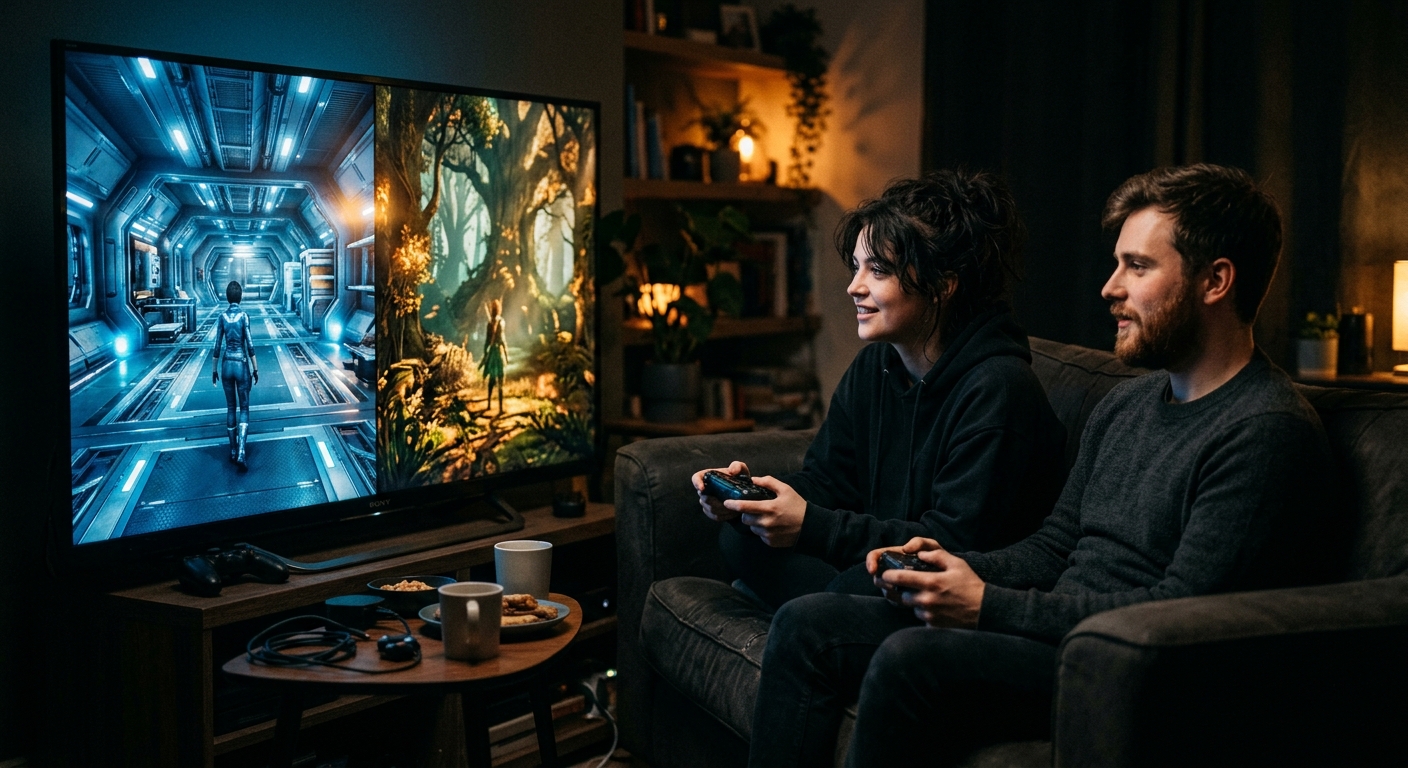
Hazelight Studios has never been shy about what it wants to make. Co-op games, full stop, built from the ground up so that a second player is not a bonus mode but the entire reason the thing exists. With Split Fiction, released March 6, 2025 on Windows, PlayStation 5, and Xbox Series X/S, the studio has delivered what reviewers across the board are calling the best-reviewed game of 2025, surpassing high-profile launches like Avowed and Monster Hunter Wilds before the year even hit its midpoint.
"Working together brings stories together" is the tagline Hazelight leaned into, and reviewers at Geeks Under Grace found that the game's narrative architecture actually earns it, structuring the experience so each player holds half the emotional context at any given moment.
A Co-op Pedigree Built to Last
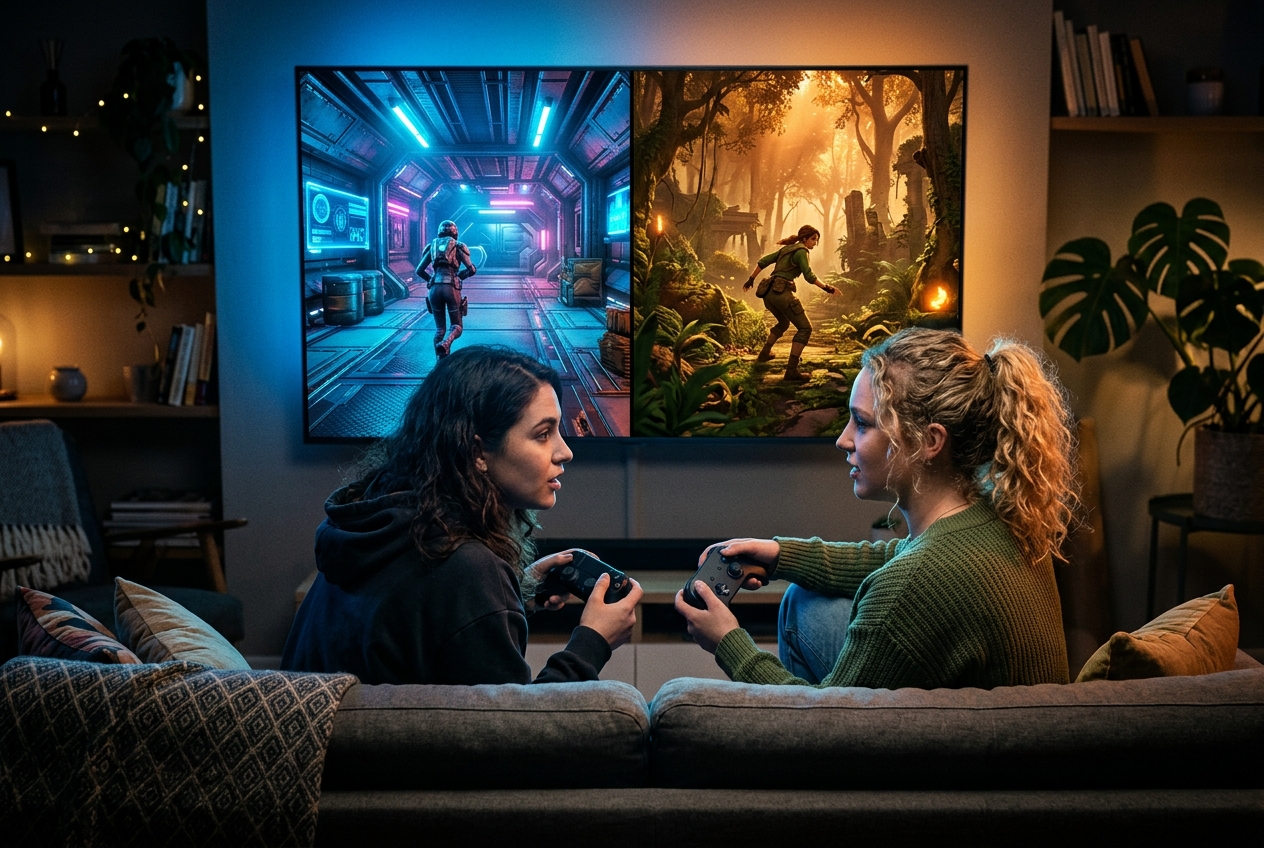
It Takes Two, Hazelight's 2021 release, built the studio a devoted following and a Game of the Year trophy. Split Fiction inherits that goodwill and does something smarter than coast on it. Director Josef Fares and his team treated the follow-up as a chance to prove the philosophy, not just repeat it. The core conviction, that cooperative play is the design foundation and not a feature layered on top, runs through every system here. No meaningful moment in Split Fiction is designed for a solo audience. The game simply does not function that way, and that is a deliberate aesthetic choice as much as a mechanical one.
NME reported that Split Fiction claimed the top spot in 2025 review aggregates ahead of its launch window, a fact that carries real weight in a year crowded with marquee releases from major studios. For a cooperative, narrative-driven title without live-service hooks, that kind of critical ceiling is unusual and worth paying attention to.
Genre Collisions and Set-Piece Spectacle
The title is literal. Split Fiction fractures its two protagonists, Mio and Zoe, across wildly different fictional universes, and the transitions happen fast. Science fiction corridors give way to fantasy settings within a single session. Each shift brings a new mechanical grammar that both players must absorb together. Learn it together, or fail together. There is no catching up off to the side.
The set pieces reportedly rival anything Hazelight has attempted before. Critics drew comparisons to cinematic blockbusters in terms of scope, but the moments that land best stay grounded in the tactile satisfaction of cooperative problem-solving. A flashy visual sequence is more memorable when your partner is the reason you survived it. That loop, spectacle earned through coordination, is what made It Takes Two spread by word of mouth, and Split Fiction appears to have refined it further.
The action-adventure and platformer DNA blend in ways that feel purposeful. Each genre shift is not just a coat of visual paint over the same controls. The game genuinely asks players to rethink their approach, which keeps sessions from going stale across what reviewers describe as a substantial runtime.
Narrative at the Heart of the Machine
Mio and Zoe are contrasting writers, and the fiction they are trapped inside reflects their opposing sensibilities. One leans toward science fiction, the other toward fantasy. That premise is not just flavor. The writing uses the gap between their perspectives to generate dramatic tension, giving each player a slightly different emotional window into the same events. The result, according to the Geeks Under Grace review, is that the central thesis about collaboration feels structural rather than decorative.
Faith-and-community outlets noted that the themes of mutual vulnerability and shared stakes translate beyond the screen in ways that genre games rarely manage. Split Fiction has become a genuine recommendation for couples, siblings, and close friends who want a shared interactive experience with real emotional texture, not just a couch activity to fill time. That crossover appeal is rare, and it speaks to writing that trusts its players to bring their own relationship dynamics into the space the game opens up.
Critical Reception and Industry Context
Cooperative narrative games without live-service scaffolding face a commercial argument every time they go before a publisher. The conventional wisdom says that story-first co-op titles have a ceiling, that the audience is smaller and the long-tail revenue thinner than open-world or multiplayer-service alternatives. Split Fiction's critical performance complicates that argument in public, which matters for development pipelines currently being reshaped by uncertainty around single-player economics.
Whether the commercial numbers match the critical praise is a question that will take longer to answer. But the conversation has shifted. When a cooperative, narrative-driven game beats out massive franchise releases in review aggregates, publishers and developers take note. The implications for how story-first co-op projects get greenlit in the next few years could be significant, and Split Fiction put itself at the center of that conversation by simply being very good at what it set out to do.
What It Means for the Co-op Canon
There is a short but meaningful list of games that treat cooperation as an aesthetic. Not a checkbox, not a selling point, but a genuine organizing principle for how the experience is built and what it tries to say. Split Fiction belongs on that list. For players who trace a lineage from the instinctive shoulder-to-shoulder play of early arcade co-op or the rhythm of games like Segment Storm and Star Dive through to modern collaborative design, the game marks a waypoint worth noting. The instinct to play beside someone rather than against them has produced some of the medium's most memorable work, and Split Fiction adds a credible new entry to that record.
Whether it expands the audience for cooperative narrative games or remains a celebrated high point within a devoted niche is a question only time and sales data will answer. What is already clear is that Hazelight built something that rewards the person sitting next to you, and that is harder to do well than almost anything else in game design.
Sources

Mara Solis is a staff writer at GoAndGame covering board games, tabletop strategy, and the culture around competitive play. She has spent years logging hours at game tables from local hobby shops to international conventions. Her writing blends practical insight with a genuine enthusiasm for the communities games create.


