
The headline numbers are real. Southeast Asia's gaming market is forecast to hit USD 6.39 billion in revenue in 2025, and mobile esports prize pools have climbed in rough proportion to that commercial expansion. Flagship events like the 2024 MLBB Mid Season Cup now post figures that would have seemed absurd five years ago. But the number a publisher announces at a tournament kickoff and the number that eventually lands in a player's bank account are often separated by a long, poorly lit corridor of fees, tax obligations, and currency conversions. That corridor is where the real story lives.
The Numbers Look Impressive, Until You Start Asking Questions
The 2019 MLBB Southeast Asia Cup was an early proof of concept: a mobile title could sustain serious competitive infrastructure across the region. The prize structures then were modest. What Moonton now advertises for international events is a different order of magnitude, with pools crossing into seven-figure territory and qualified teams arriving from across Southeast Asia and beyond.
The problem is definitional. "Prize pool" functions as a marketing instrument first and a financial instrument second. Gross figures announced at tournament launch routinely obscure what comes next: management fees paid to event production companies, organizational cuts retained by the publisher or its licensed partner, tax withholding that varies by jurisdiction, and conversion losses when a USD-denominated prize is paid out in Philippine pesos or Indonesian rupiah at a rate the organizer sets rather than the open market. By the time those deductions compound, the number a player sees bears only a family resemblance to the number on the press release.
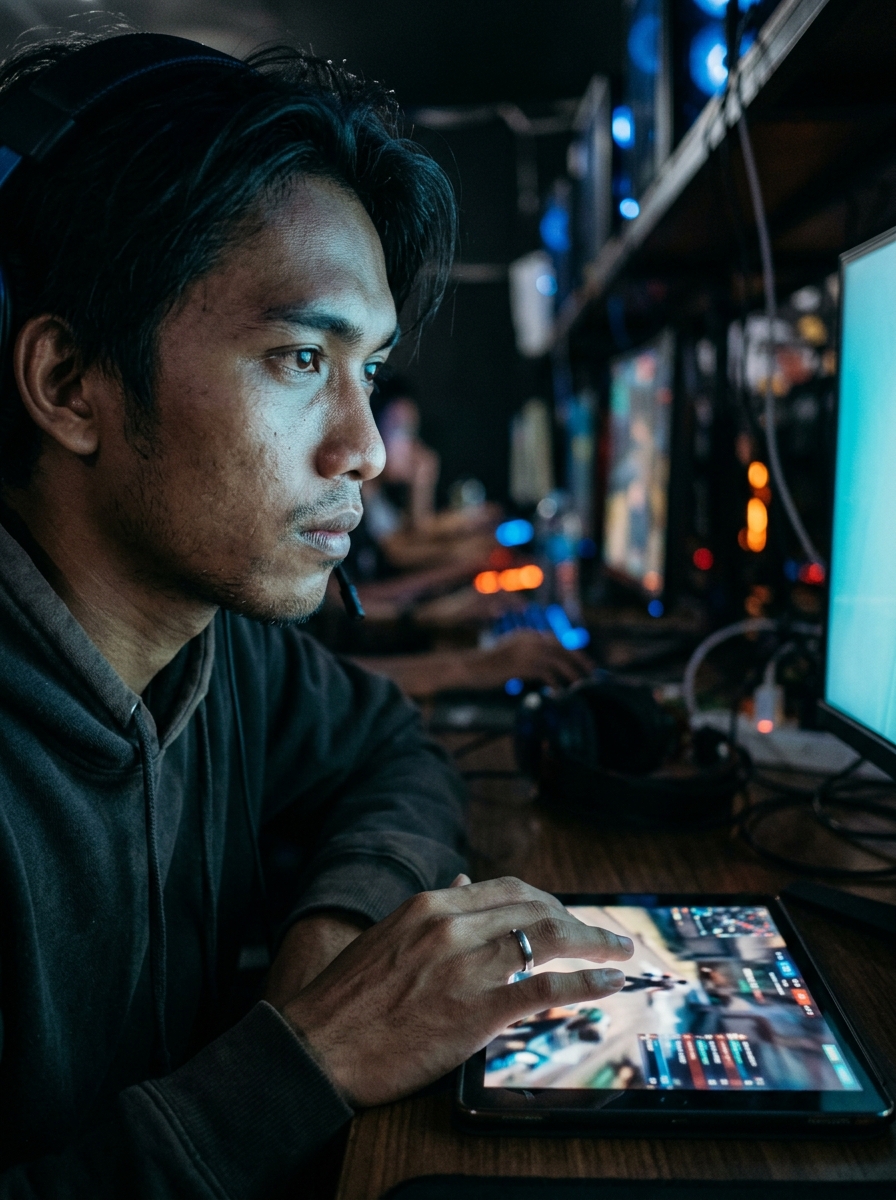
None of this is unique to Southeast Asia. But the region's structure amplifies the problem. Multiple currencies, multiple tax regimes, and a competitive calendar that spans six or more countries mean that the same prize pool announcement creates wildly different economic realities depending on where a winning team is based. A Filipino team and a Vietnamese team can finish in the same bracket position and walk away with materially different effective payouts because of forces that have nothing to do with how well they played.
Who Actually Controls the Money
Mobile esports in the region runs through a layered authority structure that is genuinely different from the PC esports model most international coverage defaults to. The game publisher, Moonton for Mobile Legends and Krafton for PUBG Mobile, sets the competitive calendar and seeds the prize pool. But day-to-day tournament execution is frequently contracted out to third-party event companies, and in the case of the SEA Games, it gets folded into national Olympic committee structures with their own bureaucratic incentives and timelines.
The inclusion of Mobile Legends as an esports discipline at the 2025 SEA Games men's team tournament marks genuine institutional legitimacy. It also illustrates a tension that rarely gets named clearly. When a gold medal is the stated objective, the cash component becomes almost secondary in public framing, even as it remains the primary economic reality for professional players who have no salary safety net underneath them. National pride is a useful narrative for broadcasters. It pays nobody's rent.
Third-party organizers who license regional qualifiers and city-level events take a percentage of commercial revenue that may or may not be disclosed publicly. A team winning a regional qualifier is claiming a slice of a slice, with the original headline pool having been divided through multiple contractual layers before a dollar reaches anyone who actually competed. National esports federations, which have proliferated rapidly across Indonesia, the Philippines, Thailand, Malaysia, and Vietnam, add another institutional tier. Some function as genuine player advocates who negotiate better disbursement terms. Others are primarily credential-granting bodies that collect administrative fees without providing proportionate services in return. The difference matters enormously to players, and it is almost never legible from the outside.
The Player Experience: Tax Exposure, Sponsorship Gaps, and the Conversion Problem
Professional mobile esports players in Southeast Asia skew young, frequently late teens or early twenties, and they operate without agents or financial advisors. Most are unaware of the tax obligations that attach to prize winnings until the withholding has already happened. In some jurisdictions, competitive prize income is treated identically to lottery winnings for tax purposes, which can mean effective rates that feel punishing relative to what a player expected to receive when they registered for the tournament.
Currency conversion is a structural disadvantage that gets almost no coverage in the prize pool story. A tournament that announces USD 500,000 and then pays out in local currency at rates the organizer controls, on a disbursement timeline that may stretch weeks or months after the event ends, exposes players to real value erosion. This is particularly acute in economies that have experienced currency volatility. The player has no hedge and no recourse.
Sponsorship, which in theory supplements prize income, is distributed unevenly. Teams from Indonesia and the Philippines attract far more sponsor attention than equally competitive teams from Myanmar or Cambodia, because the two larger markets offer more commercial surface area. That asymmetry is a structural inequality that prize pool growth does not touch. Niko Partners research on the regional market emphasizes the mobile-first demographic profile as a commercial opportunity, and that same profile describes the player base from which professional athletes are drawn. Young, price-sensitive, mobile-dependent users become young, price-sensitive, mobile-dependent competitors, and the pipeline from grassroots play to stable professional income stays thin even as the trophy figures at the top grow larger.
If you want to understand the grassroots end of that pipeline, games like Segment Storm and Star Dive are decent windows into the reflex and pattern-reading skills that mobile esports selects for at the entry level. The gap between that starting point and a regional LAN final is enormous, and most of what fills it is uncompensated practice time.
What Structural Reform Would Actually Look Like
The most immediately achievable reform advocates keep returning to is standardized disbursement contracts. A template that specifies the currency of payment, the exchange rate methodology, the timeline for disbursement after tournament conclusion, and the exact percentage breakdown between organizer and players, published publicly before registration opens rather than disclosed only to participating teams after they have already committed. This is not complicated to design. It requires someone with enough leverage over the commercial ecosystem to make compliance a condition of licensing. So far, that someone has not stepped forward.
Revenue sharing models from the PC esports world, where some leagues distribute a percentage of broadcast rights and cosmetic sales tied to the competitive event back to competing organizations, have been discussed within the MLBB regional ecosystem. They have not been implemented at a scale that reaches individual players rather than just org-level entities. The distinction matters. An organization receiving a broadcast revenue share is not the same as a player receiving a fair wage.
Player unions and collective bargaining have made almost no inroads in mobile esports in the region, partly because roster churn is high and careers are short. A player who might benefit from unionization today may have aged out of top-tier competition within two years. That creates weak incentives to invest time in long-term structural advocacy when short-term competitive performance is the only thing paying attention. The math discourages organizing.
The optimistic read of the current moment is that growing prize pools, even imperfectly distributed, are generating enough economic signal to attract professional management infrastructure. Agents, financial advisors, and eventually player associations tend to follow money. The spectacle side of these tournaments, the broadcast production, the venue scale, the viewership numbers, is already professional. The disbursement side is catching up slowly. That gap is where players currently absorb the cost, and naming it clearly is the first step toward closing it.
Sources
- 2024 MLBB Mid Season Cup - Wikipedia
- 2024 MLBB Mid Season Cup - Wikipedia
- Esports at the 2025 SEA Games – Mobile Legends men's team tournament - Wikipedia
- PUBG Mobile Super League CSA Spring 2025 - Wikipedia
- 2019 MLBB Southeast Asia Cup - Wikipedia
- Top Esports Games 2025 by Prize Money — Biggest Prize Pools Ranked
- The Gaming Market in Southeast Asia (SEA) | Allcorrect
- SEA of Opportunities: Exploring the Rise of Southeast Asia Video Games Market - Niko Partners

Priya Nambiar covers competitive gaming and emerging esports ecosystems for GoAndGame, with a particular focus on Southeast Asian scenes and grassroots tournament culture. She came up through community forums before moving into sports journalism, and that background shapes everything she writes.


