
For most of VCT Pacific's existence, the competitive order felt less like a standings table and more like a geological formation: Korean organizations at the summit, Japanese rosters reliably in the middle tier, and Southeast Asian squads treated as spirited but ultimately harmless opposition that would be tidied away before the bracket's serious business began. The 2025 season has made that formation look considerably less permanent.
A Hierarchy Built on Hardware
The assumption of Korean and Japanese dominance was not purely prejudice. It was baked into where money and attention actually went. Broadcasting priorities, practice-facility investment, and sponsor budgets all flowed predictably toward Seoul and Tokyo across the league's early seasons. Organizations operating out of Manila or Jakarta competed for scraps of analytical coverage even when their map records were quietly outpacing the narrative assigned to them.
The 2025 Stage 1 opener, covered closely by Philstar, showed Filipino rosters performing well above seed against opponents installed as heavy favorites on the strength of historical reputation rather than current form. Those results were not random variance. They were the surface signal of a years-long accumulation of talent that the league had chosen not to look at carefully. Internet-café culture, mobile-first gaming pipelines, and a young median population across the Philippines and Indonesia had been manufacturing a deep competitive reservoir. The establishment teams are only now being forced to reckon with it.
The Filipino Surge and Its Painful Ceiling
CoverStory's post-season autopsy managed to capture both sides of the Filipino story in the same breath: real regular-stage brightness, then a hard wall once single-elimination pressure collapsed the margin for error to zero. The pattern is familiar enough to feel structural rather than coincidental.
Players like PatMen, whose career moved from regional grind through Paper Rex and into Global Esports, represent the archetype the 2025 season kept producing: technically polished, individually expressive, capable of mechanical output that benchmarks favorably against any player in the league regardless of nationality. The individual ceiling is not the problem. Filipino rosters have historically struggled to sustain the structured mid-round calling and adaptive veto strategies that Korean programs build through regimented boot-camp environments and large coaching staffs. Talent gets teams into the room. Infrastructure has too often determined who leaves with a trophy.
The ceiling does appear to be rising, though. Orgs that previously treated Pacific as a marketing exercise are hiring full-time performance coaches, sports psychologists, and dedicated VOD analysts. That signals a belief that the structural gap is closable, not inherent, which is a different posture than the region has seen before.
Indonesia's Quieter but Equally Consequential Push
While Philippine storylines attracted most of the English-language coverage, Indonesian rosters were building their own disruptive argument through map differentials and agent-pool diversity that caught established teams off guard during the league's middle weeks. The Indonesian competitive culture prizes aggressive entry fragging and highly personalized crosshair placement, habits cultivated across millions of hours in the country's PC and mobile café ecosystem. Channeled into a structured team environment, those tendencies produce an opening-round aggression that can destabilize even disciplined Korean setups before they settle into preferred defensive templates.
Several Indonesian players who had previously cycled through Tier 2 and Tier 3 circuits found permanent Pacific roster spots in 2025, and their integration was smoother than skeptics expected. Coaching staffs reported that these players arrived with unusually high game-sense baselines, reducing the time needed for foundational tactical education and allowing preparation to focus immediately on opponent-specific adjustment. That is a meaningful efficiency advantage in a league where weekly match cadence leaves little room for remedial work.
The demographic argument behind all of this is hard to dismiss. Indonesia is among the largest gaming markets on Earth by raw player count. If even a fraction of that base continues funneling into Valorant's competitive pipeline at the current rate, the country's representation at the top of Pacific standings seems far more likely to grow than to plateau. Games like Segment Storm and Star Dive illustrate how Southeast Asian players have historically built mechanical precision through fast-twitch arcade formats long before structured esports infrastructure arrived to formalize that skill.
What the Korean and Japanese Establishments Are Doing About It
Established Korean and Japanese organizations have not been passive observers. Several Korean programs quietly expanded their Southeast Asian scouting operations during the 2024 offseason, and at least two Japanese orgs experimented with hybrid rosters that blend domestic veterans with Filipino or Indonesian players in roles specifically designed to exploit the stylistic advantages those players carry. The tactical response on the server has also evolved: Korean teams began dedicating practice blocks to simulating Southeast Asian aggressive patterns rather than treating that style as an aberration that discipline alone could handle.
Japanese organizations face a somewhat different challenge. Their competitive culture places a premium on internal cohesion and long roster tenure, values that can slow adaptation when a threat arrives from an entirely different stylistic tradition. Several Japanese analysts have written publicly about the need to import analytical frameworks, not just individual players, arguing that understanding why Southeast Asian aggression works is more valuable than simply drafting people who embody it.
None of this means Korean and Japanese programs are about to be dethroned. Their structural advantages in coaching depth, organizational funding, and championship experience are real and not evaporating on a single season's schedule. But the fact that they are actively adjusting to Southeast Asian pressure rather than dismissing it is itself a significant form of acknowledgment. The hierarchy is in motion. Everyone in the league seems to know it.
The Road Ahead for Pacific's New Challengers
The most important question 2025 leaves unanswered is whether Filipino and Indonesian rosters can convert regular-season disruption into playoff-stage wins, and eventually into Masters and Champions representation that would force a global reassessment of where Pacific's center of gravity actually sits. Regular-season disruption is a start. It is not yet the argument.
Philstar's framing of the Stage 1 results in explicitly nationalist terms matters beyond the rhetorical register. Fan investment drives sponsorship. Sponsorship funds infrastructure. Infrastructure is precisely what Southeast Asian orgs need to close the remaining gap. A virtuous cycle is possible but not yet guaranteed, and the distance between possible and guaranteed is where the next few seasons will be decided.
Individual knowledge diffuses in ways roster changes cannot erase. When a player like PatMen moves through multiple tier-one organizations, the tactical education accumulated at each stop flows back into the regional player pool through practice partners, streaming content, and informal mentorship. The baseline for everyone coming up behind rises a little each time. That compounding effect is structural in its own right, and it favors the challengers over a long enough timeline.
Two Seasons That Tell the Same Story Differently
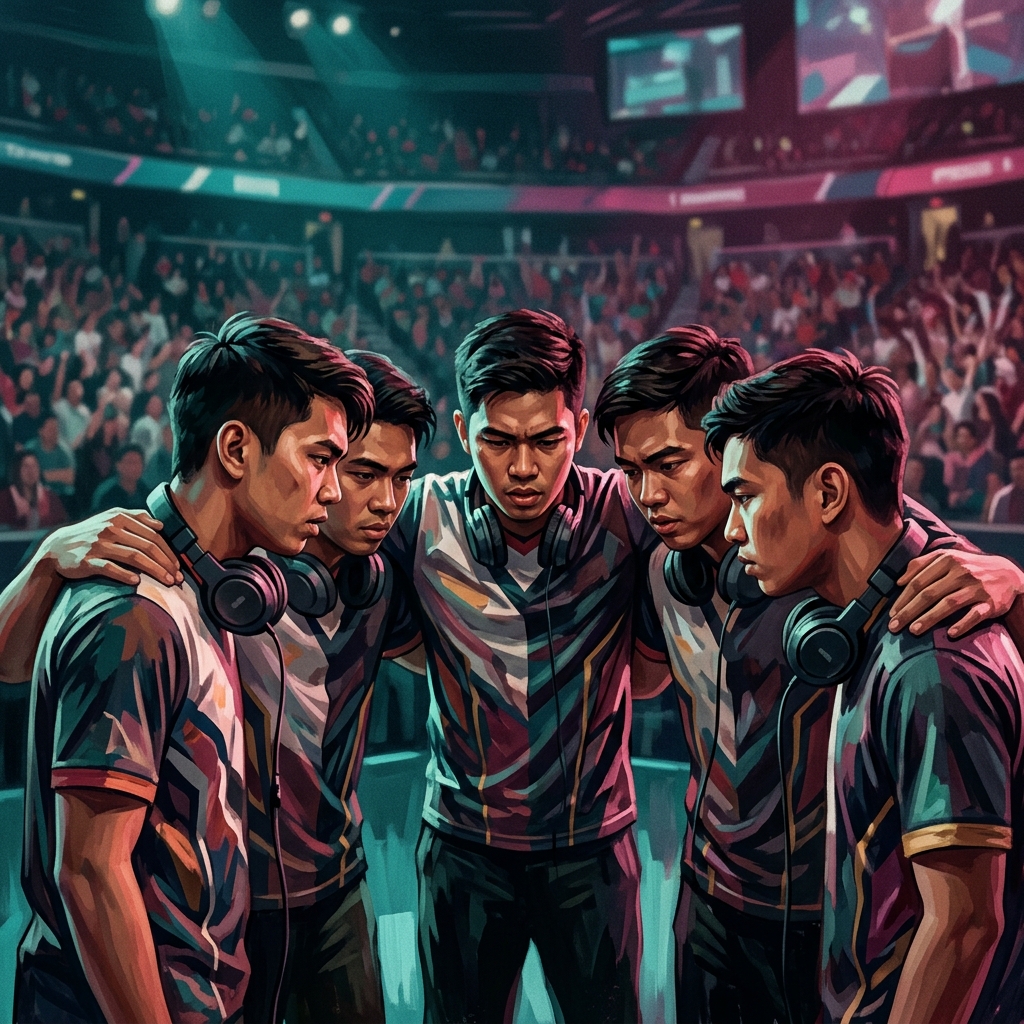

Taken together, the Filipino and Indonesian stories of 2025 are not two separate upsets. They are two readings of the same underlying shift: a Southeast Asian talent base that has grown past the point where the league can comfortably route around it. The disruption is real, measurable, and structurally grounded. Whether it accelerates into a full hierarchy inversion or settles into a more balanced multi-polar Pacific depends on decisions being made right now in org boardrooms, coaching meetings, and the ranked queues where the next generation is already grinding without waiting for anyone's permission.
Sources

Priya Nambiar covers competitive gaming and emerging esports ecosystems for GoAndGame, with a particular focus on Southeast Asian scenes and grassroots tournament culture. She came up through community forums before moving into sports journalism, and that background shapes everything she writes.


