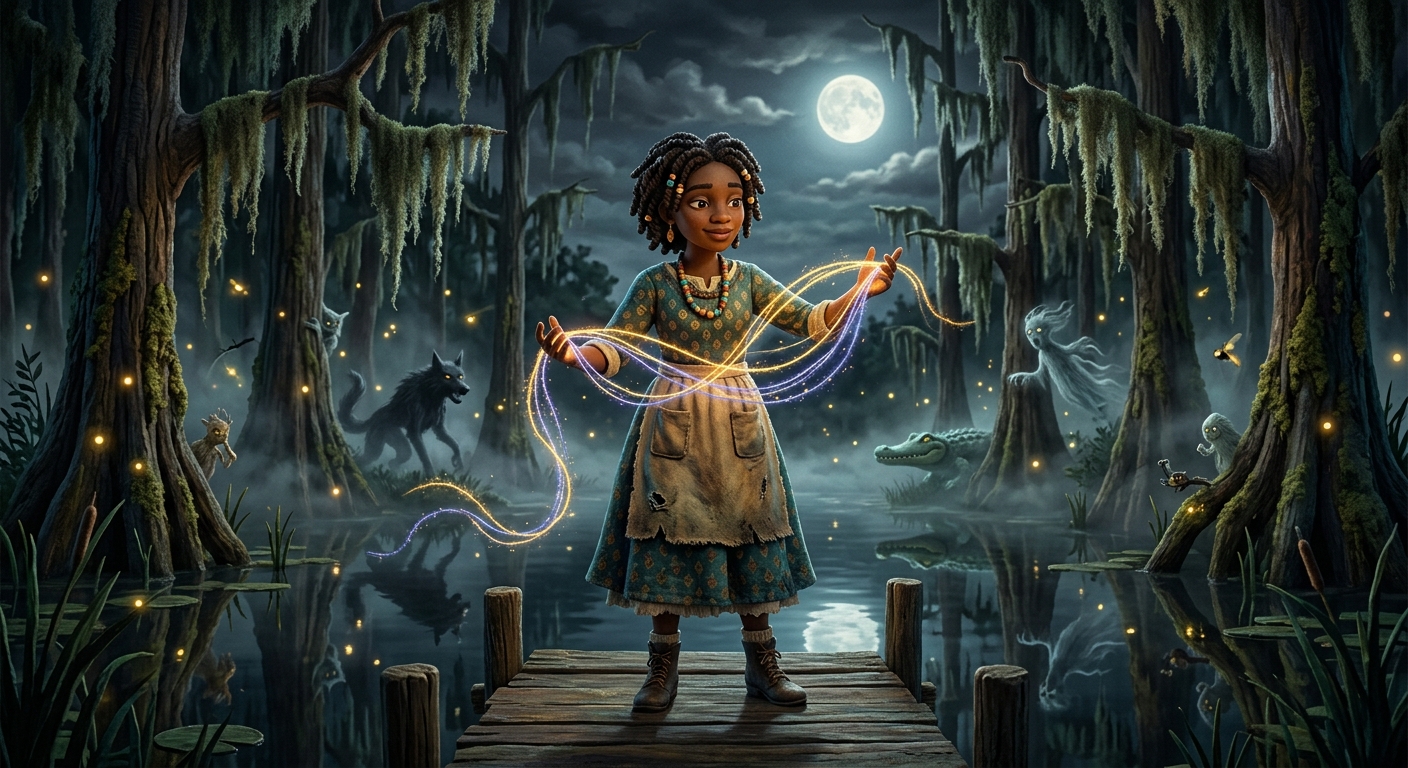
South of Midnight is the kind of game that makes you stop moving just to look at a wall. Compulsion Games, the Montreal studio behind We Happy Few, spent their production time building a stylized American Deep South that feels less like a setting and more like a living document, stitched together from Hoodoo tradition, Appalachian legend, and bayou grief. The result is one of the more genuinely distinct action-adventure games in recent memory, even when its combat stumbles.
- Visual art direction rooted in stop-motion aesthetics gives every character a handcrafted, tactile quality rarely seen in the genre.
- Audio design blends original blues and spirituals into a soundtrack critics called inseparable from the world itself.
- Cultural sourcing treats Hoodoo, Conjure traditions, and Southern folklore as research subjects, not costume pieces.
- Protagonist Hazel anchors the story with weaving-based magic powers that tie her abilities directly to the game's thematic core.
- Supporting cast earns emotional weight by sitting with generational trauma rather than resolving it quickly.
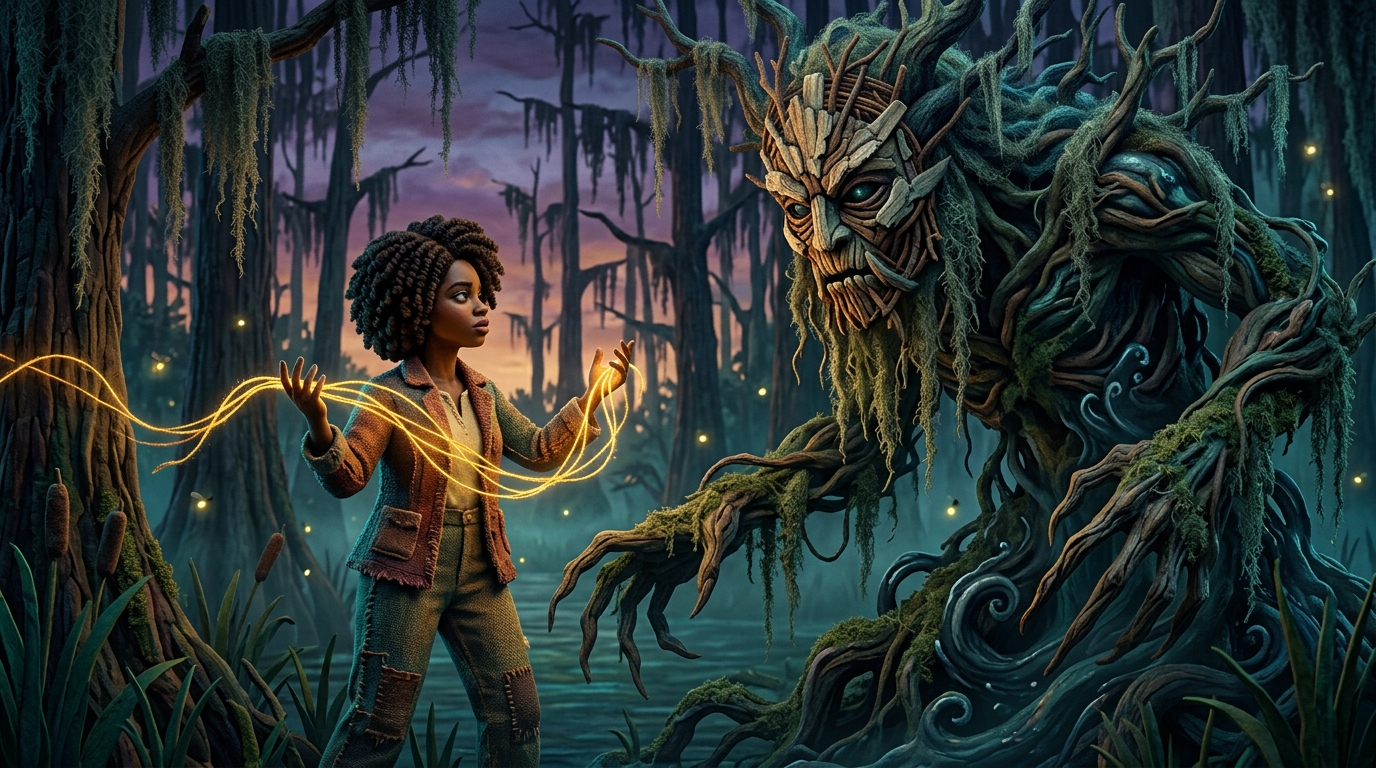
- Boss encounters design around their folklore sources in ways that make them feel like story beats, not gear checks.
- Standard combat draws recurring criticism for limited enemy variety and shallow mechanical depth across the full runtime.
- Traversal abilities tied to weaving powers add visual invention to movement, even when the fighting around them feels thin.
- Game Pass day-one launch shaped critical and player expectations around production scale in ways a full-price release would not.
- Metacritic placement in the "generally favorable" range reflects a split between what the game excels at and where it leaves players wanting more.
Setting and Atmosphere
The stop-motion visual style is the first thing you notice and the thing you keep noticing. Compulsion rendered their version of the Deep South with a texture that suggests physical craft, as if someone built the world by hand and filmed it under careful light. Swamp moss has weight. Wooden structures look like they could be lifted off a shelf. That aesthetic choice pays off because it matches the material: folklore is oral and handmade, and a handmade-looking world suits stories passed down through generations rather than published in volumes.
The audio does an equal share of the work. The original score pulls from blues and spirituals in ways that feel purposeful rather than atmospheric wallpaper. Several reviewers noted that turning off the sound significantly diminishes the sense of place, which is a strong endorsement of how tightly the design teams coordinated. When the world itself seems to hum with history, you stay curious about it even when the action slows down.
Narrative and Characters
Hazel's setup is clean and emotionally direct. A supernatural storm destroys her home and scatters her family. She gains weaving-based magical abilities in the aftermath and moves through a land populated with creatures pulled from Southern mythology. The story does not use that framework as a backdrop. The mythology is the story, and the game's writing treats it accordingly.
What critics noticed most was the evident research behind the cultural material. Hoodoo and Conjure traditions appear as coherent systems with internal logic, not as spooky dressing borrowed without context. Appalachian legend surfaces in specific, recognizable forms rather than generic monster designs. That specificity matters because it signals to players that the world has real roots, which makes the emotional stakes feel grounded. The supporting characters, townsfolk carrying generational wounds and folkloric entities Hazel negotiates with or confronts, benefit from that same grounded attention. Several reviews singled out the game's willingness to leave sadness unresolved, a choice that takes more discipline than it sounds.
Gameplay and Combat
The core loop mixes third-person melee with traversal abilities driven by Hazel's weaving powers. She can pull enemies with threads of magical energy, construct platforms mid-movement, and expose vulnerabilities in larger enemies by manipulating their structure. Visually, this is inventive and thematically coherent. A woman who weaves magic pulling apart a folkloric monster's threads is a good image. The problem, noted consistently across reviews, is that the mechanical depth does not match the visual imagination.
Enemy variety runs thin across the game's runtime. The combat system gives you the tools but not enough distinct challenges to keep those tools interesting. Standard encounters can feel repetitive by the midpoint, which is a real drag when the world around them is doing so much interesting work. Boss fights are a different story. Those encounters were designed around their specific folklore sources, so fighting a particular creature means understanding something about the legend behind it, and that design philosophy makes the big fights feel like chapters rather than obstacles. The gap between boss quality and standard combat quality is wide enough to notice.
The Game Pass day-one release is worth naming as context. Players and critics who approach a Game Pass title carry different expectations than they would bring to a sixty-dollar standalone, and that framing almost certainly shaped how the game's production scale was received. Whether that helped or hurt the critical conversation depends on who you ask.
Critical Reception and Legacy
South of Midnight landed in a crowded release window and still found its way into mid-year best-of discussions, specifically in categories around originality and world-building. That is a meaningful outcome for a mid-tier project. The Metacritic aggregate sits in the generally favorable range, and Steam community reviews skew positive, with a notable pattern: players who approached the game as a narrative experience responded more warmly than those who came for the combat.
The game represents a clear step forward for Compulsion Games as a studio with a recognizable identity. Their commercial performance under the Game Pass model has not been publicly detailed, but the critical conversation around the project is widely read as a validation of Microsoft's strategy to fund auteur-driven mid-tier games alongside its blockbuster franchises. Whether that translates to a sequel depends on engagement data Microsoft has not shared. What is already settled is that South of Midnight has become a reference point for how regional American folklore can anchor a video game world with specificity and care, rather than atmosphere borrowed at arm's length.
If you go in expecting a tightly tuned action system, the combat gaps will frustrate you. If you go in expecting a game that makes its world feel like a place with a past, South of Midnight delivers that with more confidence than most games manage in any genre.
Sources

Mara Solis is a staff writer at GoAndGame covering board games, tabletop strategy, and the culture around competitive play. She has spent years logging hours at game tables from local hobby shops to international conventions. Her writing blends practical insight with a genuine enthusiasm for the communities games create.


