
Riot Games is tearing up the contract that defined competitive Valorant for four years. The franchised partnership model, which gave a fixed roster of organizations guaranteed league slots starting in 2023, will not survive into 2027. What replaces it is an open-qualifier tournament structure built around a single animating idea: every match has to mean something.
The End of the Franchised Era
The franchised model was always a bet on stability over spectacle. Partner organizations paid significant entry fees in exchange for guaranteed regional league slots, which gave investors predictable runway and gave Riot a set of well-capitalized partners to build broadcast infrastructure around. What it gave fans was a lot of regular-season matches that felt low-consequence, because a team sitting near the bottom of standings still had a seat next split. The criticism was consistent and it came from multiple directions: longtime community members missed the chaos of early VCT open qualifiers, newer viewers found it hard to feel urgency in matches where elimination was never really on the table, and smaller organizations watched from the outside with no clear path to the top tier of competition.
Riot's framing of 2027 as the "Second Open Qualifiers Era" is not accidental. The language is a direct callback to 2021 and 2022, the pre-franchise years when unknown teams could qualify out of open brackets and make runs at Masters events. The nostalgia is strategic, but the structural ambition behind it is real. According to Riot's official announcement, the 2027 VCT is built on three principles: every match should carry weight, the path to global events should be open, and live events should visit more locations. That is a clean summary of exactly what the franchised era was criticized for failing to deliver.
How the New Tournament Model Works
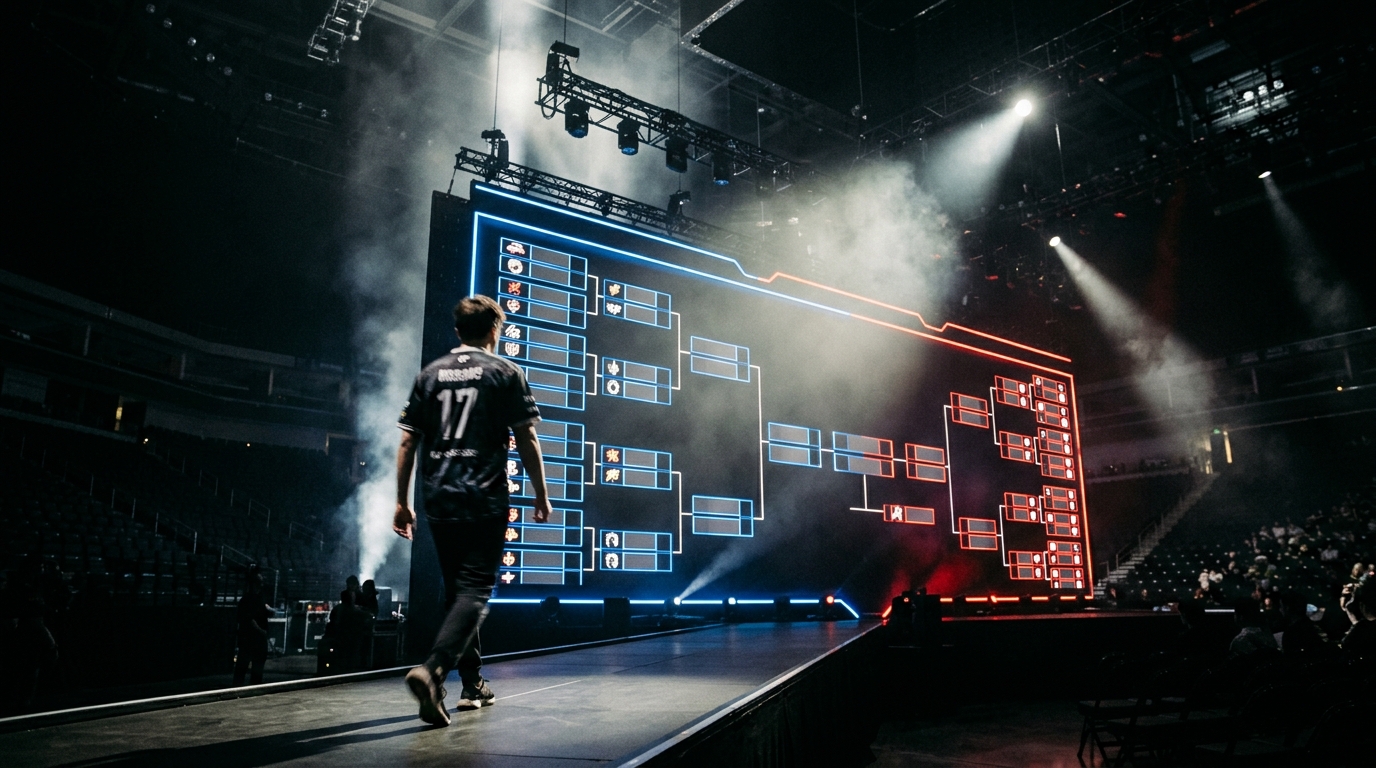
The headline mechanic is captured in the phrase Riot used to introduce the overhaul: "Everything Is a Tournament." No team holds a guaranteed appearance at a major event by virtue of an existing partnership agreement. Every slot at Masters and Champions must be earned through competitive play in discrete tournament windows spread across the calendar year.
This replaces the slow-burn regular-season format, where standings accumulated over weeks and a single bad week was recoverable. Under the new structure, each tournament window carries its own qualification weight. Lose in the wrong bracket stage and your path to a global event closes for that window. The design compresses stakes into shorter time frames, which should produce the kind of do-or-die match energy that made early VCT broadcasts easy to recommend to people who had never watched competitive Valorant before.
Riot has also committed to placing new regional events closer to local fan bases, a logistical expansion that goes beyond format changes. Bringing live events to markets that have historically only consumed VCT remotely requires real infrastructure investment, and the announcement signals willingness to make it. The details of which cities or regions see new events will presumably come in follow-up communications Riot has promised before the 2027 season launches. The VCT's tournament history shows how heavily global events have clustered in a small number of cities, so meaningful geographic expansion would represent a genuine structural change rather than cosmetic scheduling.
What This Means for Teams and Organizations
The teams with the most complicated position right now are the established franchise partners. They paid to be part of a system that is now being retired. Riot has acknowledged this directly, indicating that further details on the transition will come in a series of follow-up updates. What that transition looks like in practice, whether it involves fee adjustments, preferential qualification pathways, or simply goodwill and lead time, is not yet clear. Organizations that built rosters and budgets around the certainty of a league slot are now operating in a meaningfully different risk environment.
For mid-tier and smaller organizations, the calculus reverses. The open qualifier pathway removes the single biggest structural barrier they faced: the cost and exclusivity of franchise partnership. A team that can compete at a high level now has a legitimate route to Masters and Champions without needing to acquire a slot that was never available for purchase at any price. That changes recruitment, it changes sponsorship conversations, and it changes how regional scenes outside the major markets can develop competitive programs worth investing in.
Roster strategy changes across all tiers. Franchising allowed teams to absorb slow developmental periods because the league seat was not at risk. In an all-tournament model, consistent peak performance becomes a survival condition. Teams that previously carried roster experiments across a full split without consequences now face the possibility that a bad tournament window costs them a spot at the next global event entirely. Development rosters and academy programs may need rethinking if the top of every bracket now requires readiness rather than trajectory.
Fan and Community Implications
The community reaction has been cautiously optimistic, which is roughly the right register given the available information. Longtime VCT followers have genuine nostalgia for the early open qualifier era, when bracket upsets felt seismic because they were rare and the teams involved had earned their way in from nothing. That energy is hard to manufacture, and Riot is betting that structural conditions can recreate it rather than simply invoking it rhetorically.
The skepticism underneath the optimism is also legitimate. The franchised era did produce real gains: production quality improved significantly, broadcast infrastructure became more professional, and organizations developed the kind of staffing and support structures that make player careers sustainable over longer periods. The open model needs to preserve those gains while adding back the competitive urgency that franchising eroded. Whether the tournament format delivers that depends on execution details that have not been announced yet.
For regions that have watched VCT grow in player population without ever hosting a premier live event, the promise of geographic expansion carries the most weight. Southeast Asia, Latin America, and the Middle East have produced significant player and viewership growth over the VCT's run, and each has a community of fans who have watched global events staged elsewhere. Bringing live events into those markets does more than reward existing fans. It creates local anchoring points for scenes that currently have to reach across time zones just to watch their own players compete on the biggest stages.

The 2027 VCT format overhaul is the most significant structural change in the circuit's short history. The franchised model had four years to prove its thesis, and the argument it lost was that stability without urgency produces a product people watch out of habit rather than excitement. The open qualifier model has its own risks, particularly around organizational sustainability and the practical difficulty of running more frequent high-stakes events at professional production quality. But the underlying bet, that competitive merit should determine who plays on the biggest stages, is one the community has been asking Riot to make since 2023.

Priya Nambiar covers competitive gaming and emerging esports ecosystems for GoAndGame, with a particular focus on Southeast Asian scenes and grassroots tournament culture. She came up through community forums before moving into sports journalism, and that background shapes everything she writes.


