
Something shifted in the Pacific bracket this spring, and the scoreboard is the clearest evidence. Rex Regum Qeon took first place at the VCT 2025 Pacific Stage 1 Playoffs, held at Sangam SOOP Colosseum in Seoul between March 21 and May 11, with Gen.G Esports and Paper Rex rounding out the top three and all three earning berths to Masters Toronto. The headline results look familiar. The path to those results did not.
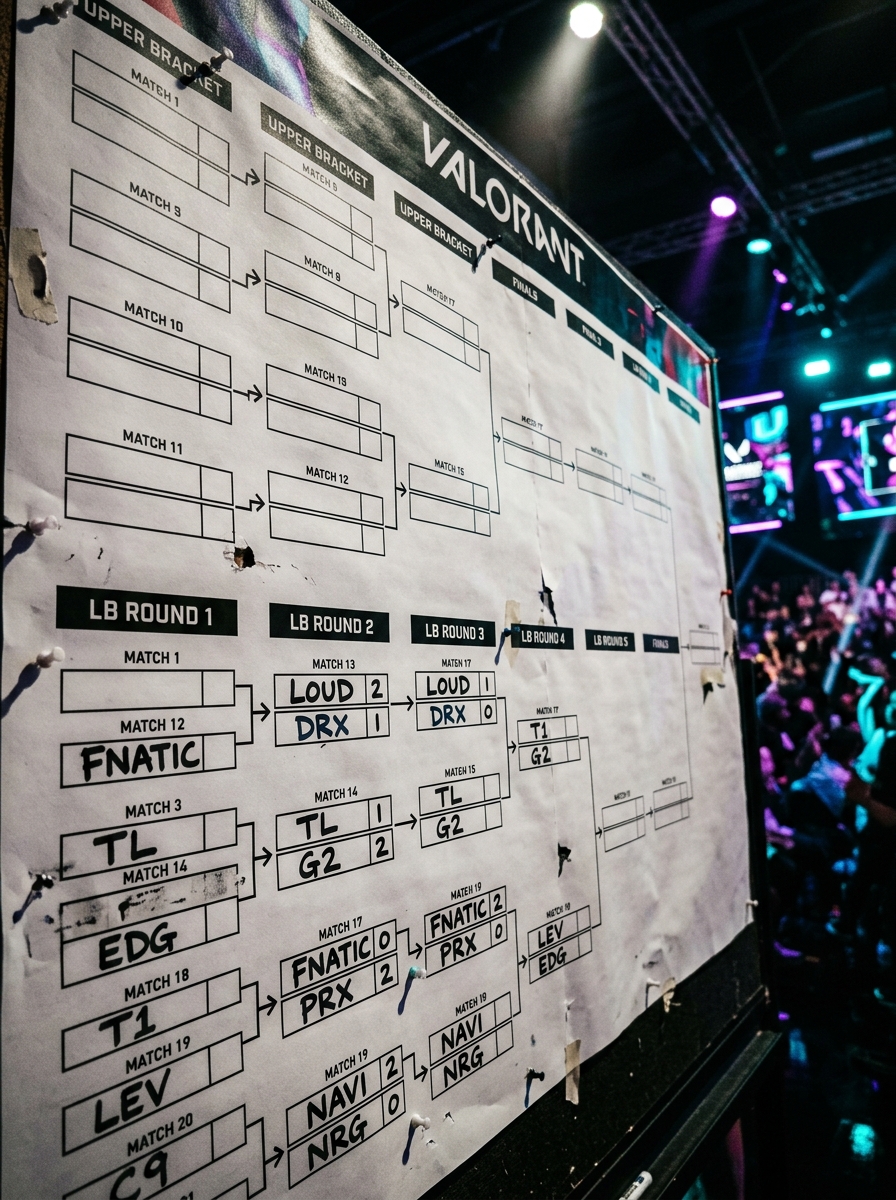
The structure of this stage deserves more credit than it usually gets. Riot organized the twelve competing teams into a Two Single-Round Robin group phase before feeding survivors into a Double-Elimination playoff bracket. That combination is doing real work. The round-robin opening means every team in the field, regardless of seeding, faces top-flight opposition multiple times across the stage. Not once in a group draw and never again, but repeatedly, with preparation cycles in between. For a mid-tier squad, that is a different kind of education than a best-of-three tournament bracket where one loss sends you home.
The double-elimination side of the equation adds a second layer. Teams still ironing out agent composition issues or in-game communication gaps get a lower-bracket path rather than a one-series elimination sentence. KIWOOM DRX finished fourth overall, collecting a Pacific Points result that rewards a deep run even without a Toronto qualification slot. TALON finished fifth and sixth. Both outcomes represent squads pushing significantly further into the bracket than pre-stage projections suggested.
Why the Gap Is Closing Faster Than Expected
The conventional explanation for Pacific's talent concentration was always structural: a small number of legacy organizations captured the best players, widened their analytical and practice advantages, and repeated the cycle each season. That model still describes the top of the standings. RRQ, Gen.G, and Paper Rex are not accidents. But 2025 shows enough friction in that model to notice.
Sponsorship presence from ZOWIE, Predator, Intel, and Pulsar signals something concrete. Those brands do not attach to organizations without verified viewership and operational credibility. Their presence across Pacific Stage 1 suggests that even non-top-seed organizations are running at a level of infrastructure that was unavailable to equivalent teams two or three VCT seasons ago. Better practice setups, more analyst hours, and actual travel and accommodation support for away events all compound. They show up in series results slowly and then faster.
The compressed single-stage timeline, under two months from first match to grand final, creates a specific condition that benefits younger rosters. High-volume competitive reps in a short window force adaptation at a pace that stretched seasons with long breaks between events do not. A team that plays forty-two total matches across the stage, as the VLR.gg event page tracking all 42 scheduled matches confirms, accumulates problem-solving experience that previously only appeared at international tournaments or in the best scrimmage networks. The round-robin phase is, functionally, high-stakes practice against the region's best, on broadcast, with results that matter.
What the Bracket Results Signal for Toronto and Beyond
The three Masters Toronto qualifiers, RRQ, Gen.G, and Paper Rex, arrive in Canada with something more valuable than a regional title. They were pushed. Gen.G and Paper Rex both navigated playoff pressure from teams that outperformed their seeding, which means the qualifying squads enter international competition having solved problems under duress rather than coasting through a lopsided regional bracket.
That matters because Pacific's international ceiling has historically been partly set by how competitive its internal preparation was. A region where the top three teams spend their playoff run beating opponents with large capability gaps tends to produce squads that encounter their first genuinely hard series at the international level. A region where the bracket fights are real before Toronto produces teams that have already lost sleep over a close deficit in a deciding map.
The harder question, the one Pacific analysts are quietly raising, is whether the traditional top organizations will accelerate internal changes to maintain separation, or whether the infrastructure improvements are rising across the entire region at roughly the same rate. If sponsorship access, analytical tooling, and structured player development are becoming more evenly distributed, the gap at the top becomes harder to hold. RRX winning Stage 1 is one data point. What the Stage 2 bracket looks like, and how many of the same mid-tier squads are present in its later rounds, will say considerably more about whether this spring was a moment or a trend.

Priya Nambiar covers competitive gaming and emerging esports ecosystems for GoAndGame, with a particular focus on Southeast Asian scenes and grassroots tournament culture. She came up through community forums before moving into sports journalism, and that background shapes everything she writes.