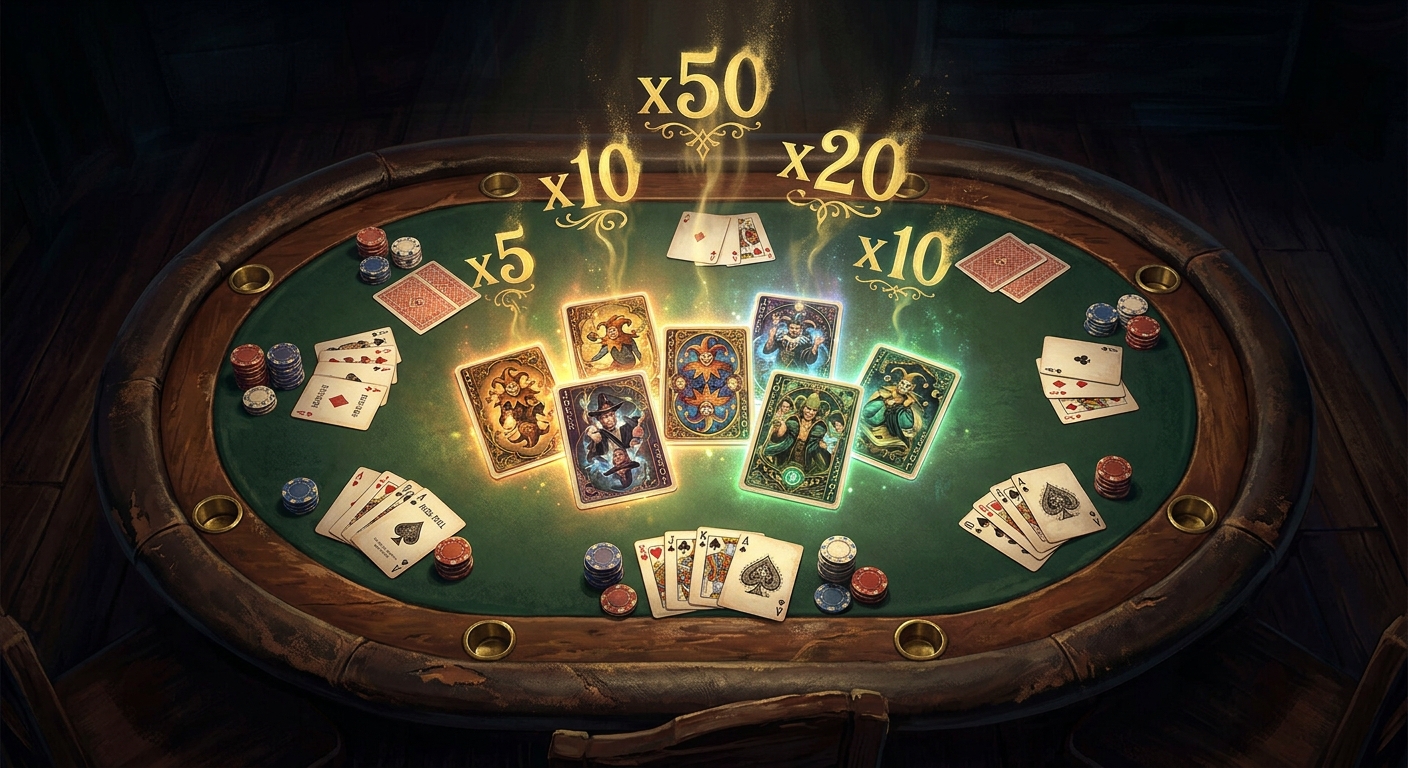
Balatro does not ask you to bluff anyone. There is no opponent across the table reading your tells, no pot odds to calculate against a human mind. Solo developer LocalThunk stripped poker down to its skeleton, a scoring system built on hand ranks, and then packed that skeleton with joker cards, multipliers, and a roguelite loop that has swallowed entire afternoons for players who swore they had no interest in deck-builders. The game shipped in February 2024 and has not let go of people since.
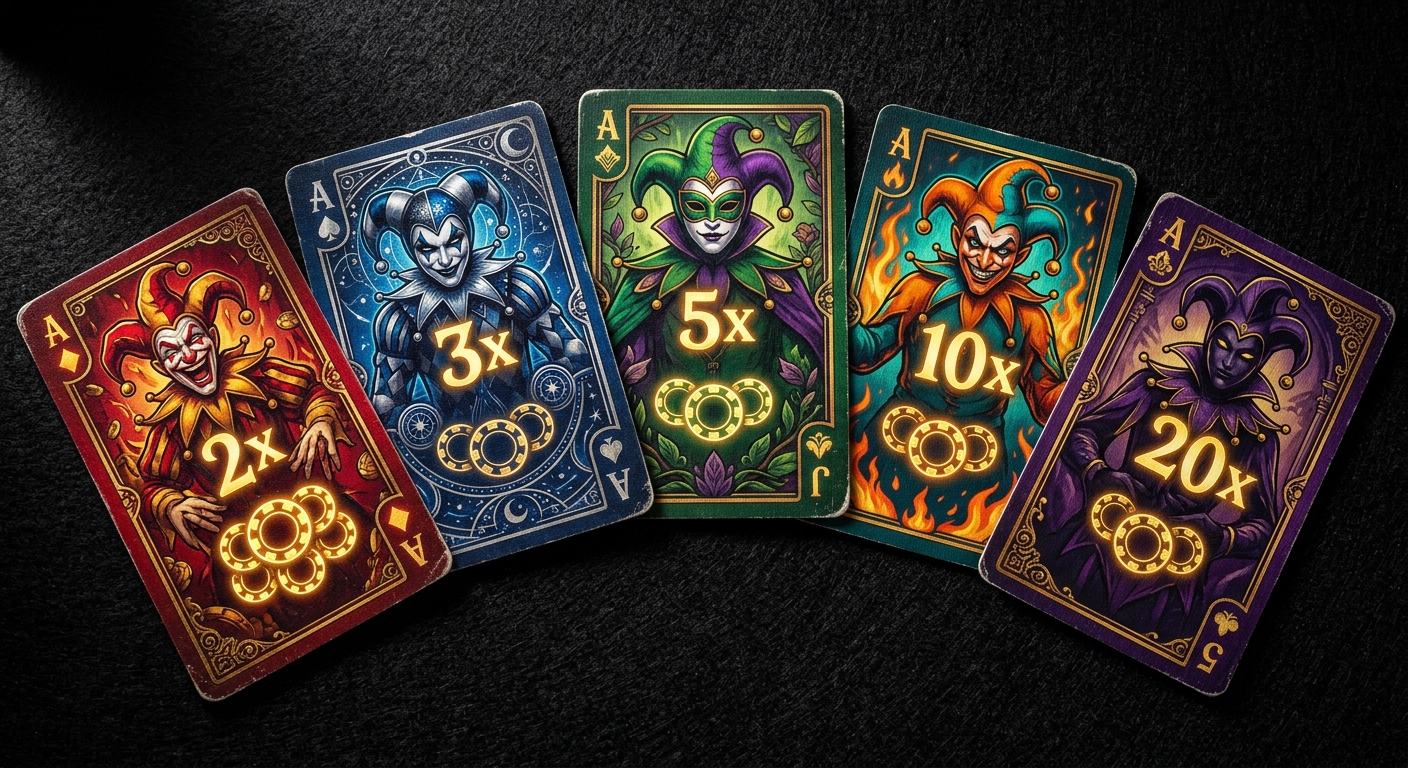
The core act is simple enough to explain in a sentence: play poker hands from a modified deck to hit score thresholds called blinds, then spend shop currency on cards and jokers between rounds. What that sentence cannot communicate is how quickly those jokers start talking to each other. One might multiply points for every club in your hand. Another might add bonus chips whenever you play a pair. Stack three or four of these together and the numbers stop being numbers, they become a kind of violent arithmetic that feels more like a chain reaction than a card game. Turn Based Lovers called it addictive, relaxing, and tremendously rewarding after going in skeptical, which is about the most honest possible summary.
The skepticism part matters. Deck-builders carry a reputation for complexity that keeps casual players at arm's length. Balatro sidesteps that by grounding everything in poker hand recognition. You already know a flush beats a pair. That shared literacy means the game can load complexity into the joker layer rather than the foundation, and new players absorb it gradually rather than all at once. PC Gamer ran a piece from a writer who actively disliked deck-builders and came out the other side converted. That is not a coincidence of taste. It is a design choice paying off.
What Keeps Runs Fresh
Balatro gives you several starting deck types, each nudging a different strategy, and the joker pool shuffles enough between runs that copying a previous build exactly is rarely possible. Boss Blinds arrive at set intervals and impose negative modifiers: one might forbid you from playing face cards, another might flip dealt cards face-down. These forced pivots are the game's sharpest design tool because they punish complacency harder than any straight difficulty spike could. You cannot coast. The deck you assembled for round four may be actively wrong for round six, and recognising that quickly is most of the skill ceiling.
Rogueliker put Balatro alongside Luck be a Landlord, a slot machine simulator, as two atypical deck-builders that arrived within a single month and completely subverted expectations. The comparison to Slay the Spire comes up repeatedly across coverage, and it is apt in one specific way: both games use number escalation as a kind of dopamine delivery mechanism. Watching a score tick from four thousand to four million because three jokers happened to align correctly is a sensation that pure card games, played against other humans, almost never produce.
Where the Game Earns Its Caveats
The audiovisual presentation is minimal. Intentionally so, and the card-room aesthetic holds together, but players who come for rich art direction or any narrative thread will find neither. The interface is functional rather than beautiful.
Early sessions can also feel murky. Tarot cards, planet cards, and jokers each operate on different layers of the scoring system, and the game does not always surface those interactions in plain language. Some hours pass before a new player fully internalises why a particular combination broke their run or saved it.
- Joker synergies compound in ways the tutorial does not always anticipate
- Planet cards upgrade specific hand types but require deliberate setup to matter
- Tarot cards offer one-time effects that feel opaque until you have seen most of them
The luck question is also genuinely unresolved. A run can collapse because the shop never offered the one joker type your strategy needed, and that failure sits in an uncomfortable middle ground between bad luck and bad play. Experienced players learn to build flexibility rather than dependency, but that lesson costs a few promising runs to learn.
The Honest Assessment
Balatro is a small, focused, and almost aggressively good game. It converts skeptics at a rate that says something real about the design, and it sustains replayability through variety rather than sheer content volume. The score inflation is silly and satisfying in equal measure. The gaps in onboarding are real but survivable. If you have ever lost time to a numbers-go-up loop and felt no shame about it, this is the next place that time will go.

Mara Solis is a staff writer at GoAndGame covering board games, tabletop strategy, and the culture around competitive play. She has spent years logging hours at game tables from local hobby shops to international conventions. Her writing blends practical insight with a genuine enthusiasm for the communities games create.