
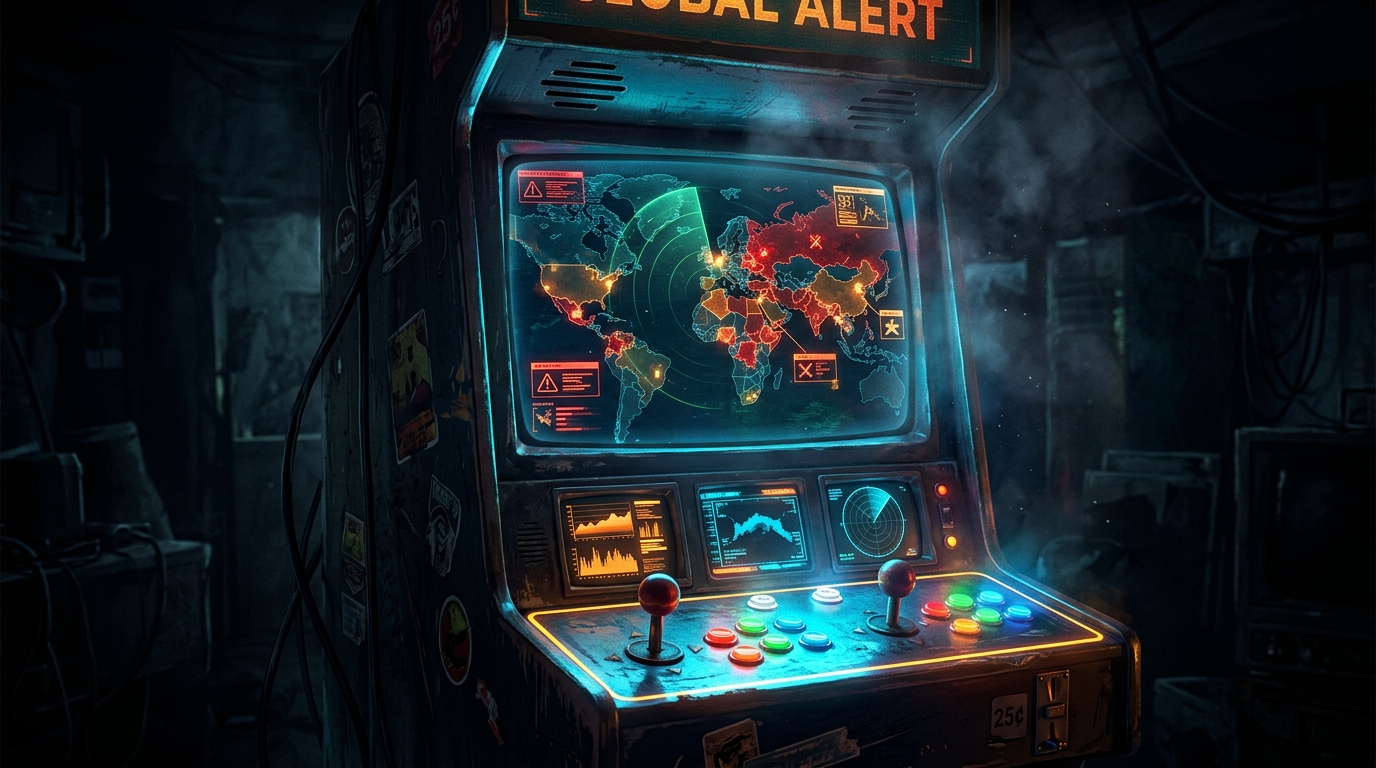
The rapid tempo of breaking news can feel like feeding quarters into a machine that never stops. Each headline arrives before the last one resolves, and the cumulative weight of open conflicts, financial jitters, and shifting alliances makes the news feed look less like journalism and more like a segment storm with no pause button. Four stories in particular have been cycling near the top of Euronews trending lists, and each one deserves more than a headline glance.
The Iran Flashpoint and What the Sources Actually Say
A US-Israel strike on Iran is trending on Euronews under the label "2026," which places the story in the current year. That much is confirmed by the source. What is not confirmed by the source material is any specific detail about UN emergency sessions or a defined diplomatic window. Those specifics are circulating in wider media but have not been independently verified here, so this piece will not repeat them as fact. What can be said plainly is this: a military action involving two of the most heavily covered actors in Middle East geopolitics has made it to the top of European news aggregators, and that alone signals a significant moment. The Iran file has been open for decades. Each escalation resets the diplomatic math, and governments from Paris to Tokyo are being asked, again, where they stand. The story is genuinely serious without needing invented detail to make it feel that way.
Ukraine: A War That Refuses to Become Background Noise
The war in Ukraine remains a top trending item on Euronews alongside European Union coverage, which tells you something about how tightly the two subjects have become linked. Ukraine is no longer just a war story; it is an EU policy story, a defense spending story, and an energy story simultaneously. Front-line positions continue to shift, and the debate inside EU member states over the pace and scale of military aid has not quieted. Some governments want faster delivery of heavier equipment. Others are calculating domestic political costs. The civilian toll is not abstract. Displacement figures have been updated repeatedly upward since the full-scale invasion began, and communities along active front lines are living with the kind of dirt pump economics of survival: keep moving resources in, or the whole system stalls. What makes the Ukraine coverage different from many long-running conflicts is that European publics have not fully tuned it out, and that sustained attention is itself a political variable that leaders in Kyiv and Brussels are managing in real time.
The ECB and Two Separate Concerns Worth Keeping Separate
Euronews surfaced two distinct ECB-related headlines recently, and they should not be collapsed into one alarm. The first is that ECB staff have raised stability concerns. The second is that there are rumours about Christine Lagarde's departure from the ECB presidency. These are different stories. Staff concerns about financial stability touch on sovereign debt conditions in a high-rate environment, a real and ongoing tension inside the eurozone. The Lagarde departure rumours are a governance and succession story. Conflating them into a single sovereign-debt crisis narrative would be inaccurate. What is fair to say is that the ECB is operating under scrutiny from multiple directions at once, and that the combination of personnel uncertainty and market anxiety creates a noisier-than-usual communications environment for the institution. Economists watching the eurozone have noted for months that the window for preemptive rate adjustments narrows as member-state fiscal positions diverge. That tension is real, even without dramatizing the two headlines into one.
Canada, Carney, and the Art of Being a Necessary Ally
Canadian Prime Minister Mark Carney stated publicly that Canada remains a crucial partner for the United States in key areas, according to Euronews. The phrasing is careful, and the care is intentional. North American alliance dynamics have been under strain, and Carney's government has chosen a posture of visible engagement rather than quiet withdrawal. Trade policy, continental defense arrangements, and energy supply chains are all active files. Canada's position is unusual: it is close enough to US decision-making to matter, and independent enough to occasionally push back. Carney's explicit statement about partnership is partly reassurance for domestic audiences who want to know that the bilateral relationship is being managed, and partly signal to Washington that Ottawa is present and paying attention. It is the diplomatic equivalent of a dot chomper move: stay on the board, keep moving, and do not let the map close in around you.

Four stories, four different kinds of pressure. The Iran situation demands sourced patience over invented urgency. Ukraine demands sustained attention even when the news cycle wants to move on. The ECB demands precision about which concern belongs to which headline. Canada demands recognition that alliance management is its own form of statecraft, unglamorous and ongoing. None of these resolve cleanly. That is the actual shape of the news right now, and it does not need a scoreboard to feel consequential.
Sources

Alexandra Rivet explores the intricate interplay of games and culture for GoAndGame. A passionate storyteller, she delves into narratives with depth and curiosity. Her pieces often highlight the stories behind the pixels.


