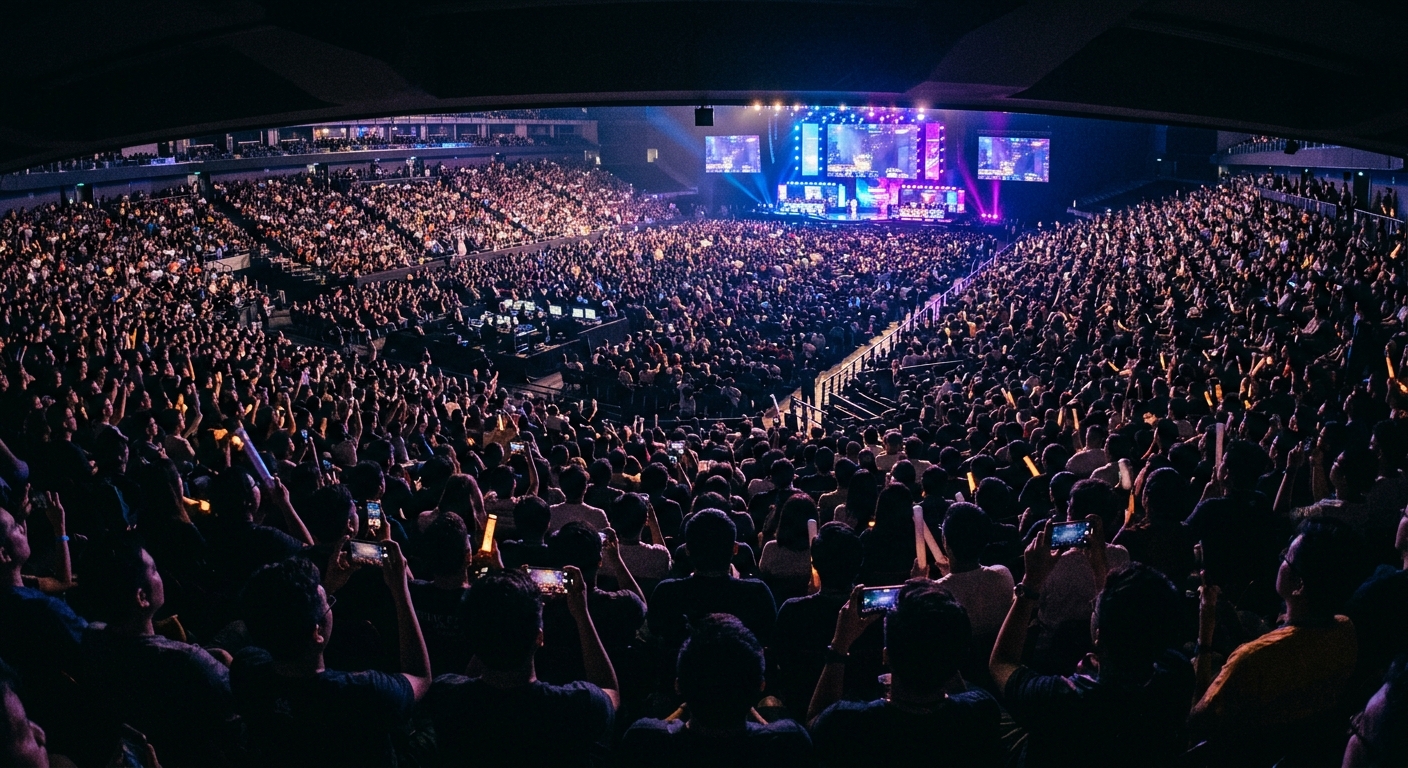
Peak concurrent viewership for MPL Philippines Season 14 tells a quieter story than any championship trophy. The headline numbers look like steady maintenance. What sits underneath them is more interesting: the crowd itself is changing composition faster than it is changing size.
Ratings in Context: What the Numbers Actually Mean
Competing regional leagues across Southeast Asia would consider MPL Philippines' average concurrent stream figures an aspirational benchmark. That framing matters. A league that holds firm during mid-table matchups between lower-seeded teams has built something more durable than a league that spikes on marquee finals and then craters for six weeks on either side. Sponsors and media partners price inventory against guaranteed minimums, not viral outliers. A stable lower bound carries more value across a multi-year contract than a single spike driven by one iconic series.
What Season 14 established, across the regular season and into the playoff bracket, is exactly that floor. The Philippine market has held it long enough for the pattern to look deliberate rather than lucky. Early seasons pulled audiences whose primary attachment was to individual celebrity players, not to systems or team identities. That is a fragile foundation. When a star retires or transfers, the viewership that followed the person goes with them. Season 14 suggests that attachment is now landing somewhere more durable, on teams, drafting philosophies, and institutional brand rather than any single name on the roster.
The Maturing Audience: From Casual Spectator to Informed Viewer
Viewer commentary during Season 14 shifted noticeably toward tactical vocabulary. Draft phase decisions, jungle pathing, and gold differential trends became common reference points in community discussion. That is not the language of passive entertainment. It is the language of someone who has been watching long enough to build a mental model of the game and is now testing that model in real time against what professionals are doing on screen. The direction is clear, even if the pace is gradual.
Teams that built institutional identity across multiple roster iterations have benefited most from this shift. RSG Philippines, whose organizational history in the league stretches back to Season 8, competed through several roster configurations before its final season in Season 14 and eventual disbanding in 2025. That arc is the kind of coherent team narrative a sophisticated audience can follow and invest in across years. Fans who understand drafting philosophy and strategic identity have reasons to follow a team through personnel changes. Fans who were only following one player do not. The distinction has measurable consequences for retention numbers from week to week through a long split.
The practical implication for league programming is significant. An audience with genuine tactical literacy does not need fundamental rules re-explained every broadcast. That opens space for analyst desk segments, replay breakdowns, and documentary-style access content, the kind of production that deepens attachment rather than simply maintaining it. The audience has outgrown the tutorial. Season 14's broadcast showed early signs of that recalibration in pacing and overlay design. Tighter framing during draft phase, more deliberate use of on-screen data, and less filler between games all point toward a production team that has updated its assumptions about who is watching.
Regional Competition and the Philippine League's Positioning
Southeast Asia remains the most contested terrain in mobile esports. Indonesia, Malaysia, and Singapore all operate MPL franchises under Moonton's regional structure, and prestige primacy among national leagues has direct consequences for player salaries, sponsor interest, and international tournament seeding. Season 14 viewership data arrives at a moment when dominant markets are entering a competitive phase defined by audience quality rather than raw growth percentages. The Philippine league's audience maturity functions as a defensible advantage in that environment.
A fanbase that understands the product engages differently with broadcast sponsorship. A casual viewer might register a logo during a timeout graphic. An informed viewer connects a brand to a specific in-game moment, a rotation call, a late-game objective trade, and carries that association further into daily thinking. That dynamic shapes how media packages get structured and how renewal conversations go. Audience composition is not a soft metric. It has direct line-of-sight to deal terms, and leagues that can describe their audience in granular terms negotiate from a stronger position than leagues that can only offer gross impressions.
The 2025 MPL Philippines season, structured across Seasons 15 and 16, signals that league operators are planning for an audience that expects elevated production values and deeper competitive stakes. Team Liquid PH winning both Season 15 and Season 16 gave the year a narrative spine that rewards sustained watching. A dominant team running through a full calendar year creates storylines around challengers and countermeasures that only make sense if you have been paying attention all along. That is a calendar built for retention, not acquisition. It assumes the fan already knows why they are watching.
Infrastructure, Venue Strategy, and Long-Term League Health
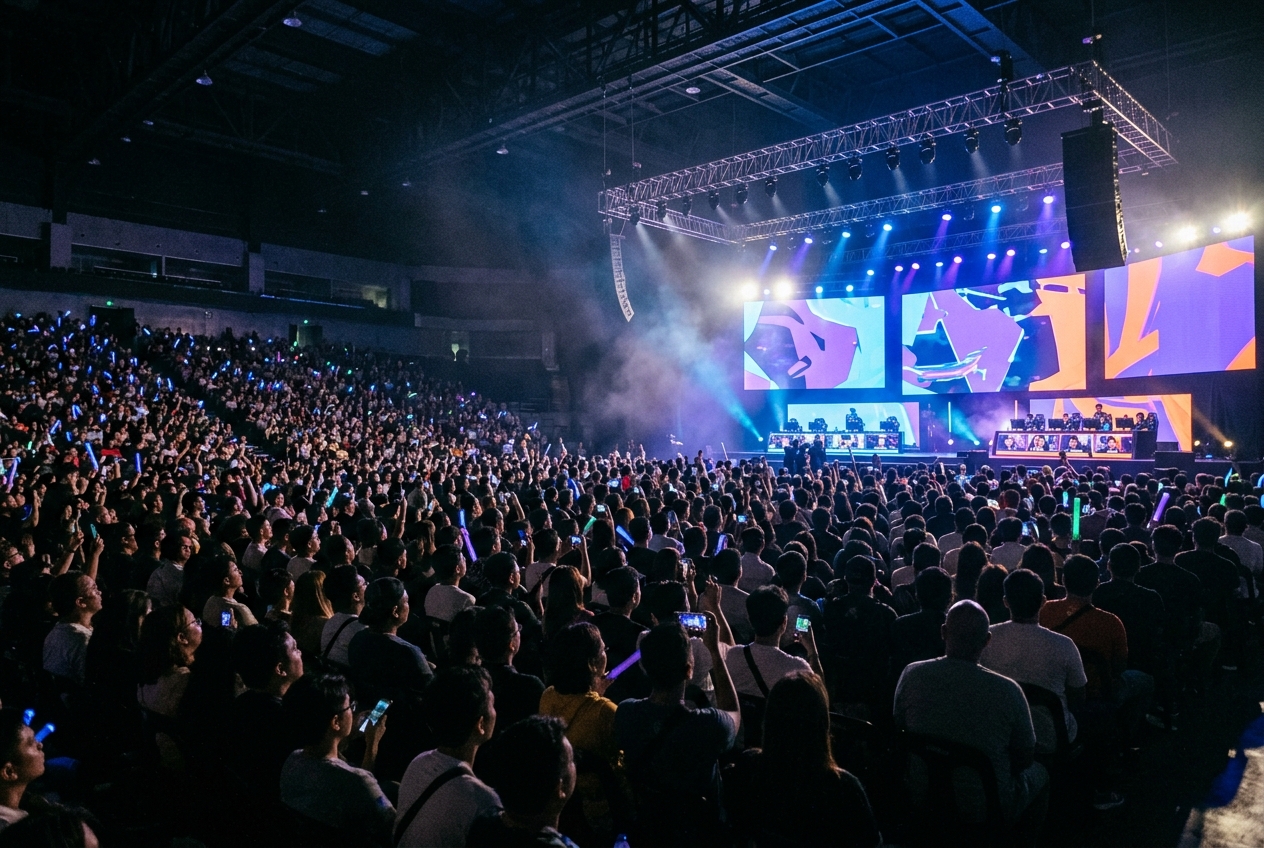
One underreported driver of viewership maturation is sustained investment in live venue experiences. The 2024 MPL Philippines season continued refining a dedicated venue approach that creates a feedback loop most broadcast-only leagues miss. Fans who attend matches in person return to streams with heightened emotional investment and serve as organic advocates within their social networks. Online viewership and live attendance are not competing channels. Leagues that treat them as such plateau earlier. Leagues that use arena events to deepen community bonds show stronger streaming retention through the back half of long splits.
The venue progression from Season 14 through Season 16 reflects that thinking made structural. Season 16's Grand Finals at the Cuneta Astrodome placed the league inside a building with decades of history in Philippine sports and entertainment. That choice is not incidental. Putting a mobile esports championship in a venue that carries cultural weight communicates something to a broad audience about what this league considers itself to be. It also gives first-time attendees a reference point that connects esports to the broader sports-going culture they already participate in.
Production quality improvements visible in Season 14's broadcast reinforced this direction. Tighter observer camera work, improved data overlays, and more disciplined pacing between games are not cosmetic changes. They are signals that capital is being allocated in response to a specific audience type. An entry-level audience needs spectacle and explanation. A mature audience needs clarity and depth. The broadcast is now calibrated for the latter, and Season 14 provided the evidence that the recalibration is tracking correctly.
What Season 14's viewership signals add up to is a league that has completed the difficult early phase of esports development. Predictable audiences, informed fans, institutional team brands, and a production apparatus built for depth rather than novelty: those are the structural characteristics of a mature sports media property, and they took years of unglamorous groundwork to build. The number on the concurrent viewer counter is not the story. The person behind that number, who can tell you what the blue team's draft was telegraphing before the game even started, is the story worth following.
Sources

Priya Nambiar covers competitive gaming and emerging esports ecosystems for GoAndGame, with a particular focus on Southeast Asian scenes and grassroots tournament culture. She came up through community forums before moving into sports journalism, and that background shapes everything she writes.


