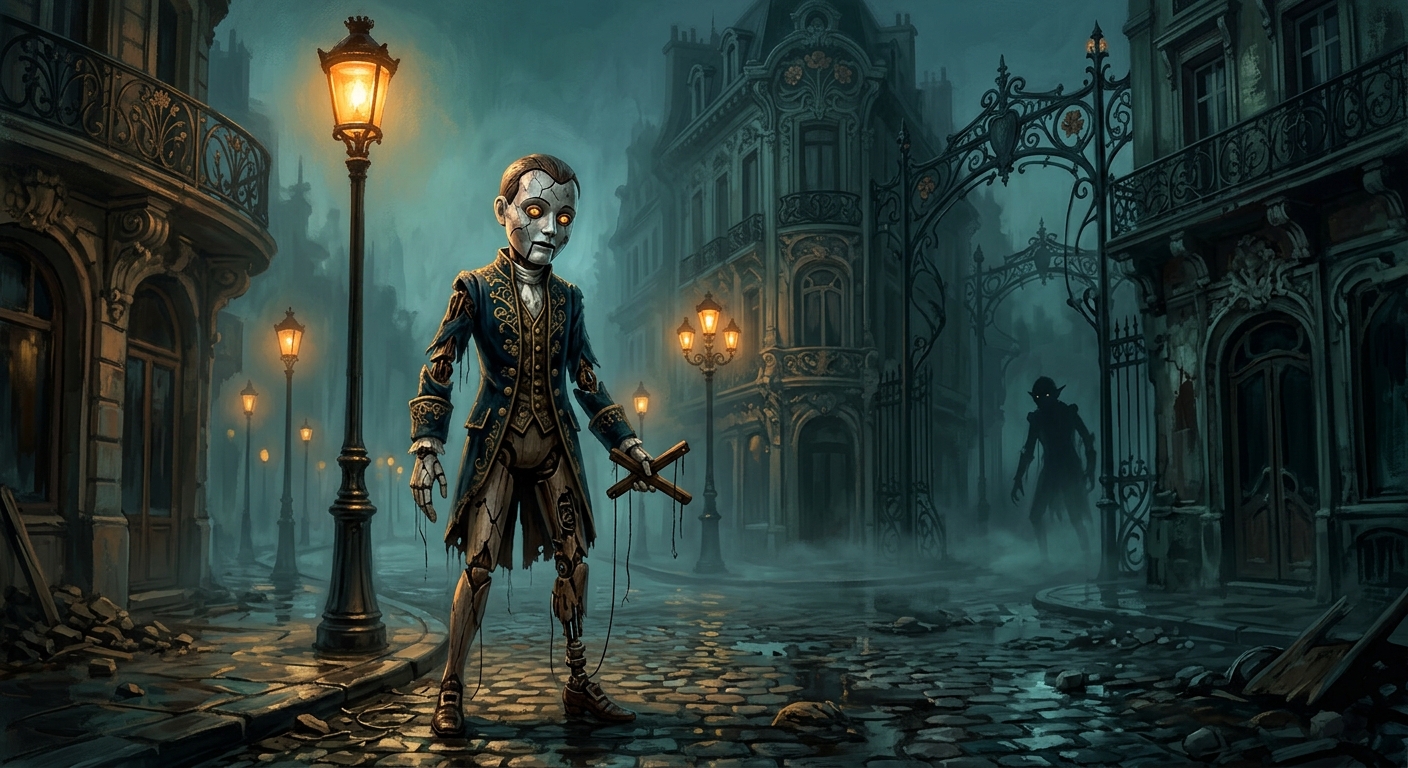
Neowiz's puppet-horror Soulslike, Lies of P, arrived in September 2023 and sold over 3 million units by June 2025. That figure matters less as a sales stat and more as a signal: players wanted something that looked like a genre exercise but turned out to be something stranger and more considered.
The Lie at the Heart of the Machine
Lies of P casts players as a reimagined Pinocchio, an automaton navigating the decaying Belle Époque city of Krat, where rogue puppets have gone homicidal and a deadly epidemic runs alongside them. The game's central mechanical conceit is that telling lies grants power. Throughout the story, players face binary dialogue choices: tell the truth or fabricate. Lying enough times rewards players with a powerful weapon, and the choices shift the main character's posture and appearance toward something more human. Most Soulslike games hide their moral architecture in item descriptions. This one puts it in your mouth.
The lying system drives the branching narrative toward multiple endings. Per Wikipedia's summary of the game, those binary choices affect both sub-plot outcomes and the overall story. What distinguishes the design is that the mechanic never sits apart from the fiction. Pinocchio was made to obey; choosing to lie is the first act of selfhood. The game earns its Collodi references because it actually uses them structurally, not just as set dressing.
Mechanical Complexity Beyond the Stamina Bar
The weapon assembly system lets players separate a weapon's blade from its handle and recombine parts across categories. A saw-toothed blade on a greatsword handle plays differently than the same blade on a rapier grip, and each combination shifts move sets, reach, and scaling attributes. The Fable Arts system layers a special attack onto each weapon, tied to a third resource built through precise parry timing. Health, stamina, and Fable gauge must all be managed simultaneously, which sounds punishing but functions as an invitation to aggression: landing parries refills the very resource that powers your most damaging options.
Where many Soulslikes encourage players to find one reliable build and commit, Lies of P keeps the parts bin open across multiple playthroughs. That replayability is not incidental. It serves the game's thematic interest in reconstruction and transformation. The city is falling apart; you are assembling yourself from what remains.
World-Building Through Architecture and Decay
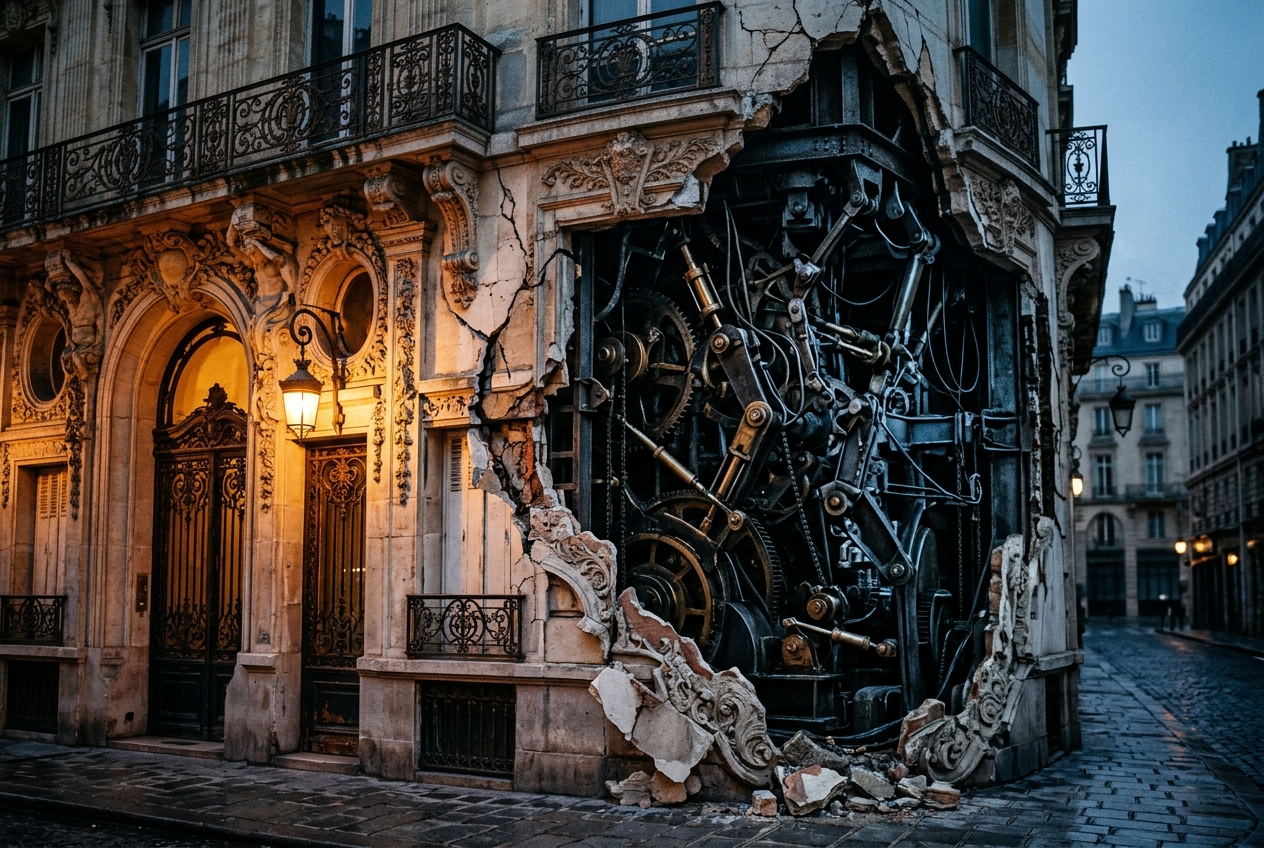
Krat's Art Nouveau architecture does narrative work that exposition never could. Ornate stone carvings share walls with industrial gearwork. Grand hotel lobbies have been converted into field hospitals. Each district presents its own ecosystem of puppet variants and environmental hazards that collectively sketch a history of prosperity collapsing into catastrophe. The game trusts players to read a room. As the Inverse review noted, Krat is "wonderful, gritty, and horrifying all at once," a city that communicates its backstory through the texture of its surfaces rather than through loading-screen lore dumps.
The prequel expansion Overture, released in June 2025, extends this approach with new locations that deepen the history of Krat before the Frenzy began. Where the base game shows ruins, Overture shows the architecture before it cracked. That contrast gives both halves additional weight.
Where others borrow the stamina bar and the bonfire rest point, Lies of P borrows FromSoftware's philosophical ambiguity and constructs something genuinely new around it.
Why Lies of P Matters for the Genre's Future
The Soulslike genre has a replication problem. Studios identify surface features of FromSoftware's work, stamina bars, ambiguous lore, punishing death loops, and reproduce them without the underlying design logic that makes those features meaningful. Lies of P avoided that trap by starting from Collodi's novel rather than from Dark Souls. The result is a game that feels familiar in its controls and foreign in its concerns, which is exactly the ratio that makes a genre entry worth returning to.
Its commercial performance and its reception on platforms like Metacritic, where it holds a user score of 8.4 with the large majority of reviews in the positive range, suggest that the audience for this kind of creative risk is larger than publishers tend to assume. The game was nominated for The Game Awards and the Golden Joystick Awards, and appeared on numerous year-end lists for 2023. A sequel is in development at Neowiz. The studio earned that sequel not by copying a template but by understanding what the template was actually for.
Sources

Eliot Reed writes about the intricacies of virtual worlds, blending analysis with storytelling. As a house writer for GoAndGame, he delves deep into game mechanics and narratives, offering thought-provoking insights for players and developers alike.


