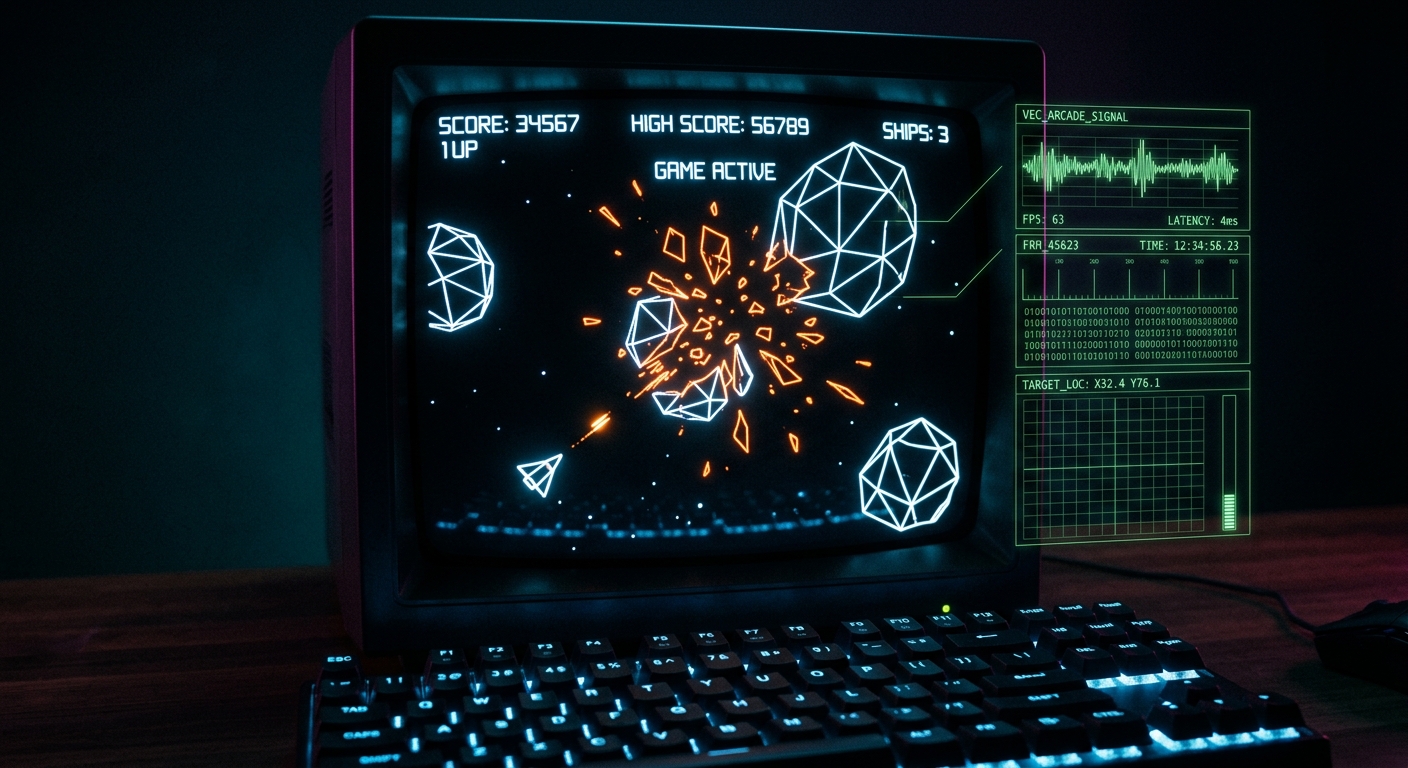
Somewhere between a 1979 coin-op cabinet and a Discord server running frame-comparison bots, the Asteroids Remake high-score scene quietly became one of the more compelling competitive corners of 2026. The leaderboards are moving fast. The arguments are older than most of the players having them. And the infrastructure holding it all together is built entirely by volunteers who would rather verify a run than sleep.
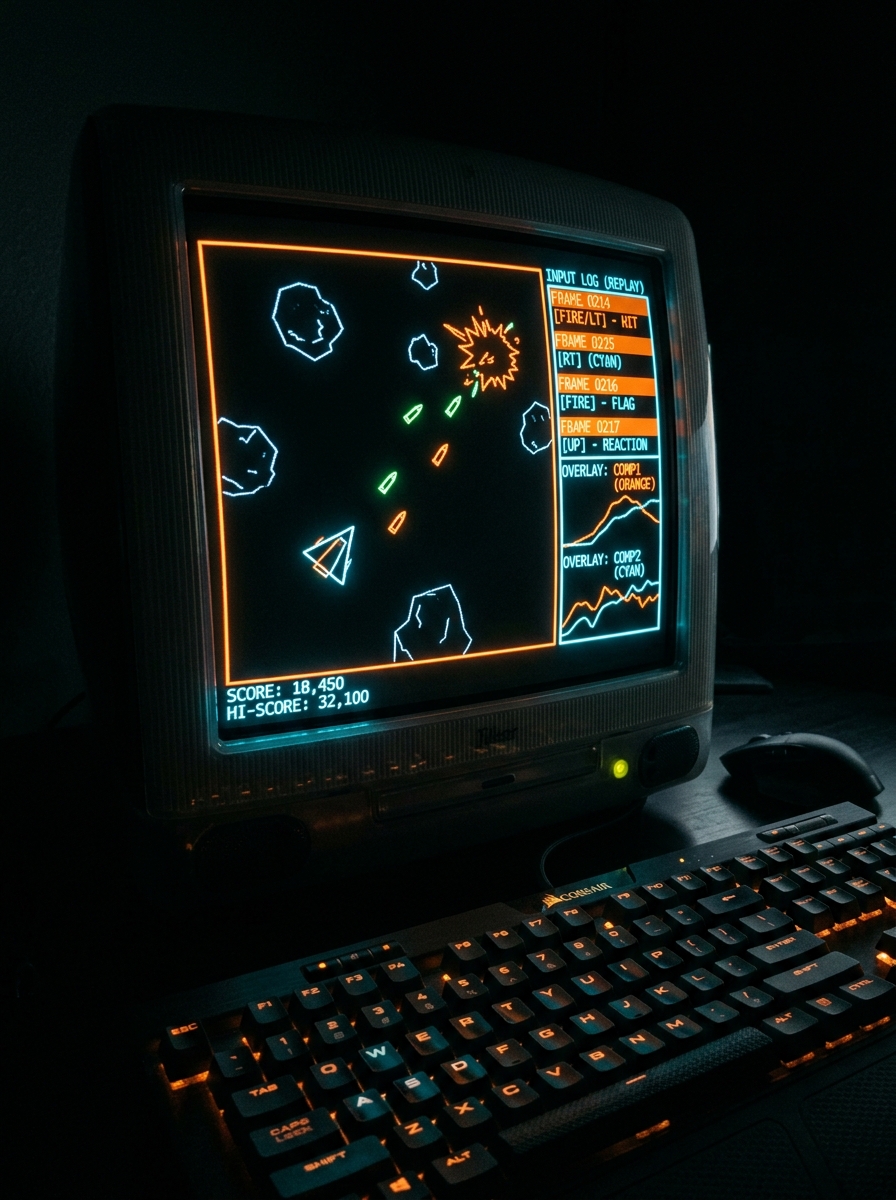
What makes this moment feel different from earlier Asteroids record eras is not the hardware or even the player pool. It is the speed of collective knowledge. Community forums and dedicated Discord servers have compressed discovery cycles that once took years into a matter of months. A routing insight posted to a public study log on a Tuesday can be absorbed, practiced, and challenged by a competitor in Manila by the weekend. That feedback loop is new, and it is reshaping who can realistically compete at the top tier.
A New Golden Age for an Old Rock Field
The player base arriving in 2026 is a genuine mixture. Veterans of classic arcade culture, people who remember hunting scores in physical isolation with no one to compare notes with, are sharing threads with a younger cohort raised on speedrunning and precision platformers. The shared vocabulary took a few months to stabilize, but it held. Both groups understand the deceptive simplicity at the core of the game: blast rocks, survive, accumulate. Everything else is optimization layered on top of that premise.
The Remake's physics engine is a significant reason the scene has grown so quickly at the mid-tier. Asteroids tumble with mass-proportional inertia rather than the flat-spin behavior of the original cabinet. That consistency means pattern knowledge compounds. A guide written by one player does not decay into irrelevance as soon as a newcomer's reflexes differ; the physics are the same for everyone, so the study logs transfer. That is a different kind of game than the original, and the community has embraced it rather than complained about it.
The result is visible in the long tail of the leaderboard. Mid-tier scores have climbed steadily across 2026 as tutorials and replay analyses have democratized knowledge that once lived in the heads of a handful of obsessives. You can track the correlation almost month by month: a guide drops, and the median score at that bracket moves inside a few weeks.
The Lurking Exploit Debate and Its Modern Echoes
Asteroids has always had this problem. The original 1979 cabinet allowed a technique players called lurking: park the ship in a safe corner, pick off the occasional enemy vessel from range, and accumulate points at a pace the designers almost certainly did not intend. That split the community along lines that never fully healed. Some players considered it a legitimate expression of game mastery. Others called it a hollow trick. The Wikipedia entry on the original game documents the lurking exploit with the kind of careful neutrality that only arrives after decades of argument. High-score forums like the Asteroids Deluxe thread at the Arcade Museum show the same tension playing out across years of posts, where players debate whether top scores reflect skill or knowledge of gaps in the design.
The Remake carries its own version of that debate. A shield-pulse timing window, executed precisely at the moment a large asteroid splits, can chain-destroy multiple second-generation rocks in a single frame event. Top players call it the bloom. Some call it a legitimate technique requiring real skill and precision. Others call it an unpatched bug that the developer has simply declined to address. Both descriptions are probably accurate, which is exactly why the argument has not resolved.
Community governance bodies spent much of early 2026 drafting category rules separating unrestricted runs, where the bloom is legal, from purist runs that ban it entirely. This mirrors longstanding debates in classic Asteroids Deluxe high-score communities about which optimizations honor the spirit of the game and which hollow it out. The two-category solution is not a resolution so much as a productive deferral. It lets both camps compete seriously without either side having to concede the underlying argument.
Meet the Record Holders Rewriting the Books
The player known as VectorPulse set the current verified unrestricted record in March 2026, landing well above the previous ceiling by a margin large enough to trigger three weeks of independent review before the community accepted the run as legitimate. A jump like that in a mature competitive scene does not happen by accident; it usually signals either a fundamental routing breakthrough or a tool-assisted submission. The community concluded it was the former. Bloom chain routing, executed at a consistency level no one had previously demonstrated in a verified run, was the difference.
On the purist side, a competitor who goes by SubpixelKaoru has been methodically dismantling stage-specific records. Her approach is almost academic: she documents spawn-pattern memorization in public study logs that any player can read, critique, and build on. She treats the knowledge as shared property rather than competitive edge, which is an unusual stance at the record-holder level and one the community has responded to with genuine enthusiasm. Her logs have become required reading in the purist category Discord channel.
Both players cite the Remake's physics consistency as the reason their strategies can transfer to newer competitors. The patterns are learnable. That is a meaningful design quality, and the record holders know it.
Tools, Verification, and the Infrastructure of Trust
The verification pipeline runs entirely on volunteer labor, and it holds together better than it has any right to. Submitted runs require raw capture files at a minimum of 60 frames per second, input logs exported from the game's built-in replay system, and a live commentary track that reviewers use to distinguish intentional decisions from reactive ones. That is a significant submission burden, but the community accepts it because the alternative is a leaderboard no one trusts.
A working group called the Asteroid Audit Collective has developed open-source tooling that cross-references input logs against known frame windows for contested techniques. The bloom detection pass is now largely automated, freeing human reviewers to focus on edge cases and novel strategies that the tool cannot categorize confidently. The collective publishes its methodology publicly, and that transparency is a core part of why the process carries weight. The trust comes from being able to see how the sausage is made, not just the outcomes it produces.
The community knows, from the history of other competitive scenes, exactly how quickly an unguarded record board collapses. Unverifiable numbers attract bad actors. Bad actors attract accusations. Accusations drive out legitimate competitors. The Asteroid Audit Collective exists specifically to interrupt that cycle before it starts. It is unglamorous work, and the people doing it rarely get the credit they deserve.
You can play the Asteroids Remake yourself to get a feel for what the top players are optimizing around. The gap between casual play and competitive routing is obvious within a few minutes, which is part of what makes the study logs so useful for anyone trying to close it.
What Comes Next for the Leaderboard
VectorPulse's unrestricted mark is looking fragile. Bloom routing has become more widely understood and practiced in the two months since the record was set, and several competitors are openly discussing routing variants that could push the score higher. The community expects a period of rapid record turnover through mid-2026.
The question of whether a bloom patch is coming shapes strategy in opposite directions simultaneously. Some competitors are investing heavily in bloom routing precisely because they believe the window is closing, and want records on the books before any change arrives. Others are doubling down on purist skills as a hedge against the technique being removed from relevance entirely. The two groups are making different bets on developer intent, and neither can know if they are right.
What is not in question is the condition of the broader scene. More people are competing seriously at more skill tiers than at any previous point in the Remake's history. The study logs are public. The tooling is open-source. The records are moving. That combination, whatever happens at the very top of the leaderboard, is the real story of the 2026 Asteroids Remake scene. The ceiling keeps getting rewritten because the floor keeps rising, and the volunteers who built the verification infrastructure made sure the two things could happen at the same time.
Sources

Priya Nambiar covers competitive gaming and emerging esports ecosystems for GoAndGame, with a particular focus on Southeast Asian scenes and grassroots tournament culture. She came up through community forums before moving into sports journalism, and that background shapes everything she writes.


