
Cassette Beasts hands you a blank tape and drops you on an island called New Wirral with almost no explanation. That is, honestly, part of the charm. But the game's systems run deeper than they first appear, and players who skim the surface spend hours wondering why their team keeps getting flattened by mid-game bosses. This guide walks through recording, breeding, fusing, and fielding a team that can actually handle the pressure, from your very first wild encounter to the post-game content that rewards the most committed collectors.
Recording and Taming Monsters: How the Cassette System Works
The first thing to understand is that Cassette Beasts is not about capture. You are not trapping creatures in a pocket or a ball. You are recording them onto blank cassette tapes, and when you play that tape back, your human character physically transforms into that beast. It is a stranger and more interesting premise than it sounds, and it shapes everything about how the game plays.
To land a successful recording, you need to weaken the target during combat. The lower its HP, the better your odds. Higher-level and rarer creatures resist recording more stubbornly, so patience matters more than luck. If a recording fails, you can try again on your next turn, but every attempt burns clock in a fight that is still actively threatening you.
Tape management is a real consideration early in the game. Each cassette holds exactly one recording, and blank tapes are not infinitely available at the start. Prioritize monsters whose elemental types patch your current weaknesses rather than chasing completionism right away. New Wirral also divides its monster population by region, and some creatures are entirely exclusive to specific environmental zones. If you sprint through the main story, you will close off access to recordings that experienced players lean on heavily for late-game fusion builds. Slow down and explore side paths early.
Breeding and Remastering: Upgrading Your Recordings Over Time
The remastering system lets you pour AP, earned through combat and exploration, into individual recordings to level them up. New moves unlock as you invest, and passive traits called stickers become available deeper into the progression tree. Think of stickers as the game's version of innate skills or held items, and treat them with real attention, because they are the hidden engine of competitive team-building.
Breeding in Cassette Beasts works on a pairing model rather than simple inheritance. You match two recorded monsters, and the result is a fusion egg whose stat spread and moveset draw from both parents. The interesting lever here is sticker inheritance. Certain powerful sticker effects only appear on specific monsters, and the only way to move them onto a fusion offspring is to use that monster as a parent. A common creature that happens to carry a rare sticker is absolutely worth keeping in your roster as breeding stock, even if you never field it directly in battle.
Lower-tier monsters get overlooked constantly, and that is a mistake. A basic early-game beast with an unusual passive can elevate an otherwise ordinary fusion into something genuinely threatening. Check sticker lists before dismissing any recording as filler.
Fusion Mechanics: Building Devastatingly Powerful Combined Forms
Fusion is the headline feature of Cassette Beasts, and it earns that billing. When two party members fight alongside each other long enough to fill their relationship meter, they can merge mid-battle into a single combined creature with a blended typing and a moveset that pulls from both base forms. The visual designs of the fused results are wild and often surprising. More importantly, the mechanical results can be overwhelming if you plan your pairings carefully.
Elemental synergy is the core planning consideration. Fusing a beast that applies strong offensive pressure against an enemy's type weakness with one that covers the merged form's own vulnerabilities creates coverage that is genuinely difficult for opponents to navigate around. One without the other leaves you exposed. The goal is a fused form that has no obvious hole in its defensive typing while still carrying real offensive options against the targets you expect to face.
Fusion moves also carry interaction bonuses that are not obvious from reading descriptions alone. Certain pairings trigger effects that neither parent could access individually, and the community on forums and wikis is still actively cataloguing unusual combinations. Experimenting with pairings that seem unlikely on paper is worth the time investment, especially heading into endgame content where bosses hit hard enough to punish standard approaches.
There is also a narrative dimension with real mechanical weight. Relationship levels between your human party members directly influence the power of their fused forms. That means companion storylines are not optional flavor. Working through a partner's personal arc raises the ceiling on what your fusion can actually do. Players who skip dialogue to reach the next fight faster are leaving stat points on the table.
- Build relationship meters before major boss fights by keeping favored partners active in your party during exploration.
- Prioritize sticker inheritance when selecting breeding parents over raw base stats.
- Remaster at least two full fusion pairs to unlock deeper move options before tackling Archangel encounters.
- Check regional monster availability before moving the story forward past a new zone.
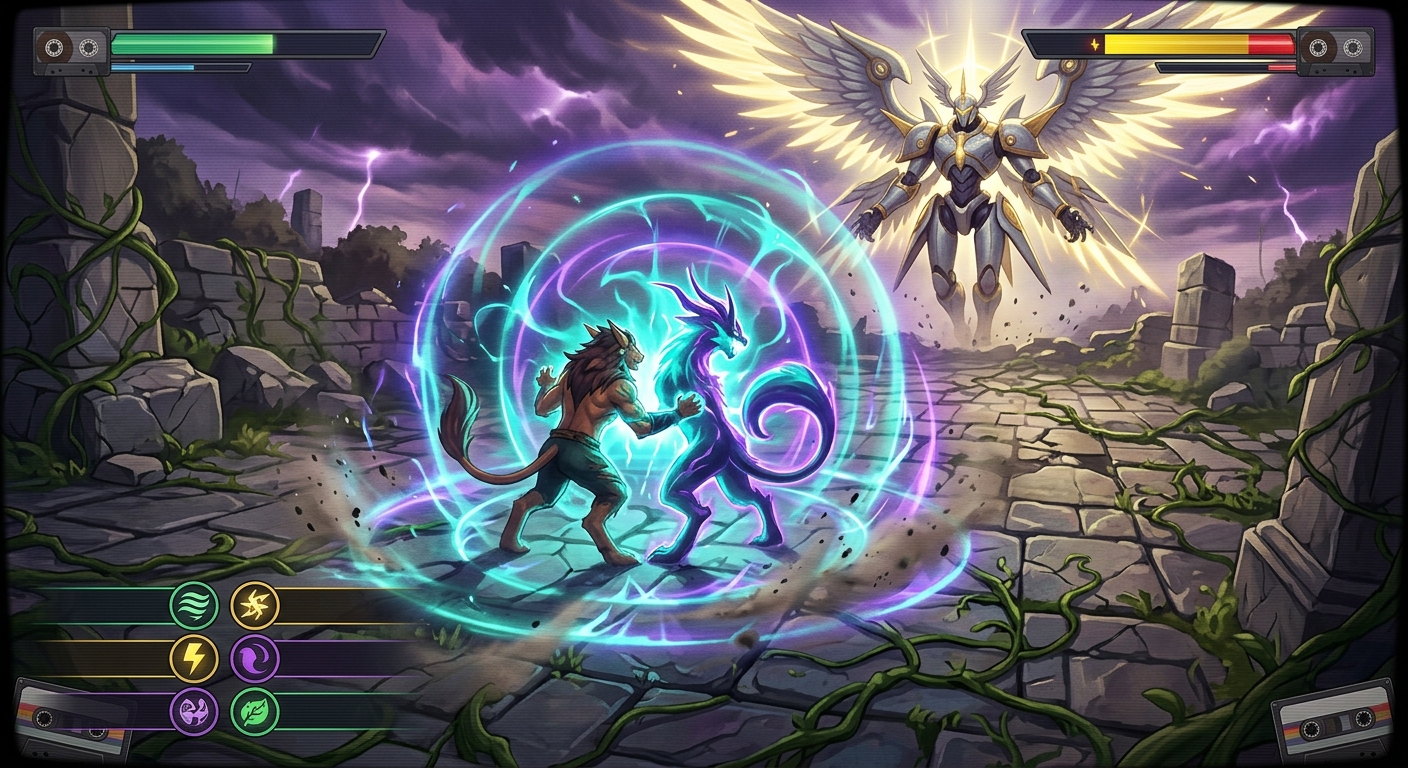
- Use status-inflicting moves on Archangels before committing to direct damage rotations.
- Rotate your cassette library between fights to keep remaster XP spread across multiple recordings.
- Experiment with non-obvious fusion pairings in low-stakes wild encounters before relying on them in boss fights.
- Field at least one debuffer on every serious team, regardless of your preferred playstyle.
Fielding Your Team: Party Composition and Tactical Tips for Every Stage
A beginner team should cover three functional roles: one monster with recovery or sustain options, one high-damage attacker focused on single targets, and one creature built around inflicting status conditions. That triangle holds up across the vast majority of story content without demanding heavy optimization or a deep cassette library.
Status conditions in Cassette Beasts are significantly stronger than in most comparable games. Poison, sleep, and elemental curses can make encounters that would otherwise require precise execution feel manageable. If you have a party slot going to a monster that does nothing but hit hard, consider swapping it for something that can apply a debuff on turn one. The damage dealt by a sleeping or poisoned enemy over several rounds often outpaces what a second attacker would contribute through direct hits.
Mid-game shifts the calculus. Once Archangels start showing up as boss encounters, a generalist team struggles. Each Archangel has specific elemental vulnerabilities, and exploiting them efficiently requires a cassette library with genuine range. This is where early exploration pays off. Players who recorded diverse types in the first few hours of the game can swap configurations between fights. Players who relied on a single favorite lineup for the whole story suddenly find themselves grinding for recordings they should have collected hours ago.
Endgame and post-game content reward a very specific team architecture: two complementary fusion pairs rather than four independent monsters. Identify which two fused forms match your playstyle best, then direct every breeding, remastering, and sticker-hunting effort toward the four base creatures that produce those fusions. Spreading resources evenly across a large roster feels satisfying but produces a team that cannot compete at the highest level. Commitment to four creatures, played deeply, beats breadth every time.
If you enjoy this kind of layered, strategic monster-collecting thinking, the mechanical logic carries over to other games built around resource management and tactical team composition. Games like Dot Chomper, Segment Storm, and Star Dive reward the same planning instinct in shorter, more immediate formats. The skill of reading a situation and building toward a specific payoff transfers.
Cassette Beasts rewards players who stay curious. The recording system encourages you to engage with every new creature rather than dismissing it. The breeding system asks you to think several steps ahead. The fusion system punishes passive play and rewards genuine preparation. None of it is impenetrable, and none of it requires memorizing a wiki before you start. You just have to keep asking what else the game is offering, and it keeps answering.
Sources

Mara Solis is a staff writer at GoAndGame covering board games, tabletop strategy, and the culture around competitive play. She has spent years logging hours at game tables from local hobby shops to international conventions. Her writing blends practical insight with a genuine enthusiasm for the communities games create.


