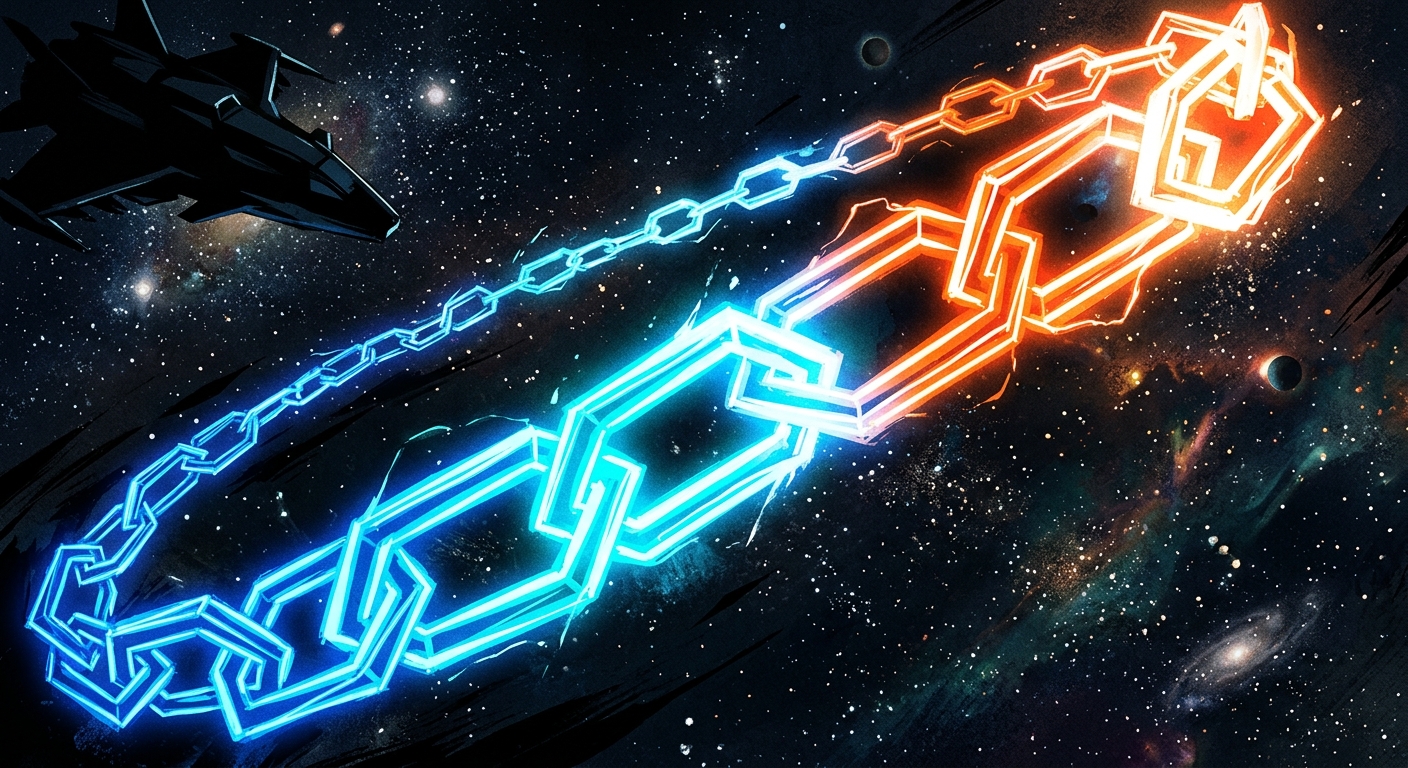
Most arcade scoring systems reward you for playing well. Segment Storm rewards you for playing well without stopping, and then punishes you the moment you slip, no matter how long you held on. That distinction sounds small until you watch a six-segment chain evaporate because a stray projectile clipped your hull during the most routine wave of the run. The chain multiplier is the heart of everything the game does, and understanding exactly how it works changes the way you approach every single stage.
What the Chain Multiplier Actually Does
The multiplier is a running bonus counter that increments each time you clear a full segment of enemies without breaking contact with the scoring zone. It starts at 1x and climbs through defined threshold tiers, typically 2x, 4x, 8x, and a capped ceiling value. That progression sounds orderly until you do the math: a player holding a clean six-segment chain is scoring geometrically more per cleared enemy than a player who resets after every zone. This is not a flat reward system. It is an exponential one, and the gap between a modest chain and a long one is far wider than the multiplier numbers suggest on their own.
The design is deliberately asymmetric. Gains accumulate slowly through careful play and collapse in a single frame on one interruption. That asymmetry is what gives the system its tension. You are not just trying to score points. You are managing a fragile asset that took several minutes to build and can be gone before the sound effect finishes playing.
How a Chain Break Is Triggered
The community calls it a bleed interrupt, and the name is apt. Any enemy projectile that makes full hull contact while your chain counter is active zeros the multiplier immediately, regardless of its current tier. There is no partial damage to the streak, no grace tier that cushions the fall. You had an 8x and now you have a 1x, full stop.
What makes this harder than it sounds is that enemy fire is not your only concern. Segment Storm's rotating debris clusters in mid-game stages count as separate interrupt sources. You can dodge every projectile in a wave and still lose your chain to environmental geometry if you are not tracking the stage layout as carefully as the enemies. High-level players treat debris positioning as its own read, separate from the enemy pattern.
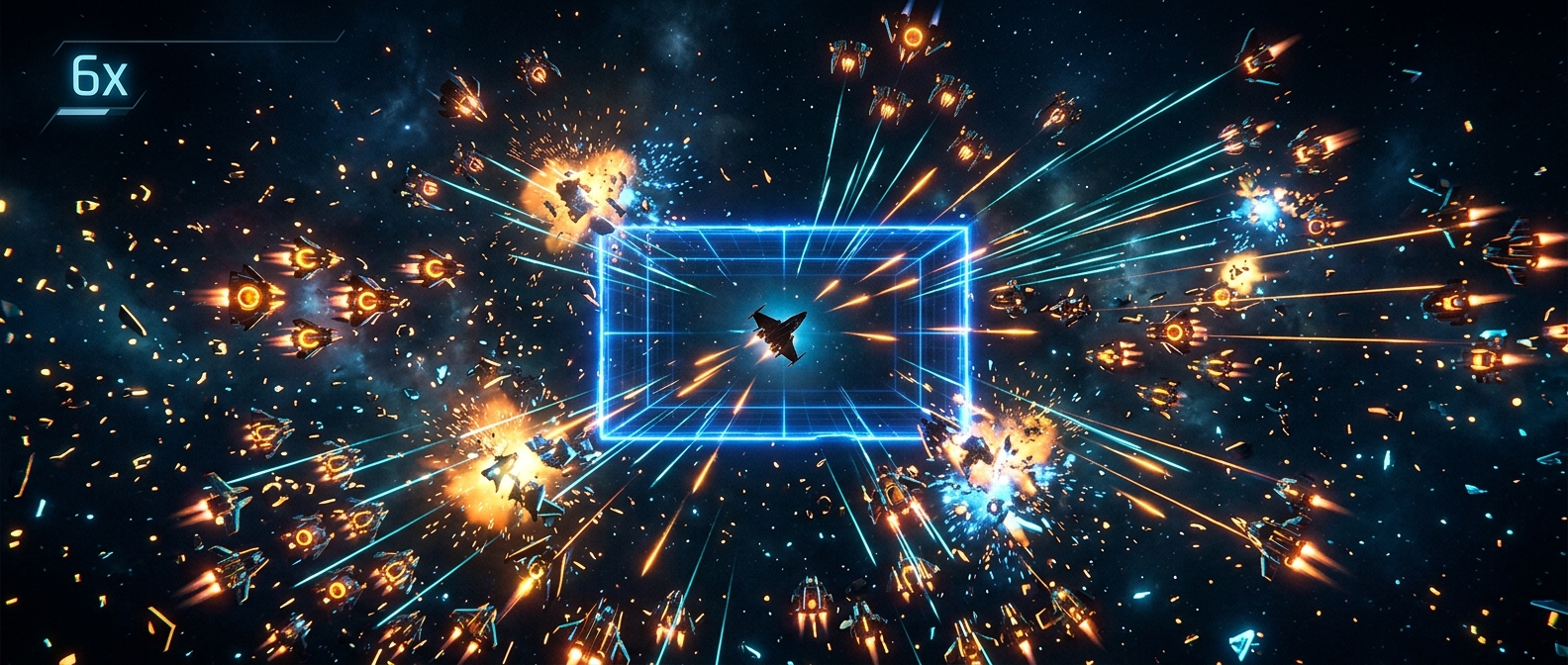
There is one small mercy built into the system. A grace window measured in frames, not seconds, exists around glancing collisions that do not fully register as hull contact. A hit that clips the very edge of your ship without completing that contact check will not trigger the break. Experienced players have built entire movement strategies around this window, holding positions during dense waves that would look reckless to anyone who does not know the frame data. Learning where that threshold sits is the dividing line between intermediate and advanced play.
Scoring Implications and High-Score Strategy
Because the multiplier scales geometrically, the practical difference between finishing at 4x versus 8x is not simply double the score. Depending on which stage segments were cleared at each tier, the total accumulated point difference can land anywhere from four to six times higher. That is not a rounding error. That is the difference between a respectable run and a leaderboard entry.
Top runs in Segment Storm almost universally show players deliberately slowing their clearing pace during the transition from 4x to 8x. They accept a longer stage timer penalty in exchange for the precision needed to survive the riskiest enemy pattern windows without an interrupt. The choice to slow down at the most critical moment is counterintuitive, but the math supports it every time.
Community analysis of replay data has surfaced a sequencing insight that inverts the instinct many players bring from other arcade titles. Rather than tackling dense, high-threat segments early while health and focus are fresh, optimal chain strategy means clearing lower-density segments first to bank multiplier progress, then confronting high-projectile-density segments with the chain already built. You want the hard part of the stage to happen when your multiplier is high, not when you are still in the early tiers where a reset costs you almost nothing.
Comparing the System to Similar Arcade Mechanics
The bleed interrupt architecture sits in a recognizable design lineage. Players who have spent time with Dot Chomper will recognize the basic concept: touching a hazard resets a chain bonus you had been building through sequential collection. The core idea of consecutive action as a scoring multiplier goes back further than most players think. But Segment Storm's geometric scaling makes recoveries far more punishing than the flat resets in earlier maze-chase titles, where starting over mostly meant losing a small bonus rather than forfeiting a multiplied total that had been compounding for minutes.
The contrast with space shooters is equally instructive. In some shooters, a partial hit degrades a score multiplier gradually across several tiers, giving you a chance to recover partial credit. Segment Storm's all-or-nothing interrupt creates a binary risk profile instead. Critics have called this both the most compelling and most frustrating design choice in the game, and both camps are right. It is binary, it is harsh, and it is exactly what makes a maintained chain feel meaningful. Compare this with the clean-run scoring in Asteroids Remake, where surviving a field of debris rewards persistence but does not punish you with a counter that zeros on contact. The philosophical gap between gradual degradation and instant collapse is the entire personality difference between those two systems.
The chain multiplier also shares conceptual DNA with trade-route scoring loops found in strategy games, where completing a full circuit without interruption yields a compounding bonus. Segment Storm translates that loop structure into real-time twitch action. The underlying logic, complete the circuit cleanly or lose the bonus, is the same. The execution demands are simply compressed into seconds rather than turns.
Tips for Maintaining Long Chains
The most consistent advice from experienced players is to treat the chain counter as the primary objective and enemy kills as secondary. That reordering of priorities changes every positioning decision in the game. Repositioning to a defensive corner of the segment zone is always preferable to an aggressive push that exposes your ship to cross-fire, even if the aggressive push would clear the wave faster. Speed is not the variable you are optimizing for. Survival of the counter is.
Segment Storm's sound design gives you a practical tool here. The pitch of the chain-active tone rises with each multiplier tier, which means you have an ears-off-screen indicator of your current bonus level during the most visually chaotic wave patterns. Players who learn to read the audio cue can keep their eyes on enemy projectile paths rather than glancing at the multiplier display at exactly the wrong moment. That auditory feedback is not decorative. It is a core part of how the game expects you to manage information under pressure.
For players still learning the frame-precise dodge windows around the bleed interrupt grace period, the game's practice mode is the right environment. Practice mode strips out the scoring system entirely, which removes the psychological weight of an active chain. That weight is real, and it degrades muscle-memory formation during the early stages of learning. Building the dodge habits in a neutral environment, then bringing them into scored runs, is the sequencing that produces consistent improvement faster than grinding scored attempts from the start.
Sources

Mara Solis is a staff writer at GoAndGame covering board games, tabletop strategy, and the culture around competitive play. She has spent years logging hours at game tables from local hobby shops to international conventions. Her writing blends practical insight with a genuine enthusiasm for the communities games create.


