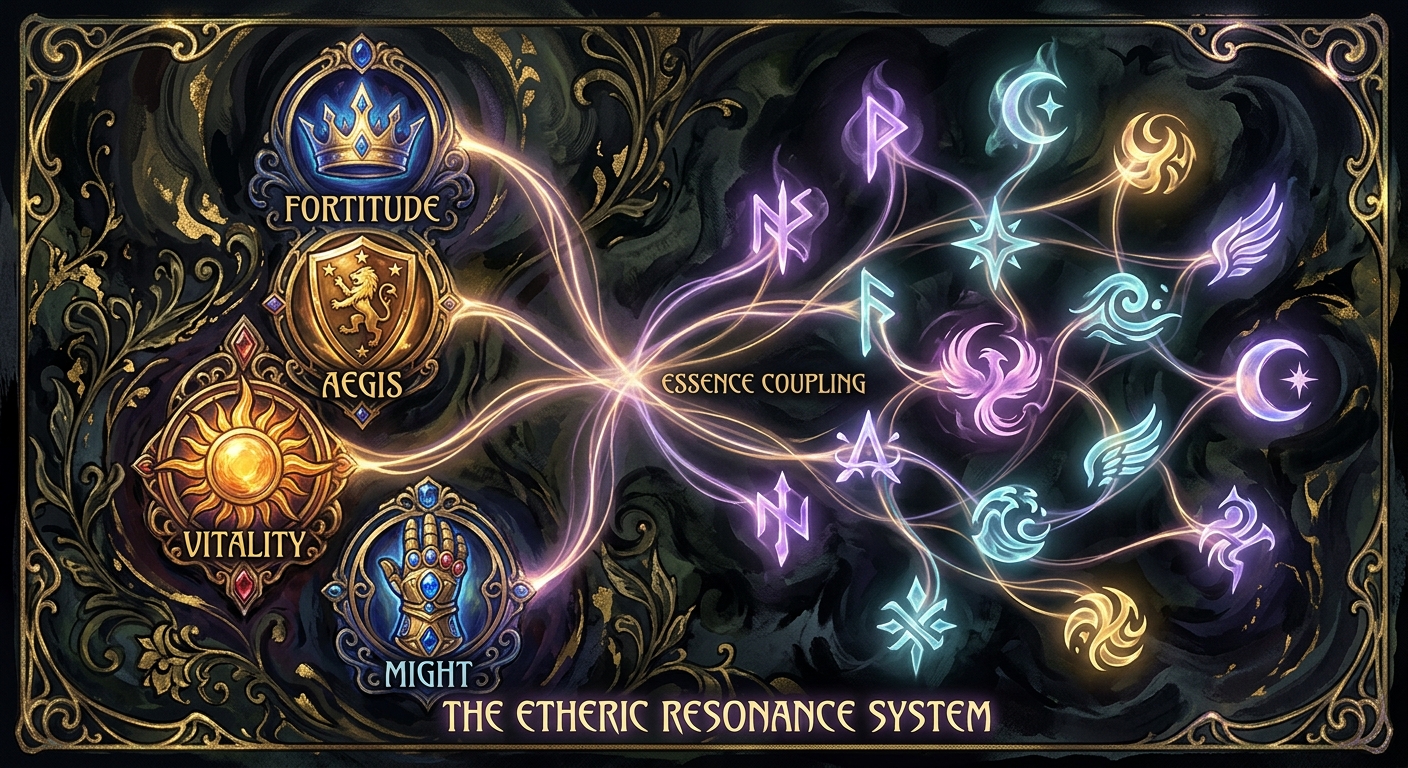
In Clair Obscur: Expedition 33, the Paintress gives the party a deadline. Pictos and Lumina give them choices about how to spend the time left. One character might survive a blow by a sliver of health; another might turn a well-timed dodge into enough Action Points for a decisive skill. Those moments begin in the equipment menu, but the two systems work differently. Understanding that difference makes it much easier to build a party with a plan.
Start with the Picto itself
A Picto is an equippable passive with a stat bonus. Each character can wear three. That small limit makes the first decision concrete: does this character need the Picto’s stats, its combat effect, or both? A promising effect may not earn its slot if its conditions rarely come up in the fights ahead. Read the trigger before equipping it, then watch for the trigger in battle.
Pictos come from exploration, enemies, and merchants, so your options will change as the expedition moves forward. There is little reason to treat an early setup as permanent. If a new Picto rewards dodging, try it on someone whose turns already depend on careful defense. If another rewards a particular kind of attack, check how often that character can make one. Three effects that serve the same routine are usually easier to use than three powerful effects waiting for unrelated circumstances.
Four victories change what a Picto can do
Equipping a Picto begins a second job. After a character wins four battles while wearing it, the Picto’s passive can be used as a Lumina. That passive becomes available for other party members to activate with Lumina Points, even while the original Picto stays equipped elsewhere. The item and the learned option are connected, but they are not the same slot.
This is the system’s most useful distinction. A worn Picto supplies its passive without charging that character Lumina Points, and it supplies its stats. Activating the learned passive as a Lumina costs points and does not bring those Picto stats along. The Pictos and Lumina guide at Maxroll is a useful reference when a particular effect or point cost needs a closer look. In play, the question is simpler: who most needs the item’s stats, and who only needs access to its effect?
Spend Lumina Points on actions you actually take
Lumina Points limit how many learned passives a character can activate at once. Their costs vary, so a crowded menu is not a sign that every option belongs in the build. Start with effects that match repeated actions: attacking, defending, spending Action Points, or recovering from a hit. A conditional bonus can be excellent, but only if the condition appears often enough to justify its cost.
Colour of Lumina increases a character’s point capacity. Before using one, look across the active party rather than automatically giving every increase to your strongest attacker. A support character who is one point short of a useful defensive passive may change more encounters than an attacker adding a bonus that rarely triggers. Lumina can be switched around as your needs change, so an unfamiliar boss is a reason to revisit the menu, not a verdict on every earlier choice.
Use easier fights to broaden your options
The four-victory requirement makes ordinary encounters part of your preparation. When the party can comfortably handle an area, put an unmastered Picto on a character and let those battles count toward learning it. The temporary setup need not be ideal. You are opening an option that may prove valuable much later, when an enemy punishes the build that carried you through the last chapter.
Do this with some restraint. Replacing all three Pictos at once can strip away the effects that make a character dependable. Keep the core of the build intact and rotate one experimental Picto through an open slot. After four wins, decide if its stats and effect deserve to stay equipped. If not, the learned passive remains available through Lumina, provided a character has the points to activate it.
Build a party, not three separate menus
Expedition 33 rewards attention to what happens between turns. A character who generates Action Points can set up an ally’s expensive skill. A defensive passive can keep that sequence alive when a boss interrupts it. Pictos and Lumina let you distribute those jobs without asking every party member to wear the same kind of equipment.
Before a difficult encounter, trace one likely round from the first action to the last. Who needs to survive an attack? Who creates an opening? Who can use it? Equip Pictos for the stats and effects those characters need immediately, then spend Lumina Points to fill the gaps with passives they have learned. The Paintress’s deadline may be fixed, but the party’s answer to the next fight is still yours to revise.
Sources

Alexandra Rivet explores the intricate interplay of games and culture for GoAndGame. A passionate storyteller, she delves into narratives with depth and curiosity. Her pieces often highlight the stories behind the pixels.


