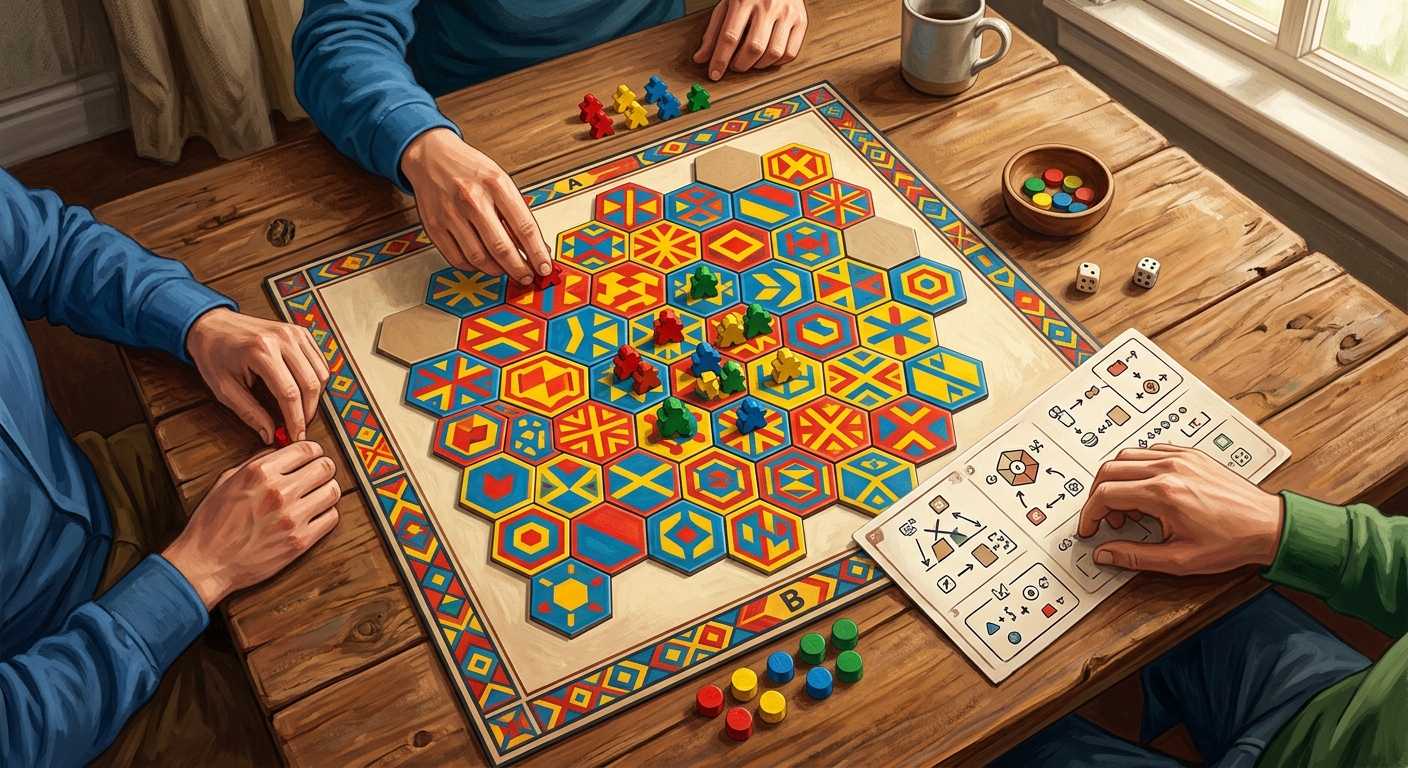
The leader reaches the final corner with a clean line and a comfortable lead. Behind them, a player who spent most of the match colliding with walls finds one last opening. Both should have a reason to care about what happens next. That is the difficult promise of multiplayer balance: protect the value of a well-played match while leaving enough room for a late turn to matter.
The best multiplayer games make last place feel like a comeback waiting to happen, not a punishment already served.
The Rubber-Band Problem
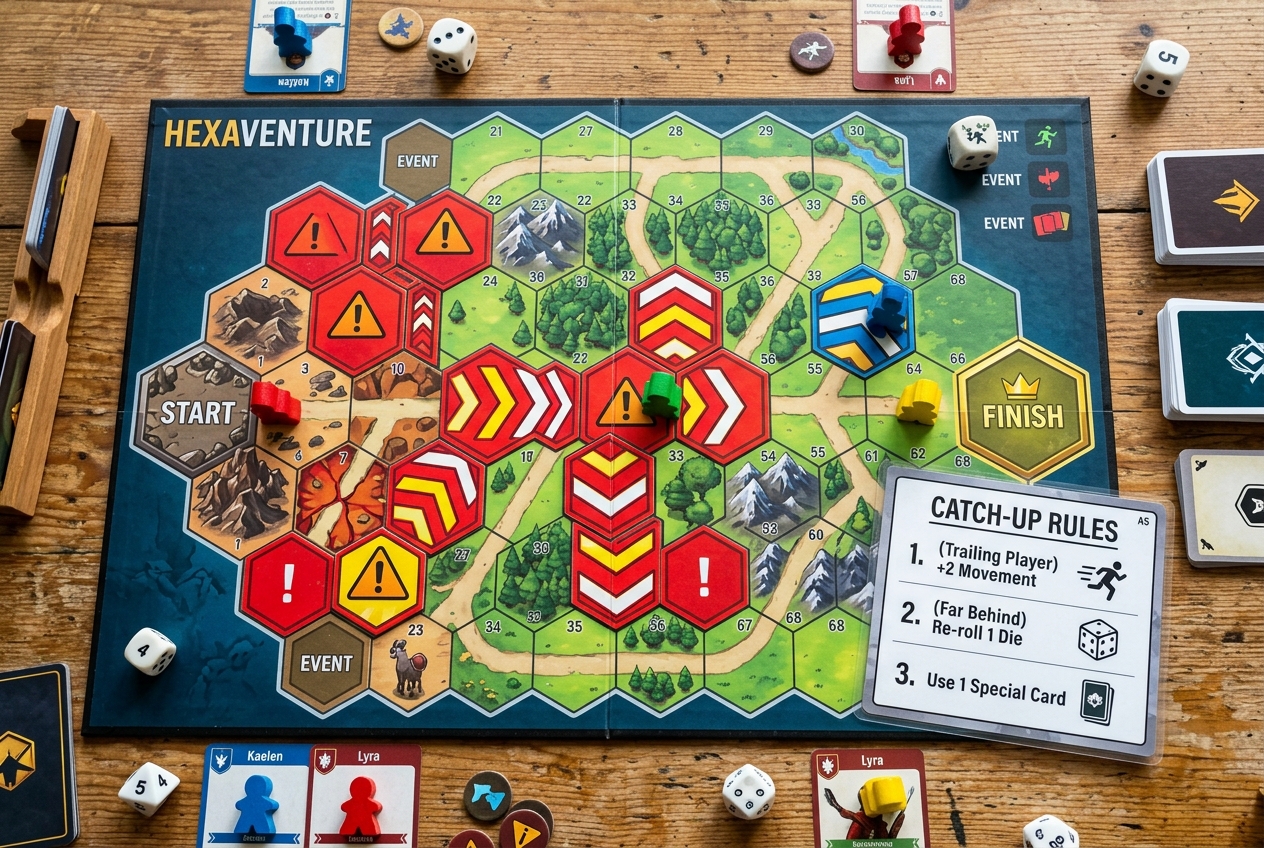
Catch-up mechanics can make a match lively again in seconds. A trailing racer finds a faster route. A team that has lost ground gains access to a powerful resource. The player at the back gets another decision to make instead of waiting for the clock. But the same intervention looks different from first place. If a lead disappears because the game quietly changed the rules, strong play starts to feel disposable.
The distinction often lies in how clearly the help is presented. A powerful item that appears in a known position on the course can be anticipated and contested. A speed bonus applied invisibly in the background gives the trailing player no credit and the leading player no warning. Players may disagree about the advantage either way, but a visible rule lets them plan around it. Good catch-up design also preserves choices for the leader. Taking a safer route or guarding a narrow passage should still mean something when the pack closes in.
Game design writing from Piotr Kuczyński at Game Anatomy notes that balance is not only about win chance. Matchups, learning curves, and difficulty all interact. A catch-up tool that is fair on paper may feel brutal in a specific map context, or become irrelevant at higher skill levels where leaders know to deny it. The rubber-band effect works best when every player can see the tool, understand its cost, and decide whether to contest it.
Asymmetric Roles Need Shared Clarity
Equal abilities are not the only route to a fair contest. Imagine a fast character trying to cross an arena controlled by a slower one who can temporarily block doorways. In open space, speed wins. At a chokepoint, timing and positioning matter more. Each player has a distinct advantage, and neither advantage settles every encounter on its own.
That kind of design gives a match more ways to change shape, but it asks players to learn more rules. A newcomer who loses to an unfamiliar ability may see no useful decision in the loss. Clear animations, readable limits, and a brief chance to try each role can turn that surprise into a lesson. The same principle gives arcade threats their staying power: in a game such as Segment Storm, an approaching pattern is interesting because the player can watch it move and respond. Multiplayer roles benefit from that kind of legibility, even when their abilities differ sharply.
The abratabia.com guide to game balance puts it plainly: balance does not mean symmetry. In a fighting game, every character needs a viable path to winning, with strengths and weaknesses that create distinct playstyles. The same logic applies to cooperative and competitive multiplayer. Asymmetric roles become a source of richness when both sides can read what the other is doing and adjust.
One Arena, Several Difficulty Curves
A shared match cannot pause to adjust itself for each person. One player may be learning the controls while another knows every corner of the map. The arena has to give both of them work worth doing. A demanding central route might reward precision, while a longer outer route offers safety and time to read the action. Optional risks create room for skill expression without making every mistake an immediate exit.
Early elimination deserves particular care. Someone knocked out before they understand what happened has little reason to queue again. A short respawn, a useful spectator view, or a small objective that remains available after a setback can keep that person connected to the match. None of these guarantees a comeback. They provide a chance to notice the next opening and build toward it. Classic arcade games such as Dot Chomper offer a useful lesson in readable danger: movement, pursuit, and escape are apparent quickly, even before a player has mastered the patterns.
Sonic Rumble Party, the 2025 Sega party battle royale, uses a staged elimination structure: 32 players drop to 16, then to 8, before a final round. That format gives eliminated players a natural exit point rather than a long wait, and it compresses the late-game stakes into a smaller group where individual decisions land harder. The structure itself is a balance tool, shaping how long anyone sits outside the action.
The Clock Changes the Stakes
Session length changes how every balance decision feels. In a brief round, an early defeat may be tolerable because another attempt is close. In a long match, that same defeat can leave someone watching a game they can no longer influence. A short format has its own cost: the opening needs to give players enough time to make a meaningful choice before the result arrives.
Between rounds, a recap can do more than announce a winner. It might show the moment a defender held a passage or the route a trailing player found through the crowd. Those details help players connect an outcome to a decision they can revisit next time. Rewards have a place in keeping players engaged across sessions, but a progress bar alone cannot make an unfair match feel fair. The strongest invitation to play again is a specific thought: I could have taken that corner differently, and I want to find out.
Balance Continues After Release
Players will find combinations a small test group missed. One role may dominate only on a particular map. An item that seems modest in isolation may become overwhelming when coordinated teammates stack it together. Balance therefore depends on watching actual matches, listening to players, and asking which decisions the rules are encouraging over time.
The meegle.com game balancing overview describes this as an ongoing process rather than a launch deliverable. World of Warcraft's developers, for example, have used data analytics to track character performance across levels and environments, identifying trends before they harden into player frustration. The same discipline applies to any live multiplayer title: collect data, identify the interaction that keeps winning, and ask whether that interaction is winning because of skill or because of a rule that removes the contest.
Patch notes can make the adjustment process easier to trust. Saying that an ability was weakened gives players a number to memorize. Explaining that it was shutting down escape routes too reliably gives them a reason to examine the change and form an opinion. Expert players and casual groups may still want different things, and no update will satisfy everyone. The useful question is more concrete: after the adjustment, can a skilled player build a lead, and can the person behind still see a way to contest the final corner?
Sources

Eliot Reed writes about the intricacies of virtual worlds, blending analysis with storytelling. As a house writer for GoAndGame, he delves deep into game mechanics and narratives, offering thought-provoking insights for players and developers alike.


