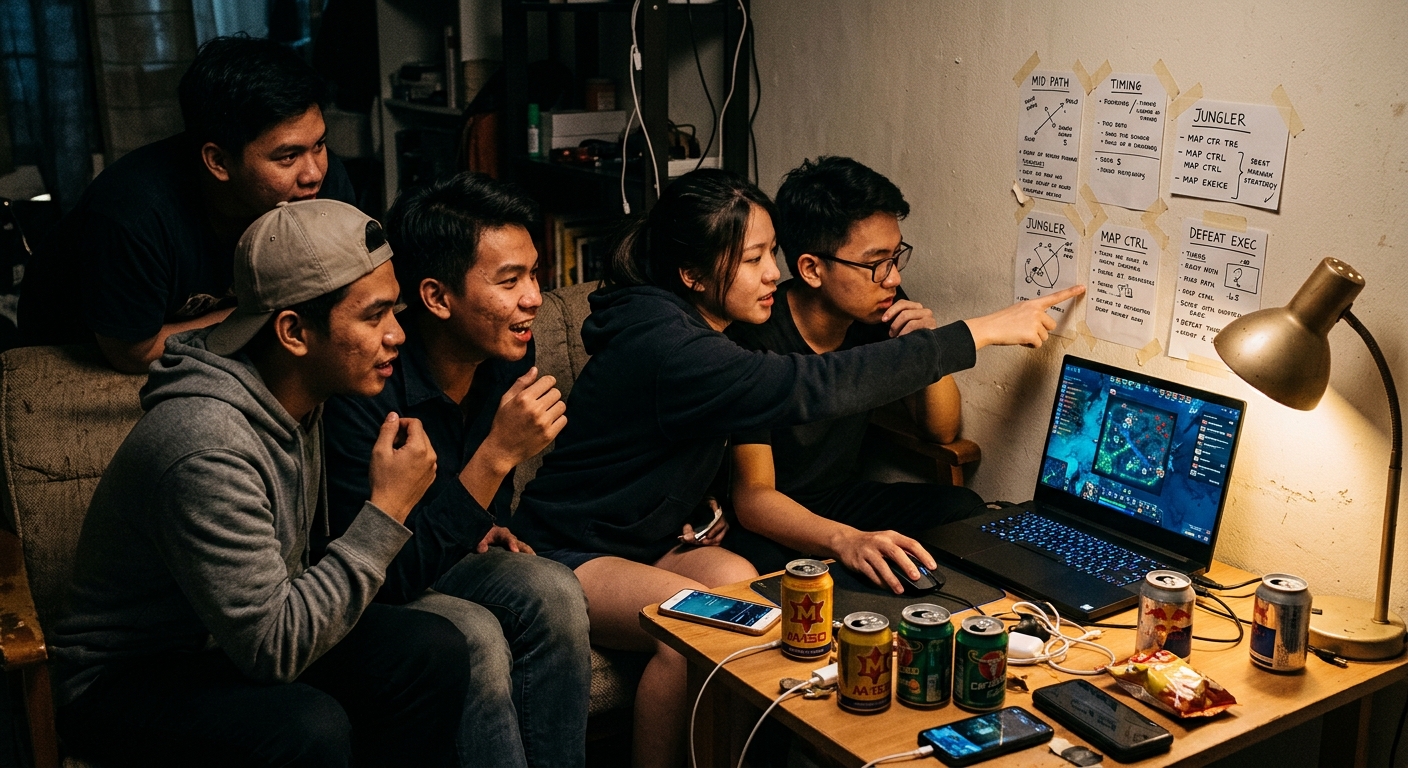
Most first-time Clash teams spend their preparation hours grinding ranked solos and ignoring the one thing that actually decides tournaments: the thirty seconds before the first ban goes out. Draft, communication structure, and the ability to reset after a bad game are what separate a team that exits round one from one that makes a final. This guide is built for five-player squads entering Wild Rift's grassroots SEA Clash scene for the first time, with no coaching staff, no analyst, and maybe one shared spreadsheet between you.
"The teams that win their first Clash bracket are almost never the ones with the highest average rank. They are the ones who made a decision before the tournament and stuck to it."
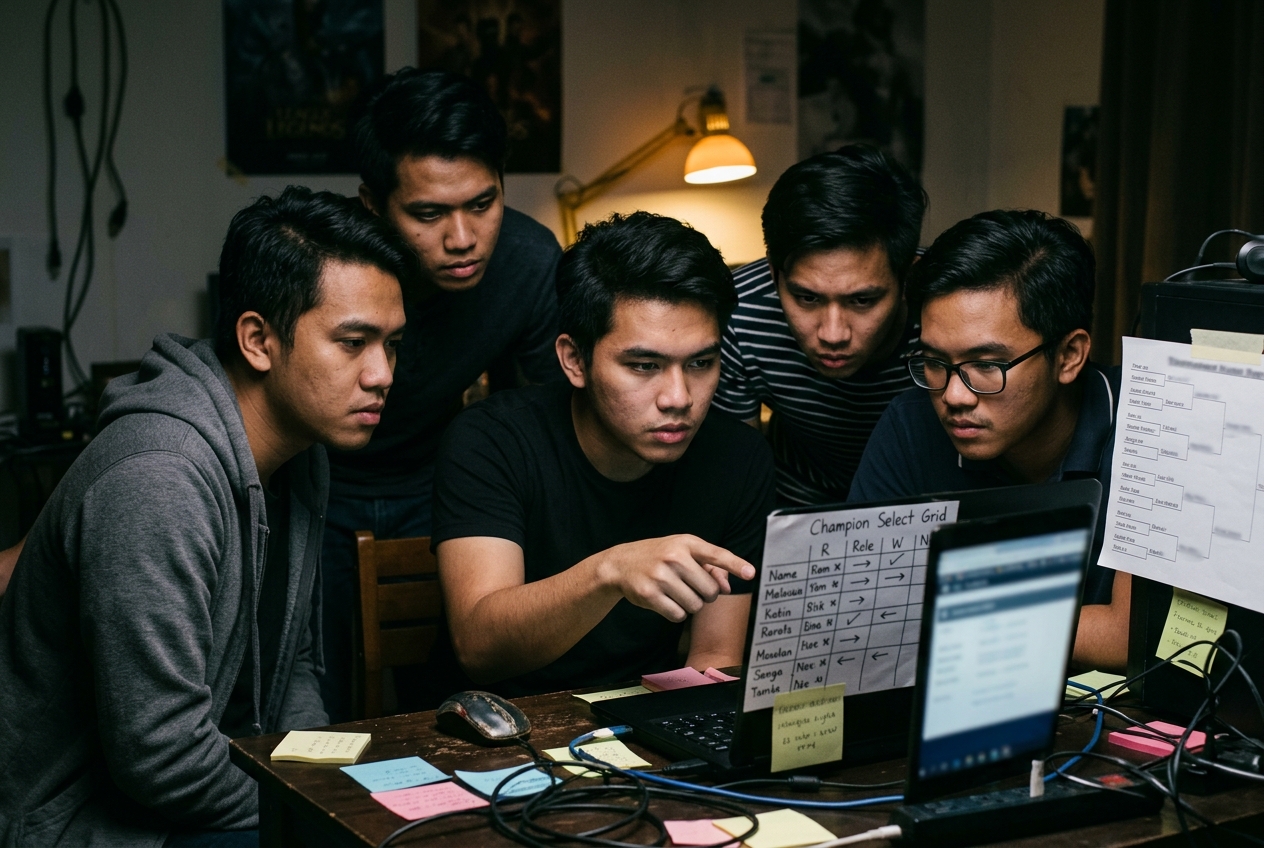
Understanding the SEA Competitive Landscape Before You Register
Wild Rift's competitive ecosystem in Southeast Asia is not a single ladder. At the top sits the Riot-sanctioned Wild Rift Champions SEA, which drew eleven qualified teams for its 2022 Finals and offered a USD 200,000 prize pool. Below that are regional qualifiers, open challengers, and then the community-run Clash brackets where your team will almost certainly start. Each tier has its own culture, rulebook, and meta tendencies, and treating them as interchangeable is a mistake.
The SEA region is not homogeneous in how it plays. Philippine squads have historically leaned into aggressive early-game junglers who seek constant skirmish pressure. Thai and Indonesian teams often build around sustained teamfight compositions that scale into the mid-game. Studying global patch notes matters, but studying regionally favored champion picks before your first draft matters more, especially when you do not know which country your bracket opponents are coming from.
The inclusion of esports at the 2021 SEA Games signaled that regional governing bodies now take mobile competitive play seriously as an athletic pursuit. That legitimacy has filtered down to how Clash organizers write their own rulebooks, handle tiebreakers, and check player eligibility. Read those rules before you do anything else. Single elimination means one bad game ends your run. Double elimination gives you a lifeline. Swiss rounds reward consistency over a hot streak. Knowing the format before champion select practice begins is not optional preparation; it is the minimum.
Draft Strategy: Building a Composition That Wins on Paper and on Summoner's Rift
The first scrim session your team runs should not be a normal game. It should be a conversation that ends with one agreed identity: poke-and-siege, engage-dive, or split-push-and-distract. Trying to draft a hybrid of all three under the time pressure of a live ban phase produces compositions that look flexible in theory and fall apart at the twenty-minute mark in practice. Pick an identity, write it down, and let it govern every draft decision.
Ban phase priority in SEA grassroots Clash should target comfort picks, not statistically overpowered champions. A mid-silver player on their signature champion will outperform a gold-ranked player fumbling an unfamiliar meta pick in almost every scenario. Removing the enemy team's pocket champion is nearly always worth more than banning the current flavor-of-the-patch carry, because patch-optimal picks require mechanical familiarity that most grassroots players have not yet built.
Counter-picking in the later rounds of draft is genuinely powerful, but it exposes information. If you reveal your baron laner first, the opposing drafter has full data to place a hard counter into that slot. Consider anchoring your early picks on flex champions who can credibly play two roles, then revealing the true lane assignment only after the enemy commits. Champions who can rotate between the jungle and baron lane, or between mid and support, give your drafter room to stay unpredictable.
In multi-day Clash events, champion depth becomes a roster management question. Fatigue, tilt, or a mid-tournament role swap can force lineup changes that no one planned for. Maintaining a shared pool of at least two champions per player across adjacent roles, such as a jungler who can flex to baron lane, gives your shot-caller the ability to adapt without surrendering draft phase control. Map this pool out before the tournament, not during it.
Role Assignments and In-Game Communication for Five Strangers Turned One Team
The single most common reason grassroots teams lose their first Clash tournament is not poor mechanical skill. It is ambiguous shot-calling authority. When every player simultaneously pings objectives and calls for rotations, the cognitive load creates hesitation at exactly the moments where half-second decisions determine whether a Baron steal succeeds or collapses into a five-man wipe. Fixing this before game one is more valuable than any champion select optimization.
Designate one primary shot-caller before the bracket starts. The jungler or support are the natural candidates because both roles carry the widest map vision by design. Establish a team norm that their calls execute immediately, with disagreements handled in post-game review rather than mid-fight debate. Think of it the way a basketball team reviews tape after the buzzer rather than arguing plays while the clock runs. The review matters; the timing of it matters more.
Role assignment should factor in personality and stress response, not just champion pool size. Players who tilt visibly after falling behind often perform better in lane roles where individual agency is higher and they can farm their way back. Players who stay even-keeled when behind tend to thrive in jungler and support roles that require prioritizing the team's win condition over personal performance metrics. Placing people in roles that match their stress response is a competitive edge that most grassroots teams leave on the table.
Voice communication hygiene is a skill that can be drilled in normals. Mute non-essential chatter during objective windows. Build a standardized callout vocabulary: "shoved in," "roam-ready," "all-in now." These phrases take thirty seconds to agree on and transform a five-person Discord call from a noise wall into a tactical instrument. Teams that practice this vocabulary in scrims before Clash day consistently execute rotations faster than teams relying on instinct alone. The gap shows up most clearly in the two-minute window around Dragon and Baron spawns, which is exactly when tournaments are decided.
If you are looking for ways to keep your team sharp between sessions, pattern recognition games like Segment Storm and Star Dive build the kind of spatial awareness and quick-read decision-making that transfers directly to tracking jungle pathing and objective timing. Even Dot Chomper rewards predictive routing, which is a cognitive muscle your shot-caller needs.
Mental Resilience: Staying Competitive Across a Full Tournament Day
Clash events in SEA frequently run compressed afternoon-to-evening windows where a team might play four to six matches back-to-back. The cognitive demands of sustained concentration under competitive pressure are comparable to athletic endurance events. Treating tournament day as a mental marathon changes how your team manages energy between matches, not just during them.
The post-loss reset is the most critical and most neglected skill in grassroots esports. High-performing teams develop a deliberate between-game ritual: five minutes of structured debrief focused on two tactical adjustments only, followed by a mandatory non-game distraction period. Extended blame sessions bleed tilt directly into the next draft phase, and a tilted drafter makes ban phase decisions based on frustration rather than opponent data. The discipline to cut the debrief short is itself a competitive skill.
Individual performance anxiety in live Clash settings differs from ranked ladder nerves because the social stakes are higher. Failing a teammate in a bracket match feels different from losing a solo queue game. The reframe that actually works is treating draft mistakes and early deaths as data points, not verdicts. The team's adaptation engine can use that data to shift strategy mid-series. A player who views their first death as information is a different player than one who views it as a failure, and the difference shows up in the next five minutes of play.
The SEA Games esports athletes in 2021 trained with sports psychologists and used mindfulness protocols borrowed from traditional Olympic preparation. That is not a resource most Clash teams have, but simplified versions are accessible. A sixty-second breath reset between games, a pre-match routine that is identical every round, and a deliberate visualization of one specific teamfight scenario the team wants to execute, all of these reduce decision latency during late-game sequences where tournaments are actually won or lost. The mental infrastructure does not need to be elaborate. It just needs to exist before the first game, not after the first loss.

Priya Nambiar covers competitive gaming and emerging esports ecosystems for GoAndGame, with a particular focus on Southeast Asian scenes and grassroots tournament culture. She came up through community forums before moving into sports journalism, and that background shapes everything she writes.


