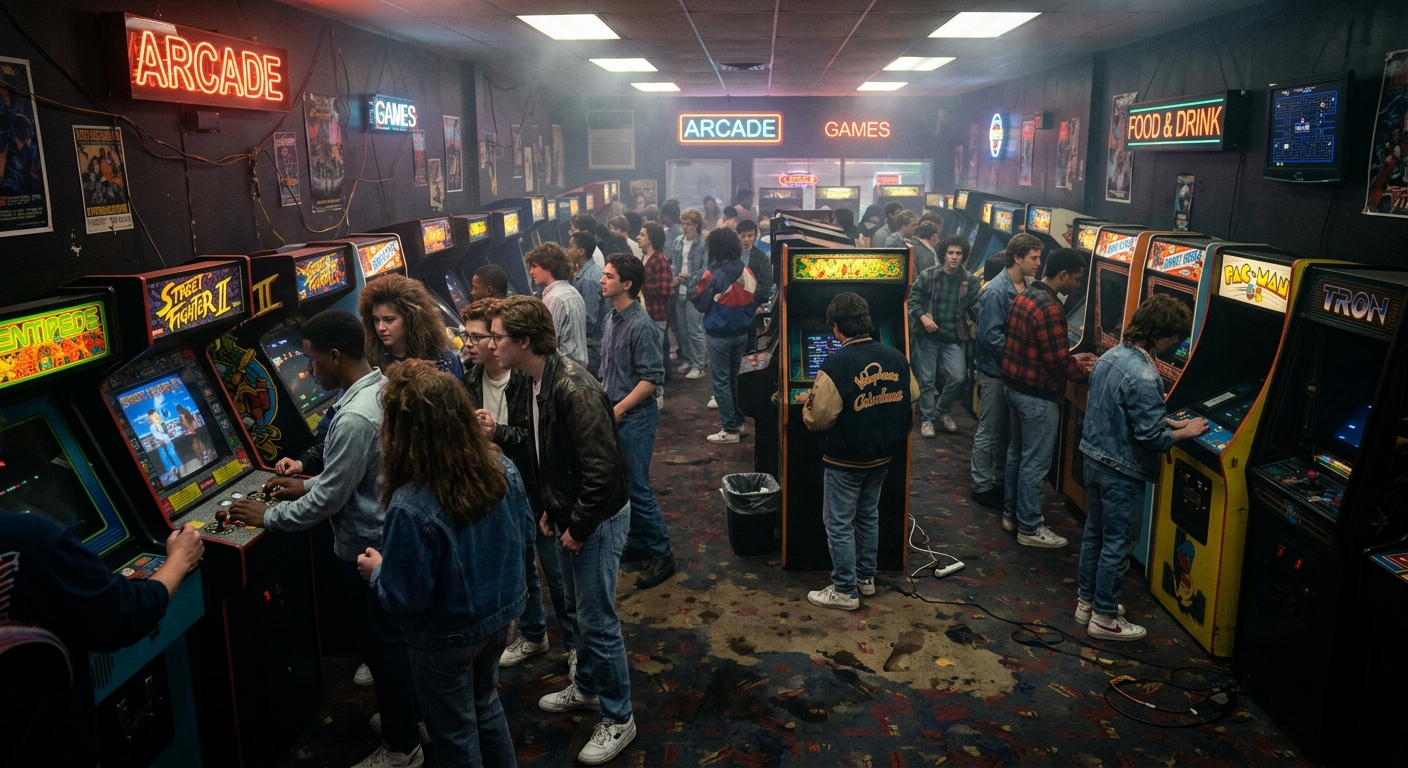
Long before online lobbies and Discord servers, a different kind of digital commons thrived. The arcade, once a cornerstone of youth culture, served a role that modern gaming environments struggle to emulate. Sociologist Ray Oldenburg's concept of the 'third place' describes a social environment distinct from home and work, a space for informal public life. Gaming historians have been slow to fully reckon with how precisely the golden-age arcade mapped onto this idea.
The Third Place and Why It Mattered
Arcades were not merely venues for playing games. They functioned as neighborhood anchors, places where teenagers, young adults, and curious onlookers could congregate. No mandatory purchase beyond a pocketful of quarters was required, making them unusually democratic spaces in an era before the internet flattened geography. This physical accessibility fostered a unique social contract.
The sensory environment of the arcade created a shared culture. Overlapping synthesized soundtracks, the distinct smell of carpet and machine lubricant, and the visible skill hierarchy encoded in high-score tables formed a civic grammar. This grammar was legible to anyone who walked through the door. It informed a generation of players, shaping their understanding of competition and community. Research into games as social-cultural media consistently finds that motivation to play is deeply entangled with community belonging. The arcade institutionalized that entanglement in physical space, years before platform holders began engineering it into online systems.
Four Pressures That Emptied the Cabinets
The home console revolution of the mid-1980s is often cited as the primary culprit in the arcade's demise. However, analysts at BGR identify it as only one of four compounding forces. The console threat arrived alongside a collapse in the novelty premium that had initially drawn customers to arcades. Players no longer needed to leave home to experience cutting-edge graphics or engaging gameplay with titles like Asteroids Remake or Dot Chomper.
Economic dynamics accelerated the decline in ways often underestimated. Arcade operators faced rising real-estate costs, increasing cabinet licensing fees, and the perpetual need to refresh hardware to stay competitive. This demanding cost structure was one that home consoles simply did not impose on their customers. The financial burden became unsustainable for many independent operators.
Moral panic cycles also targeted arcade venues. Local governments and parent groups periodically characterized them as sites of truancy, gambling-adjacent behavior, and youth loitering. This perception resulted in zoning restrictions and curfew ordinances. Such policies structurally disadvantaged operators in many American cities throughout the late 1980s and early 1990s. The timing of these pressures was catastrophic in combination. Just as the home library grew rich enough to satisfy most players, the social stigma attached to arcade venues gave cover to municipal policies. These policies made survival nearly impossible for independent operators who lacked the resources to pivot toward family entertainment center models.
What Was Actually Lost When the Lights Went Out
The disappearance of the arcade stripped gaming of its most visible public-facing identity. This occurred precisely at the moment the medium was expanding its cultural footprint. It pushed the activity behind closed doors and into bedrooms. There, gaming became, paradoxically, both more personal and less socially legible to non-players. The shared, public experience became fragmented and privatized, altering the very nature of engagement with games like Segment Storm.
Skill transmission, an informal apprenticeship, was a defining feature of arcade culture. Watching a stranger navigate a difficult stage, asking for tips, and receiving them without any prior relationship, fostered a unique kind of learning. Online systems have never fully replicated this. Digital anonymity often removes the social accountability that made such exchanges feel worth having. The human element of direct interaction was irreplaceable.
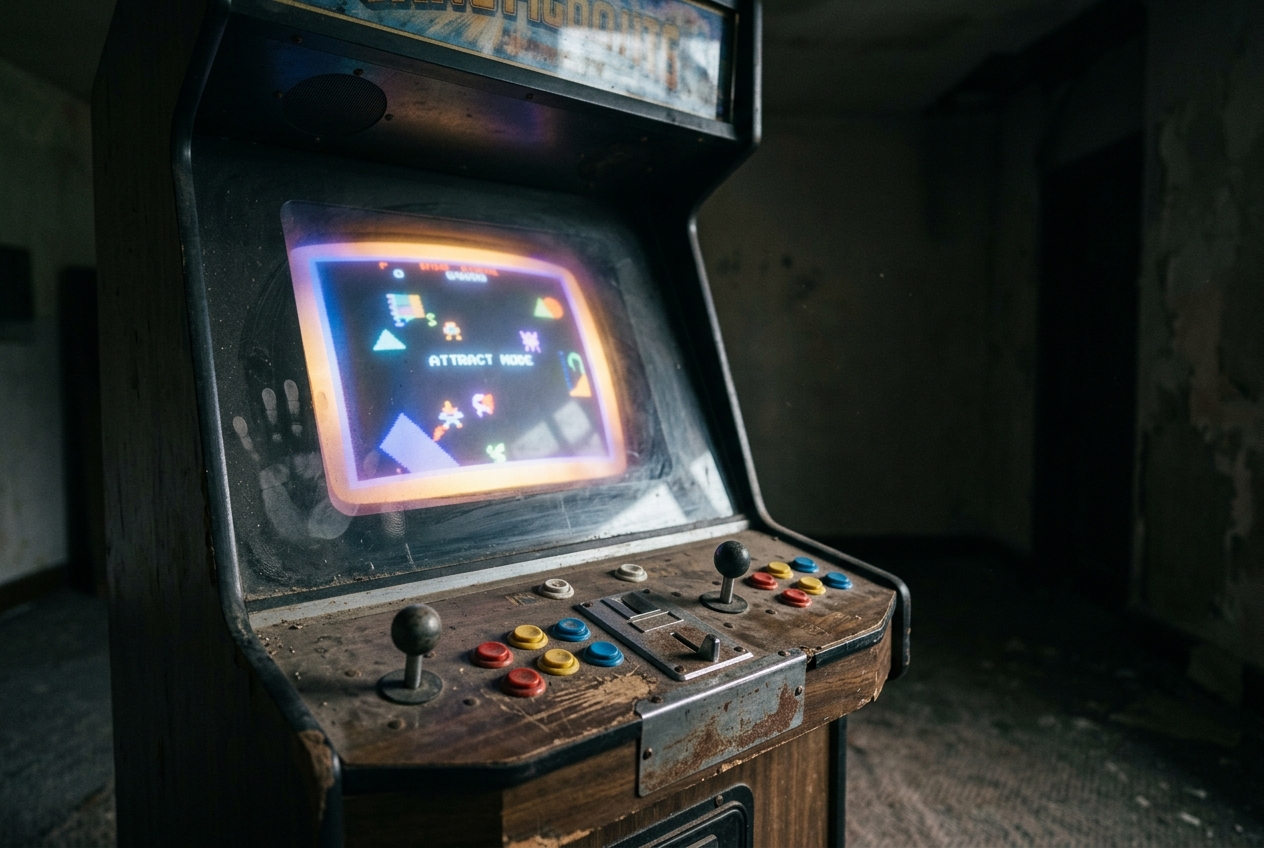
The high-score board, for all its simplicity, was a persistent public record. It gave a local community a shared object of aspiration and argument. No algorithm-driven leaderboard, filtered by friend lists, has achieved the same quality of investment. The physical locality of the original forced players to reckon with the achievement as something that happened in their shared space. Games research underscores that community formation around play depends heavily on repeated co-presence and shared reference points. The arcade provided both automatically. Its regulars developed the kind of weak-tie social networks that urban sociologists identify as critical to neighborhood cohesion and personal wellbeing. These organic connections are difficult to engineer in virtual spaces.
The Industry's Long Attempt to Rebuild What It Demolished
Every major online multiplayer innovation since the late 1990s can be read as an industry attempt to reconstruct the spontaneous sociality of the arcade. From voice chat to achievement systems and live-service seasonal events, these features utilize infrastructure fundamentally better at connecting strangers across distance than at deepening relationships within a local community. The global reach often comes at the expense of local intimacy.
The nostalgia economy, which has produced everything from barcade chains to retro cabinet compilations and high-profile remakes of genre-defining titles like Star Dive, reflects a genuine market appetite. However, it also demonstrates the limits of reconstruction. Recapturing the aesthetic of an era is considerably easier than recreating the social conditions that gave it meaning. A new coat of paint does not rebuild a foundation.
Competitive gaming and esports venues represent the most structurally serious attempt to reinvent the third-place model. They offer physical co-presence and live audience dynamics. However, their reliance on premium ticketing and curated broadcast production places them closer to spectator sports than to the open-access, participation-first ethos that made arcades function as community infrastructure. The barrier to entry, both financial and social, is significantly higher.
The most honest accounting of the arcade's legacy may be that it identified a need. Gaming required a public, embodied, locally rooted social dimension. The industry has not yet found a scalable successor to this. This gap has real consequences for how isolated or connected individual players feel within a medium that now reaches billions of people. The challenge remains to bridge the digital divide with genuine, physical community.
Sources

Julian Thorne is a seasoned house writer for GoAndGame, known for his deep dives into obscure game mechanics and industry trends. He often explores the sociological impact of gaming, blending critical analysis with historical context.


