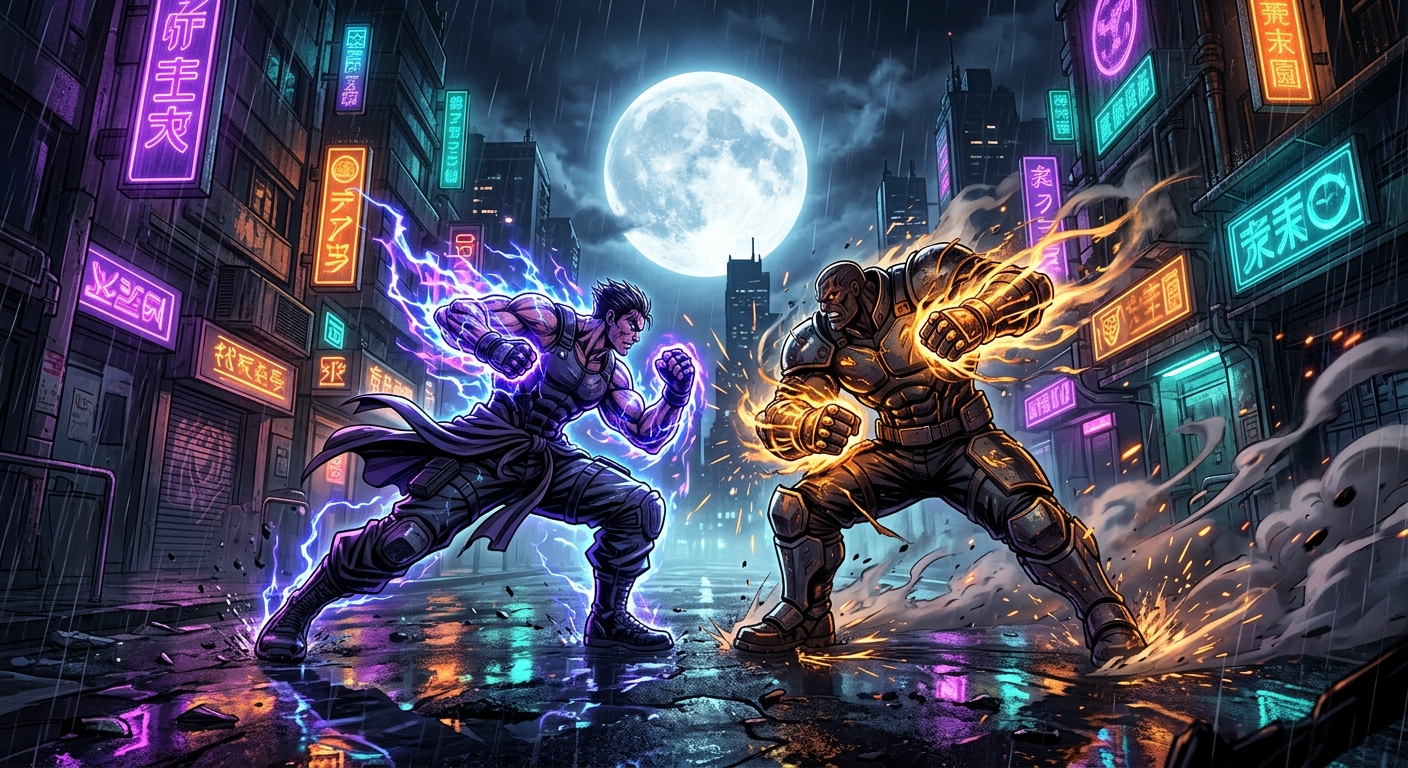
Fatal Fury: City of the Wolves arrives in Early Access after more than two decades of franchise silence, and the timing lands with the weight of something overdue. SNK has spent those years operating in the long shadow of Street Fighter and Tekken, keeping the brand alive through spin-offs and crossover cameos while the fighting game world moved on without a true Fatal Fury sequel. Now that the game is finally here, competitive communities across the globe are doing what they always do: stress-testing the mechanics, counting the roster slots, and asking whether this is worth building a scene around.
A Long-Dormant Series Finally Throws Its Punch
The symbolic weight of this release is hard to overstate for players who grew up in SNK culture. WayTooManyGames reviewer Leo Faria put it plainly: the release of a new Fatal Fury is "a very important milestone for SNK enthusiasts." His reasoning cuts to the marrow of why the franchise matters. The King of Fighters may be the company's commercial flagship, but Fatal Fury is origin tissue. It was SNK's first fighting series, the one that introduced Terry Bogard and built the lore that KOF later inherited, and the one that turned SNK into the force it became in the 1990s arcade era. Coming back to it now is not a nostalgia grab so much as a statement of intent.
For Southeast Asian communities in particular, where SNK's arcade footprint ran deep through the late 1990s and into the 2000s, that statement resonates differently than it does in Western markets. The question is whether the game itself can back it up.
Gameplay Mechanics Draw Widespread Critical Praise
On this point, the critical consensus is unusually unified. The review roundup compiled by EventHubs aggregates a broad spread of outlets, and the throughline is consistent: the core fighting engine in City of the Wolves is exceptional. Reviewers across the board praised its depth, its responsiveness, and the way it honors Fatal Fury's historically footsie-heavy, aggressive design philosophy while layering in mechanics that feel genuinely new rather than borrowed from the genre's current trends.
Gaming Trend's review, built around the game's dual-state system, captures what makes the design interesting at a competitive level. The mechanic creates decision points that matter in real time, not just in theorycrafting. That kind of moment-to-moment pressure, where the correct choice shifts based on health, position, and your read on the opponent, is exactly the texture that tournament players care about. It is the difference between a game with a scene and a game with a weekend.
Mechanical depth alone does not guarantee longevity, but it is the foundation everything else sits on. City of the Wolves appears to have poured that foundation carefully.
Content Gaps and Early Access Caveats Are Real Concerns
The praise for the engine runs directly into a wall of legitimate concerns about what surrounds it. Multiple reviewers in the EventHubs roundup flagged the same cluster of issues: roster size is smaller than players expect from a full release, mode availability feels thin, and online infrastructure is not yet at the level competitive play demands. None of this is surprising under an Early Access label, but that label does not make the friction disappear.
For casual audiences, a lean content offering means less to do between sessions. For competitive communities, the stakes are structurally higher. A fighting game scene runs on netcode stability for online brackets, ranked systems that give players a ladder to climb, and enough character variety to sustain a metagame across months of weekly tournaments. If any of those three pillars wobble at launch, the community's confidence wobbles with them. Players who invest early in learning a game, building content around it, or organizing events around it are taking on real risk when the product is incomplete. That risk does not disappear because the studio promises patches.
SNK will need to demonstrate, through consistent updates and transparent communication, that Early Access is a process and not a price cut.
What Early Access Means for Tournament Viability
The Early Access model is a calculated bet, and it cuts both ways. On the development side, releasing to real competitive players before locking the feature set is genuinely useful. The feedback pipeline from ranked grinders and tournament organizers is more diagnostically precise than anything internal playtesting can produce. Problems in neutral, frame data oversights, netcode edge cases under high-latency conditions, these surface faster when thousands of competitive players are stress-testing the game simultaneously.
The risk is on the community side. Tournament organizers do not typically build major brackets around games that are, by their own description, unfinished. Content creators hesitate to invest the kind of deep-dive production effort that drives game discovery when the character they are spotlighting might be reworked before full launch. That hesitation is rational, not cynical, and it has historical precedent across fighting games and other competitive genres alike.
What works in City of the Wolves' favor is that the mechanical quality is high enough to generate genuine enthusiasm despite those reservations. The game clears the bar that separates "worth playing" from "worth building a scene around," at least on the strength of its engine. The open question is pacing. If SNK pushes meaningful updates at regular intervals and keeps competitive players informed about the roadmap, the community's good faith can compound. If the studio goes quiet for months, that good faith evaporates at the same speed it arrived.
The Verdict From the Community Floor
Strip away the nostalgia weight and the Early Access hedging, and what remains is a fighting game that competitive players are genuinely excited about and cautiously uncertain of at the same time. That combination is more promising than pure skepticism, and it is a better position than many anticipated given how long this sequel sat dormant. The mechanics are there. The history is there. The question of whether the surrounding infrastructure, content volume, and studio communication can meet the moment is still being answered in real time.
For communities building around it now, that uncertainty is the cost of being early. For SNK, it is the cost of shipping incomplete. Whether that trade pays off depends entirely on what happens next.
Fast Read
Sources

Priya Nambiar covers competitive gaming and emerging esports ecosystems for GoAndGame, with a particular focus on Southeast Asian scenes and grassroots tournament culture. She came up through community forums before moving into sports journalism, and that background shapes everything she writes.


