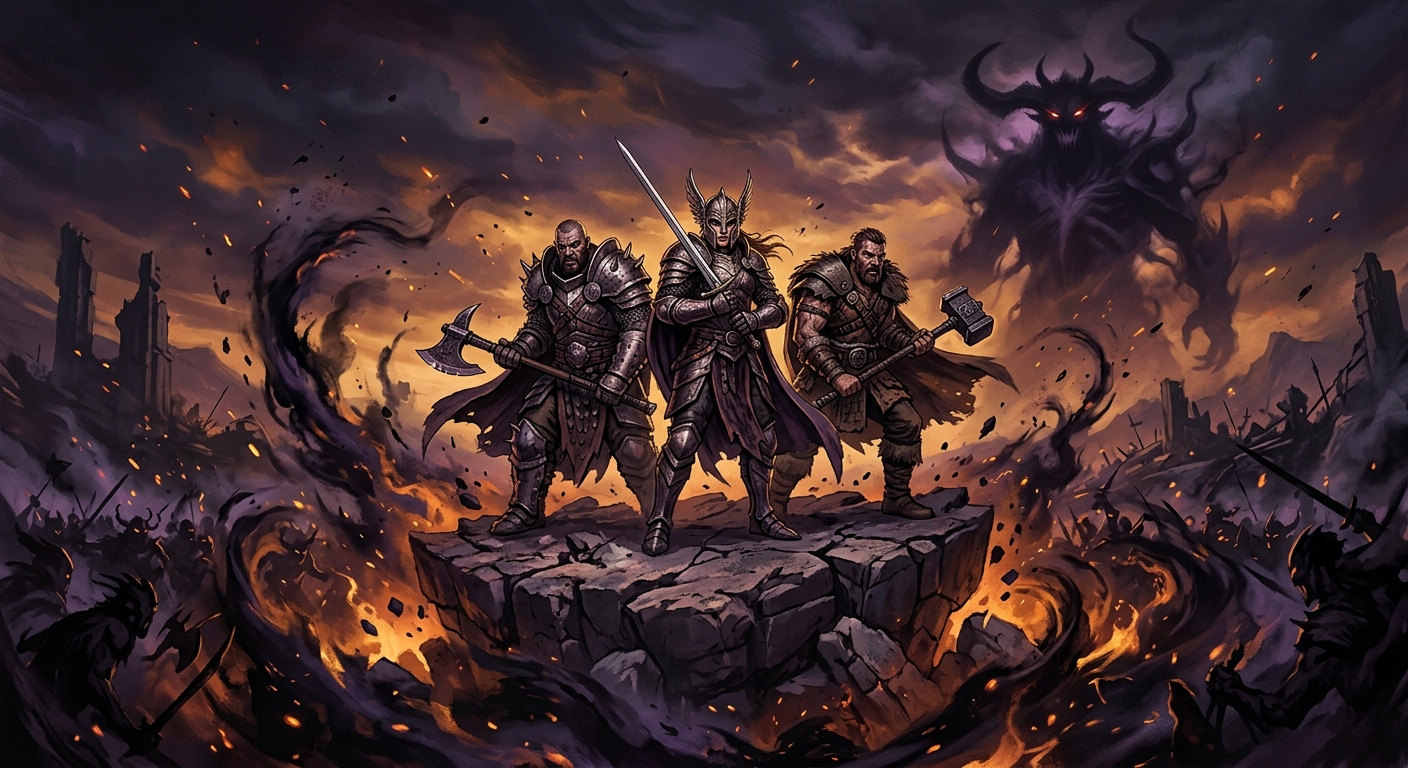
FromSoftware does not make sequels to itself. It makes arguments. Elden Ring Nightreign is the studio's argument that the Soulsborne combat vocabulary, those precise dodges, punishing bosses, and cryptic item descriptions, can anchor something structurally unrecognizable from anything they have shipped before. A three-player roguelite built on borrowed bones from the Lands Between, it is the most surprising thing FromSoftware has released in years, and mostly for the right reasons.
What Nightreign Actually Is
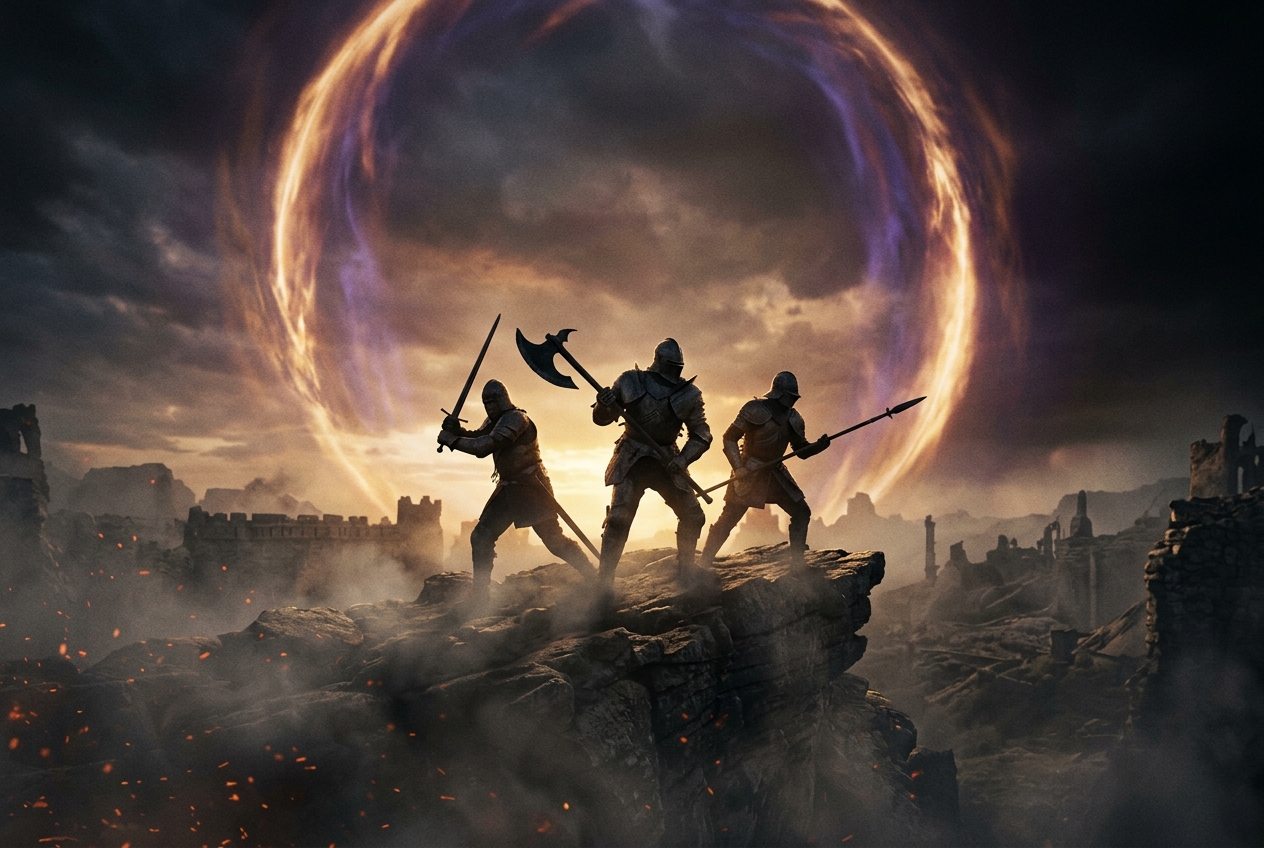
Start here: Nightreign is not a sequel, not an expansion, and not a director's cut. It is a deliberate genre pivot. The open-world deliberateness of the original Elden Ring gets compressed into a roguelite co-op framework built around squads of three. Each run unfolds across a shrinking map remixed from the Lands Between, a collapsing ring of night forcing players inward over two in-game days before a climactic boss night. The pacing owes more to battle-royale design than to traditional Soulsborne progression, and that is not a complaint. It is a structural choice that gives every session a clock.
Eight character classes called Nightfarers replace the blank-slate Tarnished of the original. Each arrives with fixed weapon affinities, passive abilities, and a powerful ultimate skill. You lose some of the freeform build expression that made base Elden Ring so absorbing, but you gain something in return: role clarity. Cooperative synergy becomes the new form of character expression, and figuring out which Nightfarers complement each other is its own quiet puzzle.
Combat Feel and Mechanical Refinements
The combat loop is sharper than you might expect. FromSoftware introduced a dodge-cancel window that feels more generous than base Elden Ring, and that reads less like an accessibility concession and more like a practical acknowledgment that three players fighting simultaneously in tight corridors need a little breathing room. Positioning matters differently when you are not a solo act.
Relics are the run's primary loot currency, stacking passive modifiers in ways that echo classic roguelite power spirals. A well-rolled set of relics can transform a middling Nightfarer into something genuinely terrifying by the final boss encounter. Hunting those upgrades gives each day-phase a satisfying scavenger-hunt texture. You are never just moving through space; you are shopping, prioritizing, making small bets about which modifiers will matter most when the night hits.
Boss encounters are where the retuning is most visible. Many are remixed versions of enemies veterans will recognize, but they arrive with expanded move sets and multi-phase aggression designed specifically to punish tunnel vision. Solo Soulsborne players have spent years developing the habit of locking onto one target and reading its patterns obsessively. Nightreign breaks that habit on purpose, demanding constant positional awareness of your two squadmates. It is a different skill, and it takes some adjustment.
Co-op Design and Social Friction
Nightreign was built from the ground up around three humans at the keyboard, and the experience reflects that priority with almost ruthless consistency. The downscaled two-player mode and solo mode exist, but they feel like accommodations grafted on after the fact. The game is not broken in those configurations, but it is clearly not where it lives.
A revival mechanic allows downed teammates to be resurrected mid-encounter, but it demands a significant time investment from the reviving player. That tension, push the aggression or fall back and help, is the kind of micro-drama that transforms strangers into a functional team over a single run. You make a decision under pressure, and then you live with it together for another sixty seconds. That shared accountability is where Nightreign earns its social texture.
Communication relies on a contextual ping system and optional voice chat. The ping system is more expressive than most, distinguishing between danger calls, item pings, and objective markers. Still, complex tactical coordination can feel slightly improvised without voice. Whether that reads as a limitation or a feature depends entirely on how much chaos you can enjoy. Some of the best runs I have had in games like this were held together with nothing but instinct and good timing. Nightreign can produce those moments.
Roguelite Longevity and Replayability
Run variety comes from procedural placement of field bosses, dungeon entrances, and elite encounters, layered on top of the relic system's randomized stat modifiers. The geography gets familiar fast, but the mechanical texture of each run shifts enough to keep the early hours genuinely interesting. Recognizing a location and still not knowing exactly what will spawn there is a small but effective design trick.
A persistent meta-progression layer unlocks over repeated play, granting minor starting bonuses and expanding the relic pool. Less experienced players get a gradual on-ramp without the game surrendering its commitment to skill expression as the primary driver of success. Reviewers at Fextralife and aggregated scores on Metacritic have noted that the early hours can feel frustratingly opaque, the studio's tradition of minimal explanation fully intact, but consensus holds that depth reveals itself steadily across dozens of runs. Patience is still the price of admission.
For players who enjoy the rhythm of a compressed run structure, the experience has something in common with arcade survival games built around session-length pressure and score-chasing mentality. That short-session design, the sense that any given run is its own contained arc, makes Nightreign easier to pick up and put down than the mainline titles. You do not need an hour of context loading. You just need two friends and thirty minutes.
Where It Sits in the FromSoftware Catalog
Nightreign occupies genuinely novel territory for a studio that has historically resisted genre crossbreeding. The willingness to let Elden Ring's bones support something this structurally different suggests internal confidence that the core combat vocabulary is strong enough to anchor radically different game shapes. That confidence is probably warranted. The combat holds up. It holds up so well that the unfamiliar wrapper feels natural faster than you would expect.
The game's pressure systems, the collapsing safe zone, the loot randomization, the run structure defined by survival rather than exploration, sit adjacent to design traditions that predate the Souls series by decades. There is a kinship here with games built around moment-to-moment survival loops and the kind of score-pressure that makes you take risks you would not otherwise take. Segment Storm and Star Dive occupy a different aesthetic register entirely, but the underlying engagement loop, risk, reward, reset, runs through all of it.
Whether Nightreign earns a permanent place in rotation alongside the mainline Souls titles will depend on how aggressively FromSoftware supports it post-launch with new Nightfarers, map variants, and boss additions. But as a proof of concept for what intentional co-op Soulsborne design looks like, built for three players rather than retrofitted for them, it already makes a compelling case. The argument lands.
Nightreign is a focused, confident genre experiment that succeeds more than it stumbles. Essential for Elden Ring devotees with two willing co-op partners, and a fascinating curiosity for everyone else. 8 / 10

Mara Solis is a staff writer at GoAndGame covering board games, tabletop strategy, and the culture around competitive play. She has spent years logging hours at game tables from local hobby shops to international conventions. Her writing blends practical insight with a genuine enthusiasm for the communities games create.


