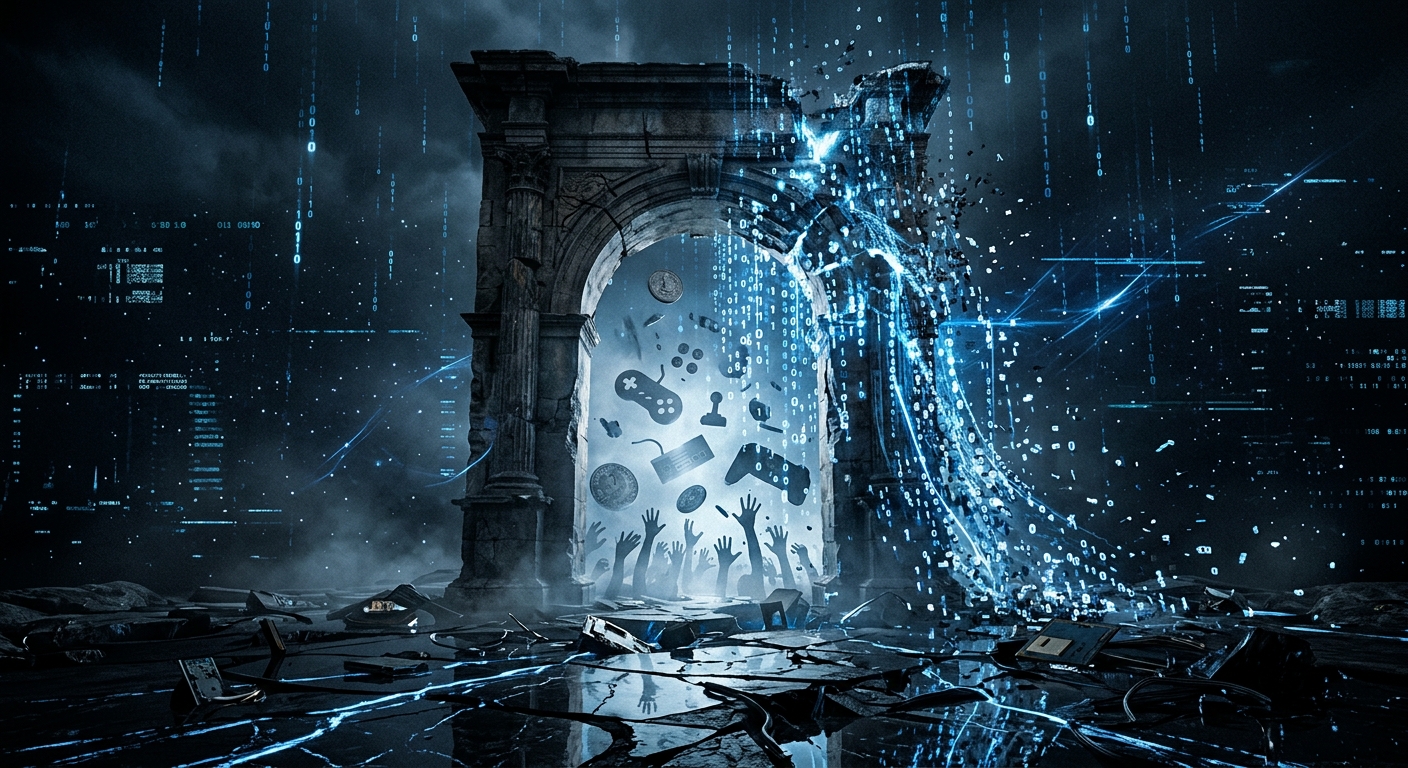
The digital age promised endless access, a persistent library of interactive experiences. Yet, the stark reality of live service gaming presents a counter-narrative: impermanence. When a publisher decides to pull the plug on a game, players who have invested not only money but also countless hours are often left with nothing. Their purchased worlds simply vanish, replaced by empty launchers or broken links, a digital void where a vibrant community once thrived. This unilateral deletion of a bought product challenges our fundamental understanding of ownership in the digital realm.
The Vanishing Act: What Happens When a Live Game Dies
Live service games, by their very design, are intrinsically tied to an external server infrastructure. Unlike a physical cartridge or even a standalone digital download, these titles are engineered for constant connection, reliant on remote servers to host their core logic, anti-cheat mechanisms, and dynamic content updates. This architectural dependency means that the moment a publisher decides to decommission that infrastructure, the game ceases to exist as a playable artifact. It is not merely a matter of a multiplayer mode going offline; the entire experience, from single-player campaigns to user progression, can become inaccessible, effectively wiping years of development and player engagement from existence.
This situation has ignited a fierce consumer rights debate. If a product, once purchased, can be unilaterally deactivated and erased by its seller, the very definition of "ownership" in the digital marketplace demands urgent legal scrutiny. Scholars and advocates increasingly frame these shutdowns not as routine business decisions, but as a systemic failure. The implicit contract between seller and buyer, wherein an exchange of money grants lasting access to a product, appears to be fundamentally broken in the live service model. The promise of digital goods, a convenient and enduring form of entertainment, often evaporates the moment a profit calculation dictates obsolescence.

Stop Killing Games: The Movement, the Momentum, and the Complications
The "Stop Killing Games" initiative has resurfaced with renewed legislative ambition, particularly across Europe and North America. This movement, which previously garnered hundreds of thousands of signatures, advocates for legal mandates requiring publishers to ensure games remain in a playable state even after commercial operations cease. The core demand is often for a "sunset build," a standalone, offline version that preserves the game's essence for posterity and player access. However, developers and smaller studios have voiced significant caveats regarding the practicalities of such mandates.
The technical modularity often assumed by preservation advocates frequently does not exist within typical live service codebases. Server-side logic, sophisticated anti-cheat systems, and live-event scripting are deeply entangled with the client-side experience. Untangling these elements to create a functional offline version can be a monumental task, sometimes akin to rebuilding a game from scratch. Industry voices warn that mandating a sunset build could impose prohibitive costs on mid-sized studios. This burden, they argue, might accelerate the consolidation of game development, favoring only the largest publishers with the financial and technical resources to comply, potentially stifling innovation and diversity in the market. Yet, consumer advocates firmly counter that the burden of proof should rest with publishers. They argue that developers should design for longevity from the outset, rather than treating preservation as an afterthought only considered when a game's commercial window begins to close. The digital artifacts we create today are part of tomorrow's cultural record, and their inherent fragility is a design choice, not an immutable law.
Workers in the Crossfire: Why Labor Rights Must Enter the Preservation Conversation
While the "Stop Killing Games" movement articulates a morally clear stance on consumer rights, it has largely overlooked a crucial dimension: the human cost of these shutdowns. A landmark analysis published in The Conversation by Louis-Etienne Dubois and Miikka J. Lehtonen argues that the focus on game ownership must be structurally linked to the demands for worker ownership and stability. The same corporate logic that treats games as disposable products frequently views the people who build them as expendable cost centers. This connection reveals a deeper systemic issue within the creative industries.
The pattern is grimly consistent across the industry. A studio is acquired, a live title underperforms, or strategic priorities shift. Within the same quarterly earnings cycle, hundreds of developers, QA testers, and support staff receive termination notices. Their contributions, often years of their professional lives dedicated to crafting these digital worlds, are erased alongside the very artifacts they helped create. This immediate human consequence highlights a critical gap in the prevailing preservation discourse. Centering worker rights within the broader preservation debate reframes the issue from a niche consumer technology grievance into a more expansive question about democratic accountability in creative industries. It resonates deeply with ongoing unionization efforts at studios across the United States, Canada, and the United Kingdom, drawing parallel between the precariousness of digital property and the precarity of digital labor. The fight for game preservation, therefore, becomes inextricably linked to the fight for dignified labor.
Toward a Framework: Legal, Technical, and Ethical Pathways Forward
Developing durable solutions to the challenges of live service game preservation requires a multifaceted approach, engaging legal bodies, technical experts, and ethical thinkers. Legal scholars monitoring EU digital market regulations suggest that requiring publishers to disclose end-of-life plans at the point of sale could establish a vital minimum standard of transparency. Much like pharmaceutical companies must publish discontinuation timelines for critical drugs, game publishers could inform consumers about a game's anticipated lifespan and potential post-shutdown accessibility. This does not mandate specific technical architectures but empowers consumer choice and sets clear expectations.
On the technical front, preservation-focused organizations like the Video Game History Foundation have demonstrated that offline patching is achievable for a meaningful subset of live service titles. This requires political and contractual will from publishers, prioritizing preservation before server decommissioning becomes an irreversible event. The challenge is not always insurmountable; rather, it often requires a shift in priorities and resource allocation. Ethically, frameworks borrowed from environmental law, particularly the concept of "polluter pays," offer a compelling model. Publishers who profit immensely from building and operating live service ecosystems should bear the cost of ensuring those ecosystems remain accessible in some form after commercial operations cease. This principle demands accountability beyond the immediate profit motive.
Ultimately, any truly durable solution will necessitate robust coordination. This coalition must include legislative bodies developing updated digital consumer laws, industry standards organizations promoting best practices, labor unions advocating for developer protections, and preservation communities safeguarding cultural heritage. This grand coalition is only just beginning to form, but its conversations are growing louder, more sophisticated, and more urgent with each high-profile shutdown. The future of digital ownership, and the legacy of interactive art, depends on this collective action. The fate of worlds like those found in Segment Storm or Star-Dive hangs in the balance, awaiting a future where their existence is not predicated on perpetual corporate sponsorship.
Sources

Julian Thorne is a seasoned house writer for GoAndGame, known for his deep dives into obscure game mechanics and industry trends. He often explores the sociological impact of gaming, blending critical analysis with historical context.


