
Xbox Accessibility Guideline 108 starts from a plain idea. A game should offer multiple difficulty options so players can enjoy and finish it, whatever their skill level. That sounds modest. It carries a real consequence for anyone who has hit a wall and had nowhere to turn.
Difficulty is subjective: it arises from the balance between a player's abilities and the barriers the game presents, so the same fixed barriers feel different to different players.
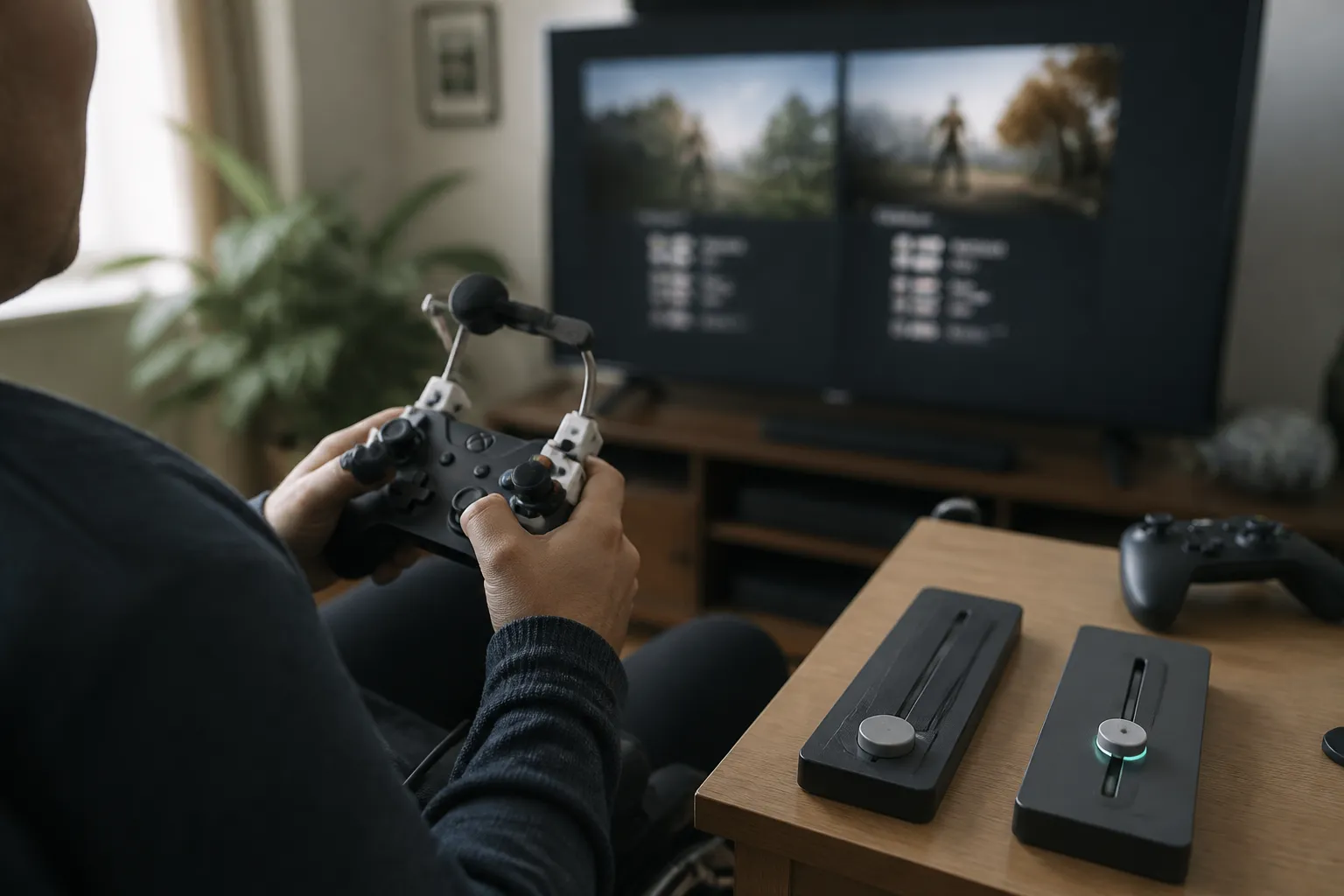
Difficulty depends on the player
Microsoft's guideline page says difficulty is subjective. It comes from the balance between what a player can do and what the game asks of them. Fix the obstacles in place and they will feel different to every person who meets them. A jump that is trivial for one player can be a wall for another.
That framing changes the question. If difficulty were a fixed property of the game, a hard game would simply be hard. Because it depends on the person, a single setting can shut out some players while boring others. The guideline's goal is to let more people reach the end.
A note on sourcing. The guideline page and the Xbox Accessibility Guidelines overview are Microsoft's own developer documentation. The overview lists version 3.2, published June 8, 2023. A Rock Paper Shotgun report on the guidelines dates to Nov. 21, 2019, so treat it as background on how the guidance was first described, not as a current status report.
Who needs a lower setting
The guideline names several reasons a player might want an easier mode. Some players have a disability. Some are younger, casual, or new to games. Others mostly want the art or the story and have little interest in the challenge. Microsoft's guidance, as relayed in the 2019 coverage, adds that a very low setting may be the difference between being able to play, enjoy and complete a title or not.
The cost of having no options is spelled out too. A game without configurable difficulty can block a player from progressing. That player may miss the rest of the story and content, or the whole game. One hard boss can end the experience for someone who was otherwise enjoying it.
The sources do not say how many players this affects, and they give no numbers on how common any of these reasons are. They describe the range of reasons and stop there.
Separate settings for separate problems
Easy, Normal and Hard are broad labels. According to the sources, each covers many variables. The guidance suggests that different parts of a game, such as puzzles and combat, can be configured separately, because a player may need to change one without touching the other.
The examples are concrete. A player with fine-motor difficulty might lower combat difficulty and keep the puzzles hard. A player with limited cognitive skills might do the opposite: easier puzzles, tough combat. One slider cannot serve both people.
The wording matters here. The guidance says games should choose multiple difficulty settings when possible. It does not demand that every game split every system into its own dial. My reading is that a single bundled slider is the weakest option on offer, and that separate dials are the stronger one. That is an inference from the examples, not a quote from the guideline.
The sources also do not say what each level changes in practice. They do not explain how a studio should label the settings, or what a bundled setting hides. Anyone who wants to know what Hard does in a given game will have to check the game.
Questions worth asking about any game
The fact sheet boils down to a short set of checks. They suit players picking a game and developers reviewing their own work.
- Does the game offer separate difficulty settings for different aspects, such as puzzles and combat?
- Can a player lower the difficulty enough to keep moving through the story and content?
Then the choice depends on the person. Which game elements create the barrier for this player? Does the player want the story or the art more than a test? The right adjustment follows the type of challenge, and a lower setting is not automatically the answer.
One red flag stands out. A game with no configurable difficulty may block some players from finishing it at all. That is worth knowing before you buy, though the sources do not offer a way to check it, and they do not describe settings in any named game.
What the sources leave out
The guidance is written for developers. It does not walk a player through changing difficulty on a particular console or in a particular title. It has no count of how many games offer multiple settings. It does not cover assist options beyond difficulty, and it says nothing about how non-Xbox games handle the problem.
The Xbox Accessibility Guidelines are also best practices, developed with industry experts and members of the Gaming and Disability Community. Microsoft's overview says they are not a compliance or legal checklist. Each guideline has a goal, an overview, scoping questions, key areas to target and implementation advice. That makes them a useful starting point for a studio. It does not make them a rule any studio must follow.
Read this way, Guideline 108 asks a small thing with a large payoff: let the player set the challenge. Whether a given game does that is a question only the game can answer.
Sources

Julian Thorne is a seasoned house writer for GoAndGame, known for his deep dives into obscure game mechanics and industry trends. He often explores the sociological impact of gaming, blending critical analysis with historical context.


