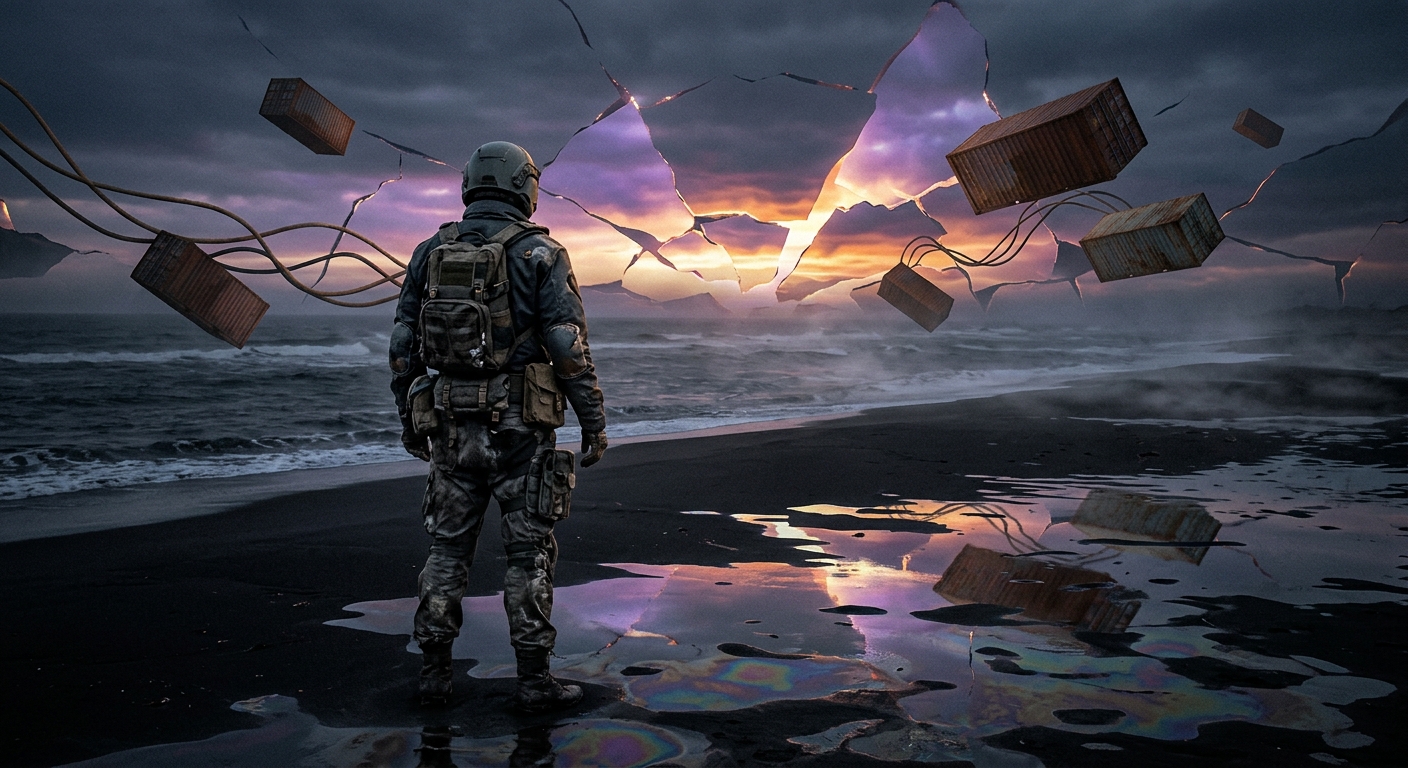
When the original *Death Stranding* launched in late 2019, its vision of a fragmented America, where isolation was enforced and connection a desperate longing, felt like science fiction. Months later, the world plunged into global lockdowns, and suddenly, Hideo Kojima's dystopian vision resembled a documentary. The years since have normalized digital labor, made algorithmic feeds central to communication, and commodified the very idea of "connection." *Death Stranding 2: On the Beach* does not just revisit this landscape; it asks if our rush to rebuild was worth the cost.

The World That Caught Up to Kojima
*Death Stranding 2* arrives in a world where the themes of its predecessor have become lived experience. Critics and players alike find themselves turning over its central question: Is its hopeful vision of reconnection naive, earned, or something more complicated? IndieWire called the sequel "2025's most hopeful blockbuster," a descriptor that resonates because hope, in this altered world, demands justification. The game labors, sometimes awkwardly, sometimes beautifully, to provide that justification, forcing us to confront the shifts in our collective understanding of community and solitude.
Connection as Infrastructure, Labor as Love
Both *Death Stranding* games anchor their mechanics in delivery, which is physical, unglamorous, and repetitive work across hostile terrain. The sequel deepens the argument that care and labor are intertwined, not opposites. Digital capitalism often separates these concepts, commodifying one while extracting the other cheaply. The strand system, which allows players to leave structures and signs for others without direct interaction, remains a radical idea. It models asynchronous, anonymous, and fundamentally generous cooperation, prioritizing contribution over transaction. Yet, after years of platform economies rebranding gig workers as "independent contractors" and delivery drivers as "community partners," the game's romanticization of the courier as a hero takes on a fraught new meaning. This job category has seen aggressive labor exploitation. Kojima's framing, however, insists on the dignity of the work itself, finding meaning in human intention behind each package and each path worn into the landscape.
Should We Have Connected? The Sequel's Darker Question
The first game tasked players with forging connections across a broken world. *Death Stranding 2*, by contrast, is haunted by the wisdom of those connections. It questions whether the impulse to reach out is an act of courage or a vulnerability destined for weaponization by those who see networks as control systems. Carli Velocci, writing for Bullet Points Monthly, identifies this tension as central to the sequel. Kojima's own personal and professional upheavals between games appear to have infused the narrative with a bitterness the original's earnest optimism never allowed. The title "On the Beach" carries a literary weight, echoing Nevil Shute's novel of survivors awaiting an inevitable extinction. The game adopts this elegiac tone, suggesting connection does not guarantee survival. It only makes the waiting bearable, and sometimes, the loss more acute. Brandon R. Chinn of SUPERJUMP writes about the unique anguish of finishing a deeply anticipated game, a completion that produces its own grief. This mirrors the game's preoccupation with what persists after contact, whether strands dissolve or remain, and if the beach was ever truly real.
Digital Labor and the Phantom of the Other Player
The strand system, with its asynchronous multiplayer, makes a formal argument about digital solidarity: you are never truly alone, yet you are always alone. The traces left by other players are simultaneous proof of community and monuments to its real-time impossibility. This structure aligns uncomfortably well with the social media paradigm that defines much of online life. Platforms are designed to create a feeling of perpetual connection while ensuring users rarely experience a connection that cannot be monetized or interrupted by an advertisement. *Death Stranding 2* intensifies these stakes by expanding how players interact with your world. However, critics note this expansion also highlights the fundamental loneliness at the system's core. Despite all the infrastructure, the roads, the bridges, and safe houses, the player still walks alone through a landscape others have built. It is telling that the game's most emotionally resonant moments often sidestep these elaborate online systems entirely. Instead, they emerge from quieter, scripted encounters with its deeply strange characters. This suggests Kojima acknowledges that the fantasy of ambient networked solidarity cannot substitute for the irreducible specificity of someone who truly knows you.
Hope as a Political Act in a Blockbuster Frame
IndieWire's description of *Death Stranding 2* as "hopeful" warrants consideration, because hope differs from optimism. The game earns its hope precisely by refusing optimism. It does not pretend connection is safe or that rebuilding comes without cost. Instead, it insists the attempt is worthwhile, a harder argument to make. For a game of this blockbuster scale, with immense production values and marketing, this is an unusual ideological stance. Most high-budget products resolve their tensions with reassurance, confirming that the right individual with the right tools can fix what is broken. *Death Stranding 2* maintains suspicion toward such easy resolutions, even as its genre demands one. The ending must arrive, connections made or broken, the beach revealing its secrets. Critical consensus suggests Kojima manages to achieve both: delivering the emotional catharsis the genre expects while leaving its core questions genuinely open. Across dozens of hours of lonely walking, careful package placement, and conversations with characters who may or may not be real, the game suggests the value of connection cannot be calculated in advance. You reach out not because you know it will be received, but because the reaching itself defines what it means to be human. This, the game posits, might be enough, even now, even here, even on the beach.
Sources

Julian Thorne is a seasoned house writer for GoAndGame, known for his deep dives into obscure game mechanics and industry trends. He often explores the sociological impact of gaming, blending critical analysis with historical context.


