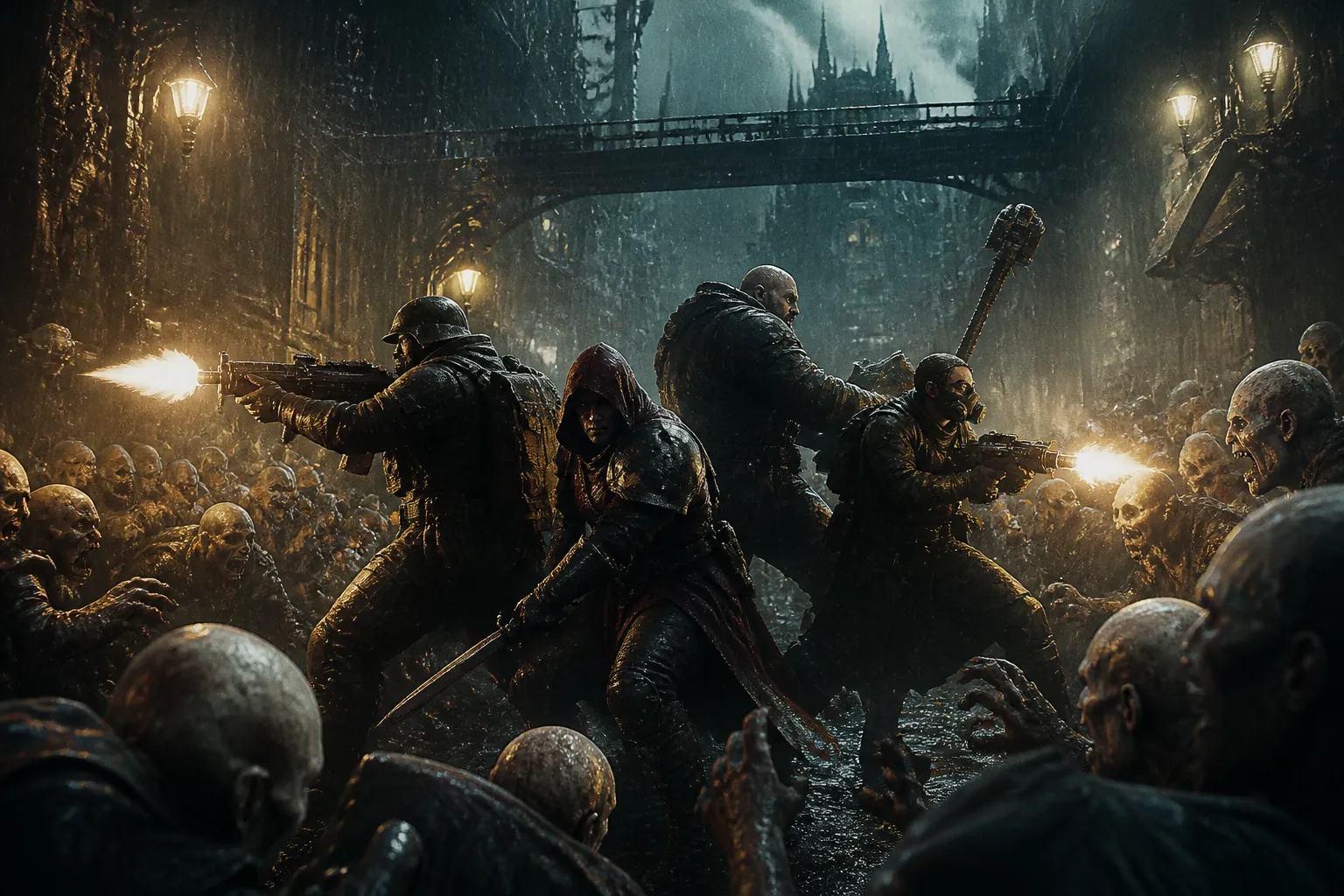
In the hive city of Tertium, trouble arrives in crowds. Warhammer 40,000: Darktide gives four players a reason to stay close as Poxwalkers and other enemies press in. Fatshark’s cooperative shooter finds much of its appeal in that shared pressure: a melee brawl can give way to a shootout, and another player can change how an encounter feels. The harder question is what happens when the fighting stops. Darktide’s strong moment-to-moment combat sits beside reported framerate dips and a progression loop that makes returning for another mission feel more like work.
What Darktide Is and Where It Comes From
Darktide is a four-player cooperative first-person shooter from Fatshark, the studio behind the Vermintide games. That lineage matters. Players familiar with Vermintide will recognize the broad invitation to face dangerous crowds together, though Darktide moves the action into Warhammer 40,000’s bleak future and gives gunfire a substantial place alongside close combat. For a prospective player, the connection is a useful starting point, not a promise that every part of the experience works equally well.
The setting gives those crowds a particular character. Tertium is a hive city overrun by Poxwalker traitors, zombie-like hordes, gun-toting preachers, and monsters powered by rifts. Such enemies make the city feel hostile from more than one direction. A group can be occupied at arm’s length while another threat demands attention farther away. The fiction supports the combat’s constant pressure, with little sense that this is a place anyone can safely control.
This assessment rests on Kyle Campbell’s written review, published December 10, 2022, and the video review, published December 7. The reviewed platform was PC; the video also lists Xbox availability. Its listed initial release date is November 30, 2022. Those dates matter because they place the reported technical problems near launch rather than establishing how the game performs today.
How the Combat and Co-op Play Work
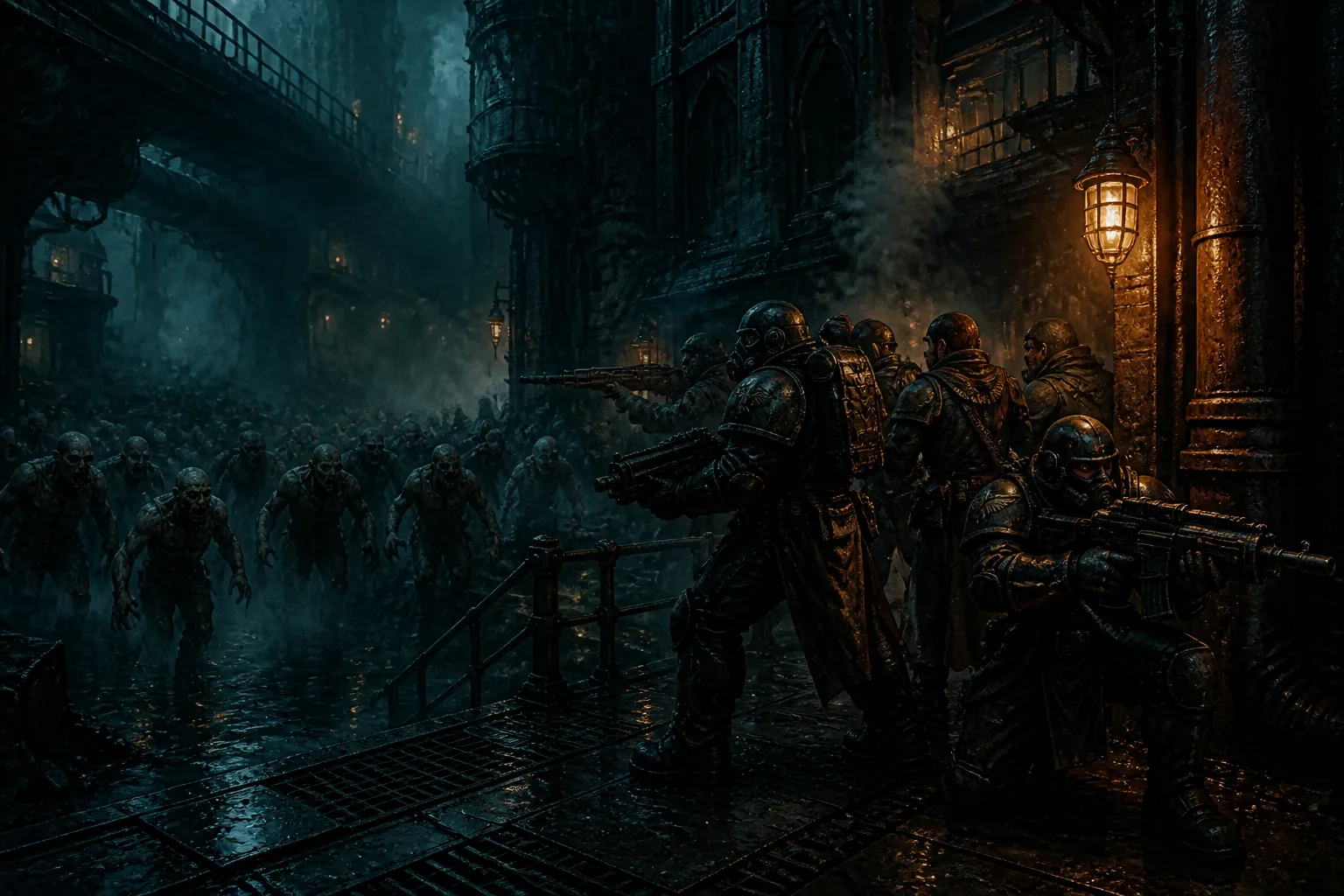
Cooperation is the center of Darktide’s design. A group of up to four players moves through encounters in which staying aware of one another matters as much as choosing how to attack. The reviews praise its group fights and melee combat, and describe a satisfying balance between brawling and shooting. That variety gives players decisions to make in the middle of a fight, especially when the closest enemy is not the only danger.
Melee gives those encounters a physical urgency. Gunfire gives the squad another way to respond when enemies are not yet within reach. The appeal comes from moving between the two, then seeing how those choices fit with what the rest of the group is doing. Darktide works best when a mission feels like a shared scramble rather than four separate players pursuing the same objective.
The soundtrack earns praise, too. In a setting built around ceaseless threat, music helps sustain the energy of another fight without requiring a quiet moment to explain why it matters. Campbell found the game consistently entertaining from moment to moment. That is meaningful praise for a shooter built around repeated missions: its most reliable reward appears to be the time spent fighting alongside the squad.
Where the Game Falters
The trouble is that a repeated mission structure asks more of a game than a good encounter. Both reviews report sluggish performance and recurring framerate dips. In a fight that depends on reading several threats at once, an uneven frame rate can interrupt the very responsiveness that makes the combat satisfying. These accounts describe a persistent problem at the time of review, not an occasional curiosity to dismiss because the underlying action is strong.
Progression between missions receives a similarly sharp criticism. The reviews describe it as monotonous and tedious, with the video review calling it aggressively so. That weakness has a cumulative effect. A player might gladly finish one more mission for the teamwork and the melee, then find that the steps connecting missions offer little of the same excitement. Repetition can be welcome in a co-op shooter when the next run feels enticing. It becomes a harder sell when the routine around those runs feels like an obligation.
The available reviews do not establish whether subsequent updates improved either issue. Their criticism remains useful as an account of Darktide near release, but it should not be mistaken for a current patch report. Anyone buying it now needs newer evidence before assuming the PC performance problems are gone, or that the progression loop has changed.
Who Should Buy It and What to Check First
Darktide makes the clearest case to people who enjoy facing hordes with friends. The video review points toward players who like co-op shooters such as Left 4 Dead 2, while Fatshark’s Vermintide audience is an obvious fit for its group-focused structure. If the pleasure of a tense run is enough to bring your group back, Tertium has a strong pull. If you need equally engaging progression between runs, the reported grind deserves more weight.
Before buying, check recent performance reports for your own hardware, particularly if you plan to play on PC. Ask how much tolerance you have for repetitive progression even when the combat itself stays lively. Those two questions get closer to the purchase decision than the setting alone can. Warhammer’s grim city gives the fighting its atmosphere, but your experience will depend on how smoothly those fights run and how often you want to repeat them.
There are practical details these reviews cannot settle. They do not provide pricing, editions, minimum or recommended system requirements, campaign length, or a firm account of replay value. Nor do they establish the game’s current patch status or document how its launch-era issues were addressed. Verify those details through current store information and recent player reports. Darktide’s best argument is the rush of a squad holding together in Tertium; make sure the version you can play lets you enjoy that rush.

Alexandra Rivet explores the intricate interplay of games and culture for GoAndGame. A passionate storyteller, she delves into narratives with depth and curiosity. Her pieces often highlight the stories behind the pixels.


