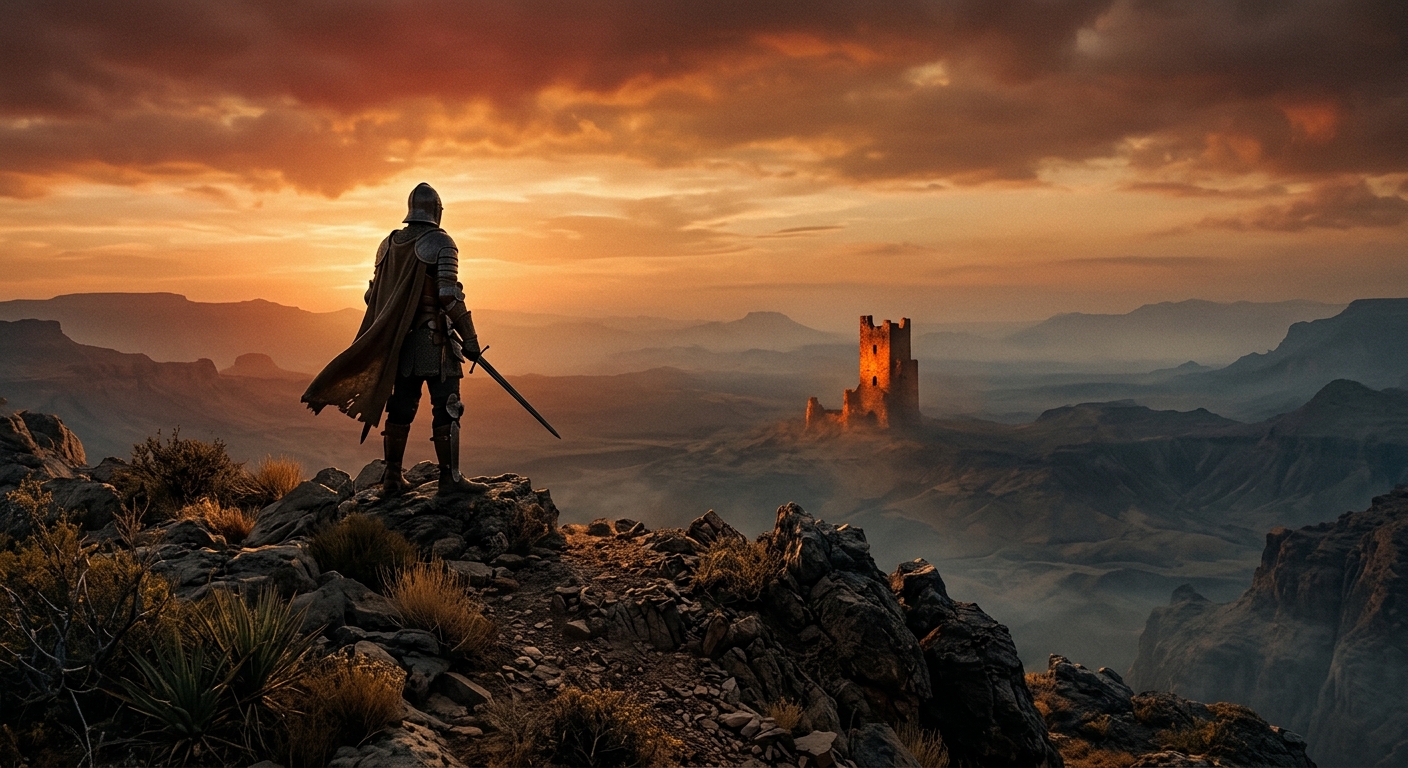
Pywel makes a strong first impression. A road bends toward a distant settlement, a ruin catches the light, and a mountain still looks worth climbing after an hour spent getting closer. Crimson Desert knows how to make travel feel like possibility. Its harder task is giving that possibility a shape. Pearl Abyss has built an enormous stage for Kliff’s adventure, but the moments that linger are often the ones that narrow his attention: a difficult fight, a particular place, a reason to keep moving.
Pywel is most convincing when the next destination matters more than everything visible on the horizon.
A World Built for Wonder
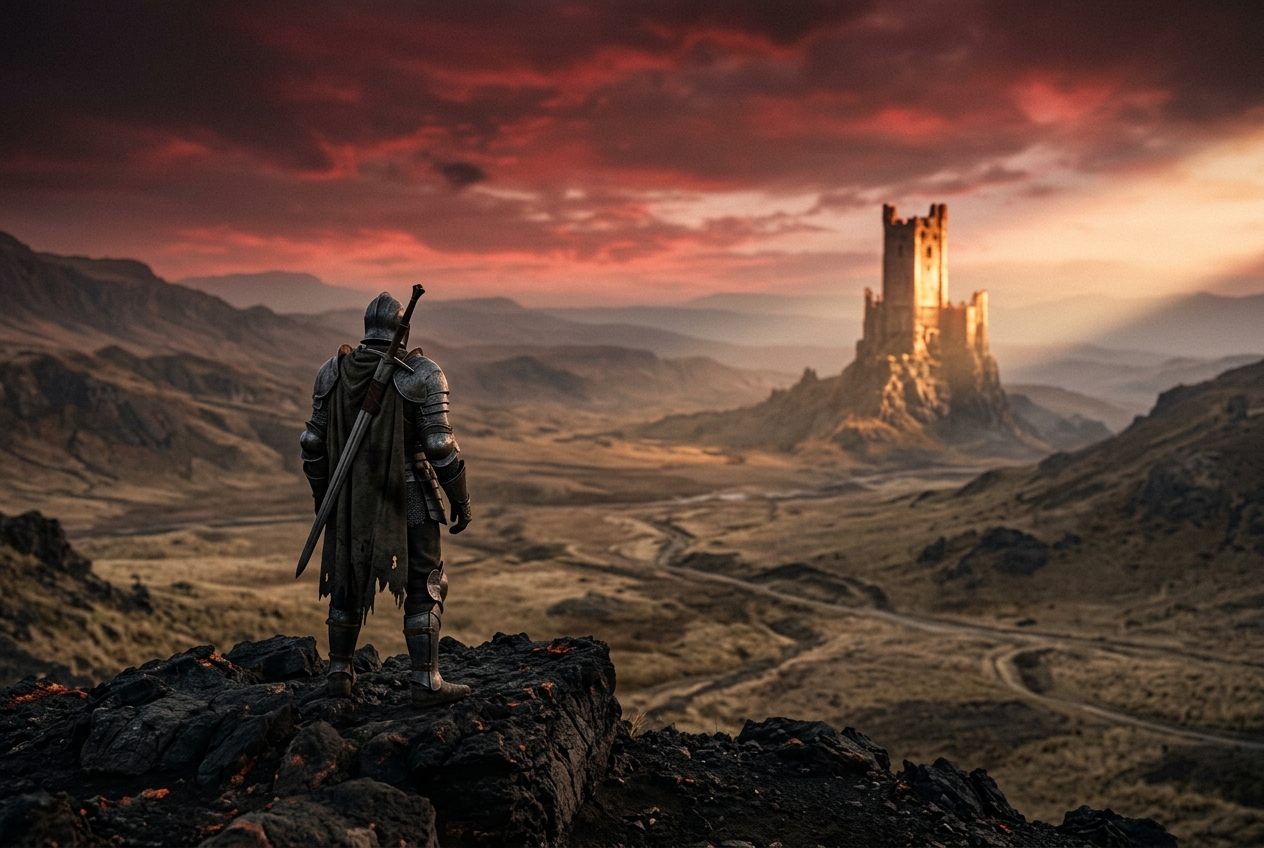
Crimson Desert understands the pleasure of spotting a route before the game tells you to take it. Pywel’s settlements, rough terrain, and ruins give travel a sense of texture. Changes in light and weather can make a familiar stretch of ground worth looking at again. That visual work matters because so much of an open-world adventure happens between objectives. The approach to a place is part of the experience, not dead time to be skipped.
Scale also creates an expectation. When a distant structure has drawn you across a valley, reaching it ought to change something: what you know, what you can do, or how you understand the people nearby. Crimson Desert cannot make every detour equally consequential, and the distance between its most memorable discoveries can feel longer than the map suggests. Pywel remains impressive to look across. Looking closely is a more uneven pleasure.
Combat That Commands Attention
Fights give the adventure its clearest rhythm. Crimson Desert asks for more than steady attacks against a health bar; movement, defense, and the choice of when to commit all shape an encounter. The appeal is physical. Closing distance has a cost, an opening feels earned, and a mistake can send Kliff scrambling to recover. That gives the game a useful counterweight to the freedom of its map. Combat makes the next few seconds matter.
Boss encounters bring that focus into sharp relief. Their spectacle is easy to notice, but their better quality is the pressure to watch and respond as a fight changes. A large enemy can fill the screen without making the player feel irrelevant, provided its attacks give enough warning to learn from a failed attempt. Crimson Desert is at its strongest when a victory feels like the result of improved attention. Those confrontations offer a glimpse of a tighter adventure inside the vast one.
A Story Looking for Its Center
Kliff’s place among the Greymanes gives the campaign a human starting point. Loyalty, loss, and the need to gather people again can carry more weight than a sweeping conflict on their own. The story becomes less steady when it widens its gaze. New factions and larger threats promise a grand fantasy saga, yet each expansion asks the player to hold on to the personal stakes that made the opening matter.
The quieter moments often help. A conversation away from a battle can make a companion feel less like a quest marker, while details found during travel give Pywel a history beyond Kliff’s immediate concerns. These scenes reward curiosity, but they also reveal a tension in the design. A player following the main path may miss some of the texture that makes the journey feel inhabited. A player searching for all of it may lose the story’s momentum.
The Cost of So Much Detail
Pearl Abyss’s technical ambition serves a clear purpose. Long views help Pywel feel continuous: the terrain ahead seems connected to the road underfoot, rather than presented as a separate destination. Lighting gives travel a changing mood. These are more than decorative achievements in a game that repeatedly asks you to cross considerable distances. They help sell the idea that setting out is worthwhile.
That ambition also raises the standard for everything happening closer to the player. A crowded fight needs readable action as much as visual density. A region needs a reason to spend time in it as much as a striking silhouette. For readers deciding which platform to play on, the Push Square and Cubed3 PS5 reviews are useful companions to the broader question of scope. Performance and presentation affect how readily the world’s invitations become enjoyable journeys.
How Much World Does the Adventure Need?
Crimson Desert is easiest to recommend for the experiences it can bring into focus: an imposing encounter, a destination reached through difficult country, a moment when Kliff’s struggle feels connected to the place around him. Its breadth gives those moments room to breathe. It can also place long stretches between them, and freedom loses some of its charm when the most appealing choice is simply to get back to the main event.
That makes this a fascinating, uneven adventure rather than a case for bigger worlds by default. Pywel has the scale to suggest stories in every direction. The strongest parts of Crimson Desert are more selective. They make one fight, one route, or one conversation feel urgent enough to hold your attention while the rest of the continent waits.
Sources

Eliot Reed writes about the intricacies of virtual worlds, blending analysis with storytelling. As a house writer for GoAndGame, he delves deep into game mechanics and narratives, offering thought-provoking insights for players and developers alike.


