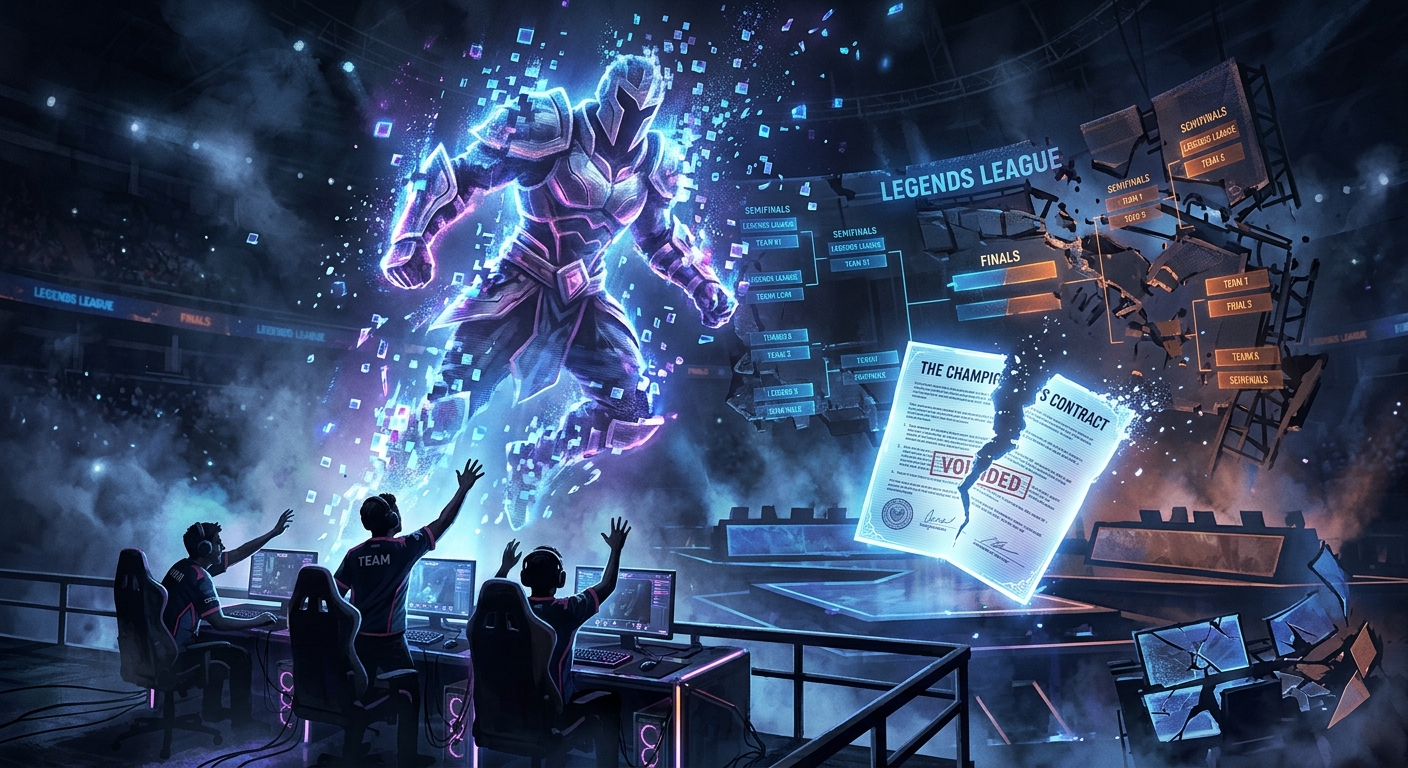
When a beloved fighter gets quietly removed from tournament play, the fallout exposes deep fault lines between developer authority, player trust, and the future of competitive gaming. The recent ban of Veylin from Specter Protocol tournaments did more than alter a character roster. It shook the foundations of what many believed was a stable relationship between creators and their communities.
The Exclusion Heard Around the Community
The announcement that Specter Protocol's fan-favorite character Veylin would be barred from sanctioned tournament play sent shockwaves through the competitive scene. The news arrived almost immediately after the patch notes dropped, but without the usual detailed developer commentary. Unlike previous balance adjustments, this exclusion came with only a brief statement citing 'competitive integrity concerns.' Players and organizers scrambled to interpret what that phrase actually meant in practice.
Tournament organizers who had already finalized bracket seedings and venue logistics found themselves in an impossible position. They were forced to either delay events or risk losing the sanction status that grants them access to official prize pools and developer support. The controversy reignited long-simmering debates about how much authority game developers should hold over communities that have independently grown, funded, and sustained the competitive ecosystem for years. The parallel to real-world esports governance is uncomfortable: Blizzard's 2019 handling of the Blitzchung situation, in which a Hearthstone player was banned following a post-match statement, showed that unilateral developer action can fracture community trust quickly and publicly, even when the developer eventually walks back part of its decision.
What Character Exclusion Actually Does to a Meta
Removing a single high-tier character from legal play does not simply flatten the competitive field. It reshapes every matchup calculation, team composition strategy, and counterpick decision that players have spent months refining. Competitors who built their entire playstyle around countering Veylin's specific pressure patterns now find that expertise suddenly worthless. This effectively penalizes players for doing exactly what competitive communities are supposed to do: study, adapt, and specialize.
The ripple effects extend to character diversity across the roster. Veylin's presence in the meta had historically kept several defensive archetypes viable. Without that pressure, those characters are expected to fall out of tournament representation entirely, narrowing the range of viable strategies at the top level. Scholars who study ecological competition use the concept of character displacement to describe how species shift when a dominant competitor is removed from an environment. The parallel to fighting game metas is uncomfortable in how precisely it applies here. Remove the apex pressure, and the organisms that existed in its shadow either adapt into new dominant roles or disappear from the competitive record entirely.
The downstream effect on training investment is equally serious. Players who spent six months developing frame-perfect punish windows against Veylin's signature pressure string now hold expertise that has no tournament application. That time cannot be recovered. For semi-professional players whose practice hours are limited by work or school schedules, this represents a meaningful competitive setback with no compensation or acknowledgment from the developer.
Developer Authority Versus Community Sovereignty
The core tension in this controversy is not really about Veylin. It is about who owns the competitive identity of a live-service game when that game's longevity depends entirely on voluntary community investment. Specter Protocol's developer, Helix Frame Studios, had historically taken a hands-off approach to tournament organization. They allowed regional circuits to set their own rulesets, which made this sudden top-down intervention feel particularly jarring to community leaders who had operated with meaningful autonomy for years.
Legal scholars focused on intellectual property have noted that developers retain the absolute right to modify their software in any way they choose. However, competitive communities have increasingly argued that implicit social contracts form around games that market themselves as esports platforms. A developer cannot simultaneously court community investment through ranked modes, official streaming support, and prize pool matching, and then reserve the right to alter competitive conditions without consultation. That is the contradiction Helix Frame now owns.
Several prominent tournament organizers have reportedly begun drafting a formal open letter requesting that Helix Frame establish a transparent competitive council with player representation before any future character-level decisions are made. This claim originates from community forum discussions and has not been confirmed by any official organizer statement, so it should be treated as unverified as of publication. Even so, the impulse it reflects is real: communities want process, not just outcomes.
Precedent, Risk, and What Comes Next
If Helix Frame's exclusion stands without meaningful pushback or process reform, it sets a precedent that other developers will notice. Riot Games has demonstrated that structured governance, including published rulings with documented timelines and clearly cited rule articles, can give competitive communities confidence that decisions are principled rather than arbitrary. The December 2025 ruling in the Seungmin "ban" Oh match-fixing case is one example: Riot published its full reasoning, the relevant code articles, and the mitigating factors it considered. Helix Frame offered none of that transparency here.
The financial stakes are not trivial. Several professional players had signed sponsorship agreements with terms tied to tournament participation requirements. Those agreements may now be in breach because of a character ban the players had no voice in preventing. Smaller regional scenes that lack the leverage of major league organizers are particularly vulnerable. They have fewer resources to absorb sudden meta disruptions and fewer alternatives if developer relations deteriorate entirely.
The most constructive path forward likely involves formalizing the relationship between Helix Frame and its competitive community through binding consultation agreements, ones with defined timelines for community comment before competitive rule changes take effect. Reaching that outcome will require both sides to acknowledge that their long-term interests are aligned even when short-term decisions create conflict. Developers need thriving competitive communities to sustain player counts and media attention. Communities need developer cooperation to secure prize funding and platform support. Neither side wins by making the other an adversary.
Recap of Key Concerns


Sources
- Character displacement - Wikipedia
- The end of the line: competitive exclusion and the extinction of historical entities - PMC
- List of Philippine sports controversies - Wikipedia
- Spectre Studios - Wikipedia
- Blitzchung controversy - Wikipedia
- 29th LG Cup World Baduk Championship final controversy - Wikipedia
- Specter - WARFRAME Wiki
- Seungmin "ban" Oh | Riot Games Competitive Operations

Julian Thorne is a seasoned house writer for GoAndGame, known for his deep dives into obscure game mechanics and industry trends. He often explores the sociological impact of gaming, blending critical analysis with historical context.


