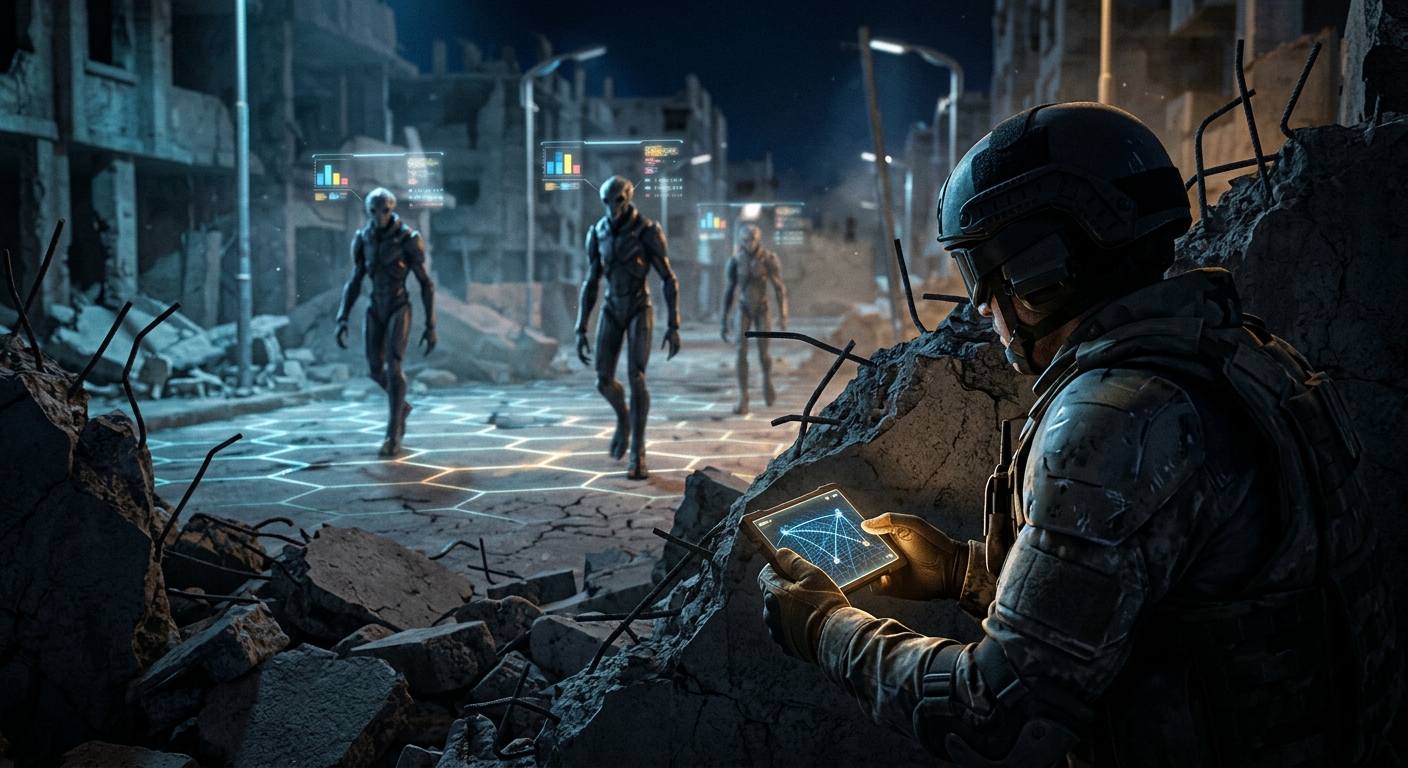
XCOM 2 presents an alien menace with apparent tactical acumen. Many players interpret enemy actions as intelligent, born of strategic insight. This perception, however, is a fundamental misreading of the game's underlying logic.
The alien AI does not think; it calculates. It operates as a complex, weighted spreadsheet, evaluating available actions and selecting the option with the highest numerical score. Understanding this deterministic core transforms the game from a test of reaction into an exercise in predictive control.
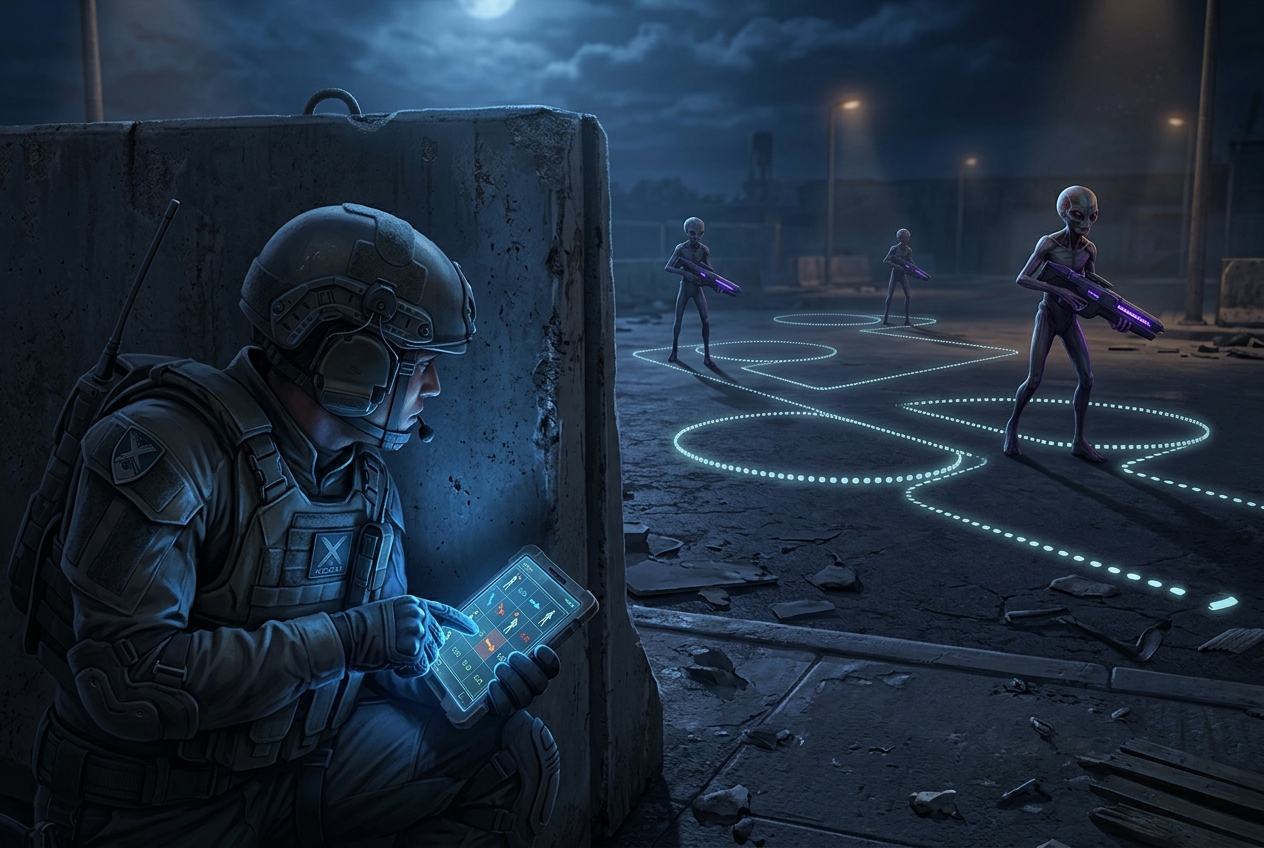
The Illusion of Enemy Intelligence
Each alien unit in XCOM 2 possesses a utility-scoring system. This system weighs potential actions like moving to cover, attempting a flank, or engaging a target. It then executes the highest-scoring action. This process is not random; it is deterministic. Given identical game states, the AI will make the same choices. To call this AI 'smart' is to anthropomorphize a complex algorithm. To call it 'dumb' is to ignore the coherent, devastating tactics a well-tuned scoring system can produce.
Pod Activation and the Patrolling Mind
Unactivated alien pods exist in a philosophical limbo. They follow pre-scripted patrol routes with minimal decision-making. Their 'awakening' is a hard state transition, triggered by sight or sound. This is not a gradual escalation. The AI's full behavioral repertoire instantly unlocks. Exploit this binary switch. Position your squad before engagement. Force pods to activate under conditions that immediately disadvantage them: cornered, split, or mid-turn.
Cover Preference as a Predictive Model
The alien AI prioritizes moving to cover. It will almost always spend its first activated turn seeking the nearest high-cover tile. This preference allows reverse-engineering enemy movement. Mentally map accessible high-cover tiles from a pod's position. The AI will telegraph its destination. Placing a Ranger or grenade in that predicted spot before activation is not a trick. It is applied behavioral prediction.
Flanking Logic and How to Weaponize It Against the Aliens
Aliens score flanking opportunities highly. A poorly positioned XCOM soldier becomes bait. The AI will burn movement and sometimes sacrifice defensive cover to take an exposed shot. Exploit this deliberately. Use a 'lure' soldier in light cover on one flank. This draws aliens away from reinforced positions. It exposes them to overwatch from the opposite side. The AI optimizes locally, not globally. It selects the best available action each turn, without modeling your subsequent response.
Psionic Units and the Exception to the Rule
Psionic enemies, like Sectoid Commanders and Priests, add a layer of ability prioritization. This often overrides standard movement-to-cover logic. High-value psionic targets become immediate priorities. Community research, including discussions around "Tygen's Files" on Steam, indicates psionic ability use is gated by cooldowns and target-validity checks. You can exhaust or deny these checks. Shield vulnerable soldiers behind mind-immune units. Break psionic line-of-sight. This resets the AI's ability targeting queue. You are not dodging the AI; you are feeding it invalid inputs.
Reinforcement Calls and the Meta-Game of Suppression
Some alien units call reinforcements. This happens under specific conditions, like low squad health or sustained exposure. Eliminating these units first interrupts the system. The reinforcement drop zone is algorithmically determined based on available map tiles. Aggressive forward positioning shrinks the pool of viable drop locations. Steam community threads document instances where players cornered reinforcement pods into immediately disadvantaged spawn positions by controlling map quadrants before the call triggered.
Manipulating the AI Through Map Geometry
The AI pathfinds to cover using the same navigation mesh as your soldiers. Destructible cover creates an opportunity for geometry manipulation. Remove the tiles the AI intends to use before it activates. Pre-activation explosives deny cover. This is philosophical work. You are not destroying the environment; you are editing the AI's decision tree by removing valid nodes. Elevation is systematically undervalued in the alien AI's cover-seeking logic. Rooftop and high-ground positions are disproportionately safe relative to their actual exposure.
The Limits of Prediction: Variance and Humility
This predictive modeling relies on probability weights, not certainties. The AI retains randomized tiebreakers when actions score identically. This is the source of many 'inexplicable' moves players report. Steam discussions titled "What's up with the AI?" frequently document apparent anomalies. These are, upon closer examination, low-probability but valid utility outcomes. The scoring system legally selected them. The correct philosophical posture is probabilistic confidence. You narrow the distribution of likely enemy actions. You do not eliminate variance. Your plans must include contingency branches.

Julian Thorne is a seasoned house writer for GoAndGame, known for his deep dives into obscure game mechanics and industry trends. He often explores the sociological impact of gaming, blending critical analysis with historical context.